

4 Öre – Sweden
Sweden
Context

References
KM: #Click to copy to clipboard17
Numista: #64076
Value
Bullion value: $8.60
Obverse
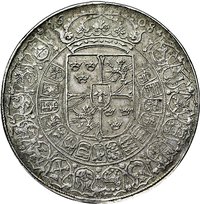
Description:
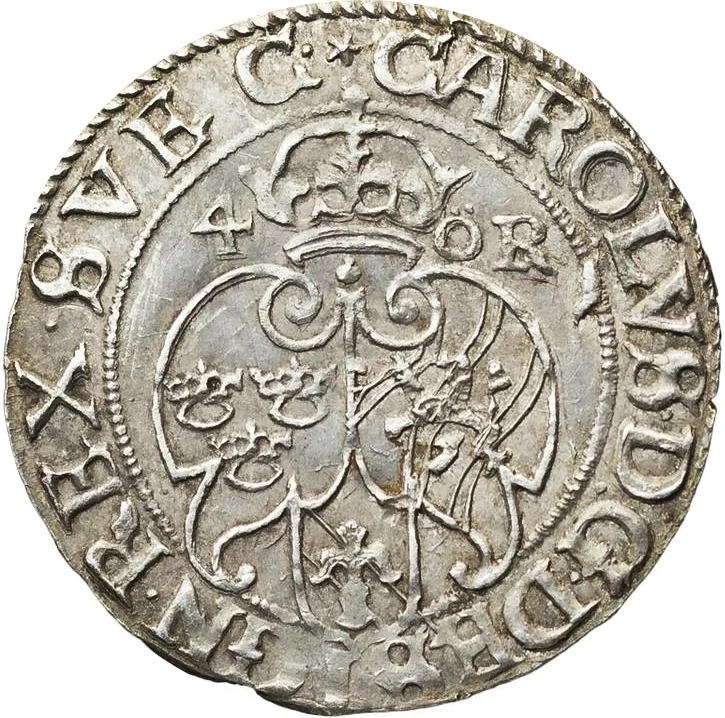
Three shields in a triangle: left shield with Sweden's Three Crowns, right with the Folkung Lion, and behind them, the Vasa arms. Value flanks the crown above. All within a circle surrounded by legend.
Inscription:
CAROLVS·D:G·DESIG·REX·SVEC *
4 ÖR
4 ÖR
Reverse
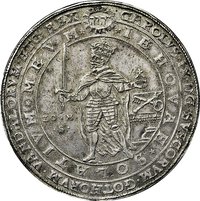
Description:
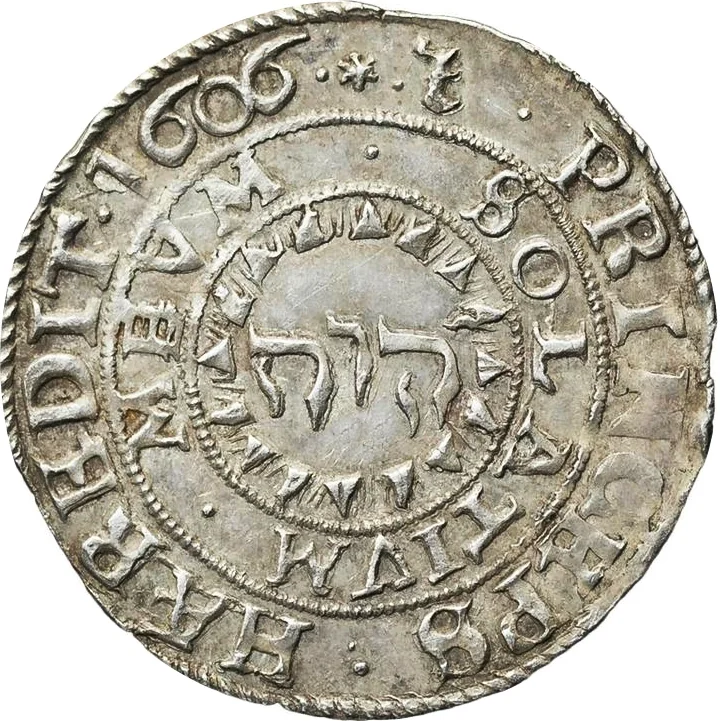
Radiant sun containing Hebrew "Jehovah" within a double circle and two legends.
Inscription:
יהוה
· SOLATIVM · MEVM ·
& · PRINCEPS · HÆREDIT · 1606 ·*·
· SOLATIVM · MEVM ·
& · PRINCEPS · HÆREDIT · 1606 ·*·
Edge
Mintings
| Year | Mint Mark | Mintage | Quality | Collection |
|---|---|---|---|---|
| 1605 | — | — | ||
| 1606 | — | — |
Historical background
In 1605, Sweden operated under a complex and strained monetary system, a legacy of the ongoing "Kipper- und Wipperzeit" (the clipping and culling period) that plagued Central Europe. This was an era of severe currency debasement, where the state, under King Charles IX, faced constant financial pressure from wars with Poland and Denmark. To fund these conflicts, the royal mint repeatedly reduced the silver content in coins like the öre and mark, while officially maintaining their face value. This created a situation where older, purer coins were hoarded or melted down for their intrinsic metal worth, leaving the economy flooded with inferior, distrustful currency.
The domestic consequences were severe inflation and economic instability. Merchants and the public became wary, often refusing the new debased coins or demanding excessive amounts for goods, effectively creating a dual circulation system. The situation was further complicated by the simultaneous existence of Swedish coinage alongside foreign currencies, particularly the high-quality Dutch rijksdaalers and German thalers, which were preferred for large transactions and international trade due to their reliable silver content. This undermined confidence in the national currency and disrupted commerce.
King Charles IX recognized the destabilizing effects and had begun attempts at reform. The Riksdag of 1604 had discussed monetary issues, and efforts were made to standardize minting. However, a true and effective recoinage and stabilization would not be achieved until the reign of his son, Gustavus Adolphus, who, with the help of Chancellor Axel Oxenstierna, would implement sweeping financial reforms in the 1620s. Thus, 1605 represents a point of acute crisis within a longer period of monetary turmoil, highlighting the direct link between Sweden's martial ambitions and its domestic economic fragility.
The domestic consequences were severe inflation and economic instability. Merchants and the public became wary, often refusing the new debased coins or demanding excessive amounts for goods, effectively creating a dual circulation system. The situation was further complicated by the simultaneous existence of Swedish coinage alongside foreign currencies, particularly the high-quality Dutch rijksdaalers and German thalers, which were preferred for large transactions and international trade due to their reliable silver content. This undermined confidence in the national currency and disrupted commerce.
King Charles IX recognized the destabilizing effects and had begun attempts at reform. The Riksdag of 1604 had discussed monetary issues, and efforts were made to standardize minting. However, a true and effective recoinage and stabilization would not be achieved until the reign of his son, Gustavus Adolphus, who, with the help of Chancellor Axel Oxenstierna, would implement sweeping financial reforms in the 1620s. Thus, 1605 represents a point of acute crisis within a longer period of monetary turmoil, highlighting the direct link between Sweden's martial ambitions and its domestic economic fragility.
✨ Legendary