

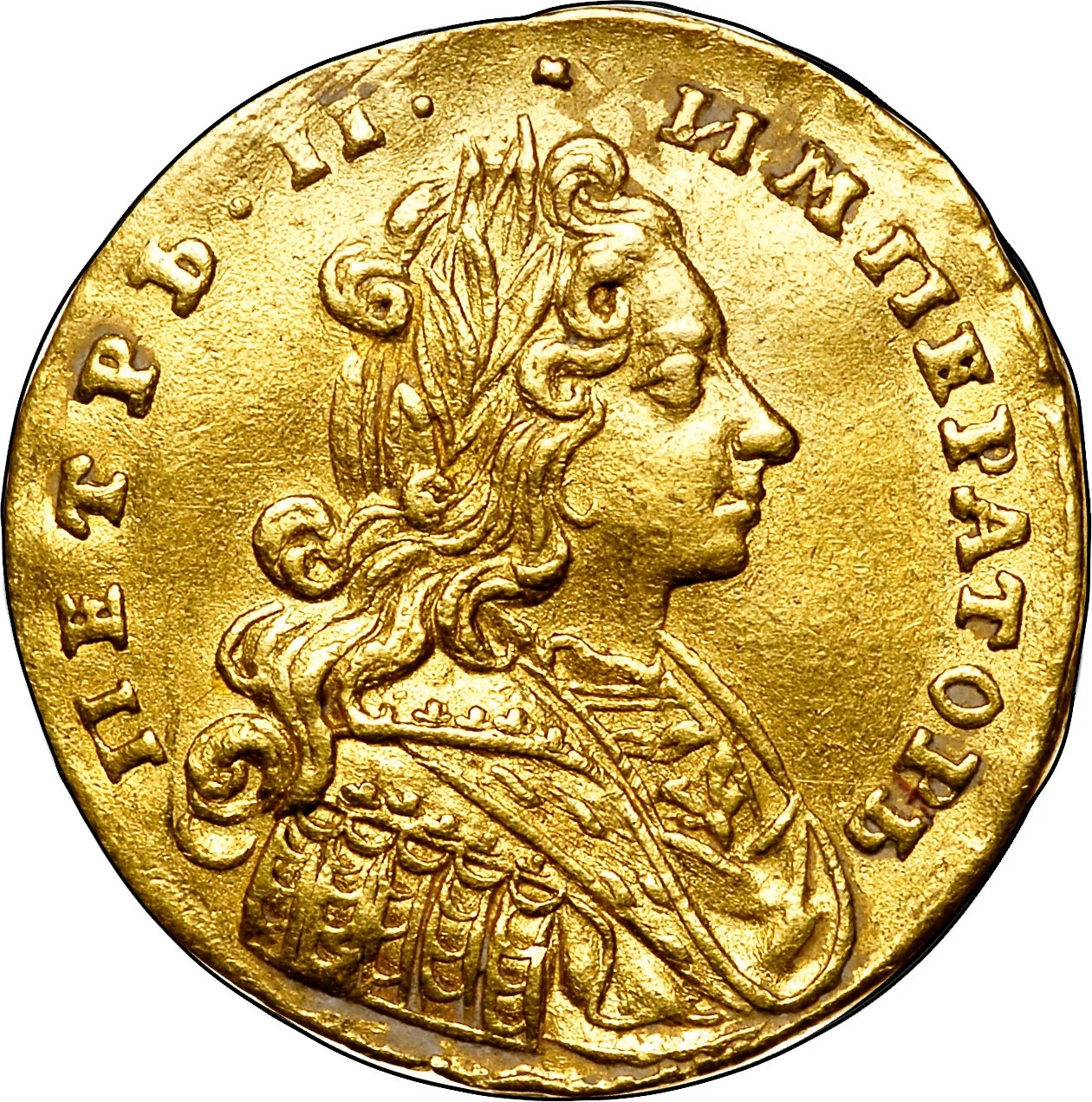
1 Ducat – Russian Empire
Russia
Context
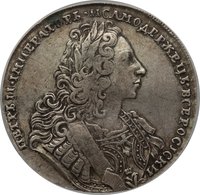
Year: 1729
Country: Russia 
Issuer: Russian Empire
Ruler: Peter II
Currency:
(1700—1917)
Demonetized: Yes
Total mintage: 17,000
Material
References
KM: #Click to copy to clipboard186
Numista: #63977
Value
Bullion value: $568.53
Obverse
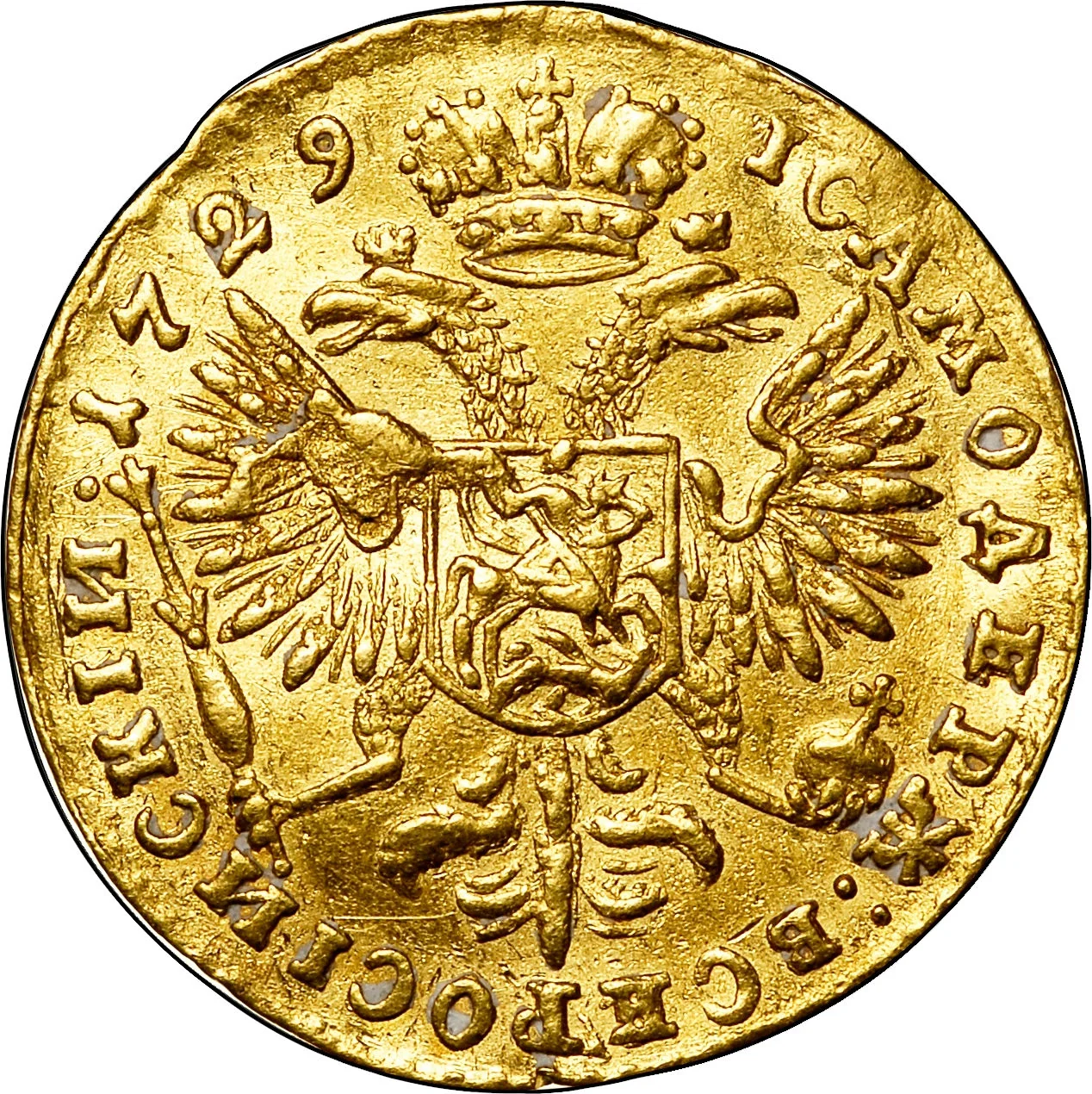
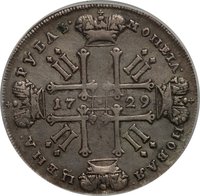
Reverse
Description:
Russian double-headed eagle with date above.
Inscription:
IСАМОДЕРЖ:ВСЕРОСIИСКIИ∙1729
Script: Cyrillic
Edge
Plain
Mintings
| Year | Mint Mark | Mintage | Quality | Collection |
|---|---|---|---|---|
| 1729 | — | 17,000 |
Historical background
By 1729, the currency system of the Russian Empire, heavily shaped by the reforms of Peter the Great, was in a state of fragile stabilization following a period of intense turmoil. Peter’s drive to fund the Great Northern War (1700–1721) had led to a drastic debasement of the silver kopeck coinage, reducing its silver content by over half. This was compounded by the introduction of large quantities of copper polushka coins, which flooded the market and caused severe inflation, public unrest, and a collapse in trust in the coinage by the war’s end.
The situation began to improve under Peter’s successor, Catherine I, and more definitively under Peter II, guided by the experienced statesman Prince Dmitry Golitsyn. A key reform in 1727 halted the damaging production of lightweight copper coins and recommitted the state to a stable, silver-based monetary system. By 1729, during the reign of the adolescent Peter II, this policy was being consolidated; the government was recalling old, debased copper currency and issuing new, heavier copper coins with a regulated value tied to silver.
Thus, the currency situation in 1729 was one of cautious recovery. The empire was moving away from the emergency wartime fiscal practices that had wrecked the monetary system and was attempting to restore public confidence through a return to harder, fuller-weight coinage. However, the system remained vulnerable, reliant on scarce domestic silver, and the underlying structural economic weaknesses meant that stability was not yet fully assured, setting the stage for future adjustments in the decades to come.
The situation began to improve under Peter’s successor, Catherine I, and more definitively under Peter II, guided by the experienced statesman Prince Dmitry Golitsyn. A key reform in 1727 halted the damaging production of lightweight copper coins and recommitted the state to a stable, silver-based monetary system. By 1729, during the reign of the adolescent Peter II, this policy was being consolidated; the government was recalling old, debased copper currency and issuing new, heavier copper coins with a regulated value tied to silver.
Thus, the currency situation in 1729 was one of cautious recovery. The empire was moving away from the emergency wartime fiscal practices that had wrecked the monetary system and was attempting to restore public confidence through a return to harder, fuller-weight coinage. However, the system remained vulnerable, reliant on scarce domestic silver, and the underlying structural economic weaknesses meant that stability was not yet fully assured, setting the stage for future adjustments in the decades to come.
✨ Legendary