

16 Ashrafi – Iran
Iran
Context
Year: 1685
Islamic (Hijri) Year: 1096
Issuer: Iran 
Ruler: Suleiman I
Currency:
(1501—1798)
Demonetized: Yes
Material
Weight: 56.37 g
Gold weight: 56.37 g
Shape: Irregular round
Composition: Gold
Magnetic: No
Technique: Hammered
References
KM: #Click to copy to clipboard230.1
Numista: #62365
Value
Bullion value: $9400.95
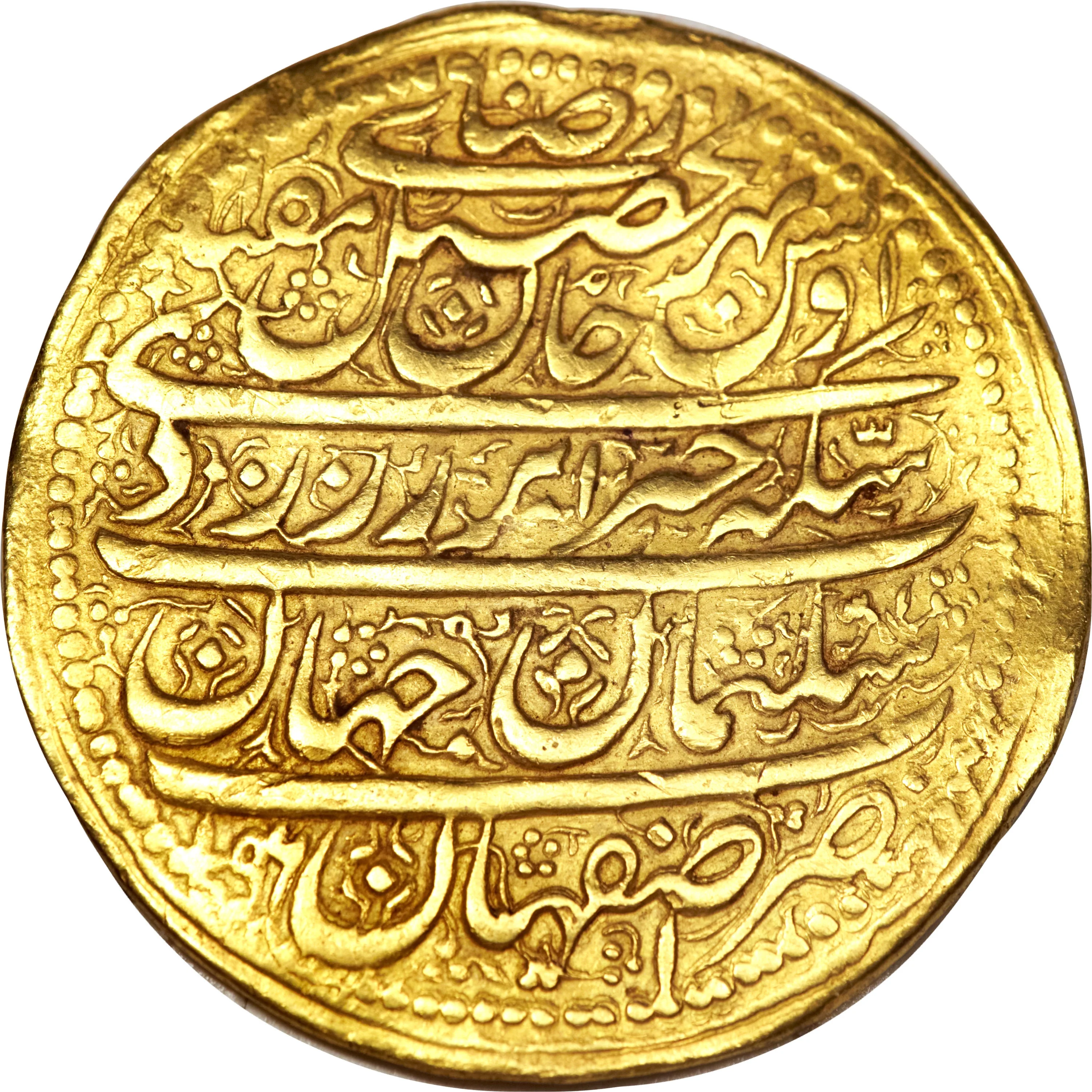
Obverse
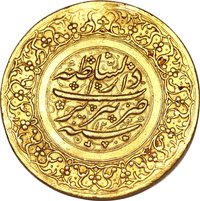
Inscription:
بهر تحصیل رضای مقتدای انس و جان
سکّه خیرات بر زر زد سُلیمان جهان
ضرب اصفهان
۱۰۹۶
سکّه خیرات بر زر زد سُلیمان جهان
ضرب اصفهان
۱۰۹۶
Script: Persian
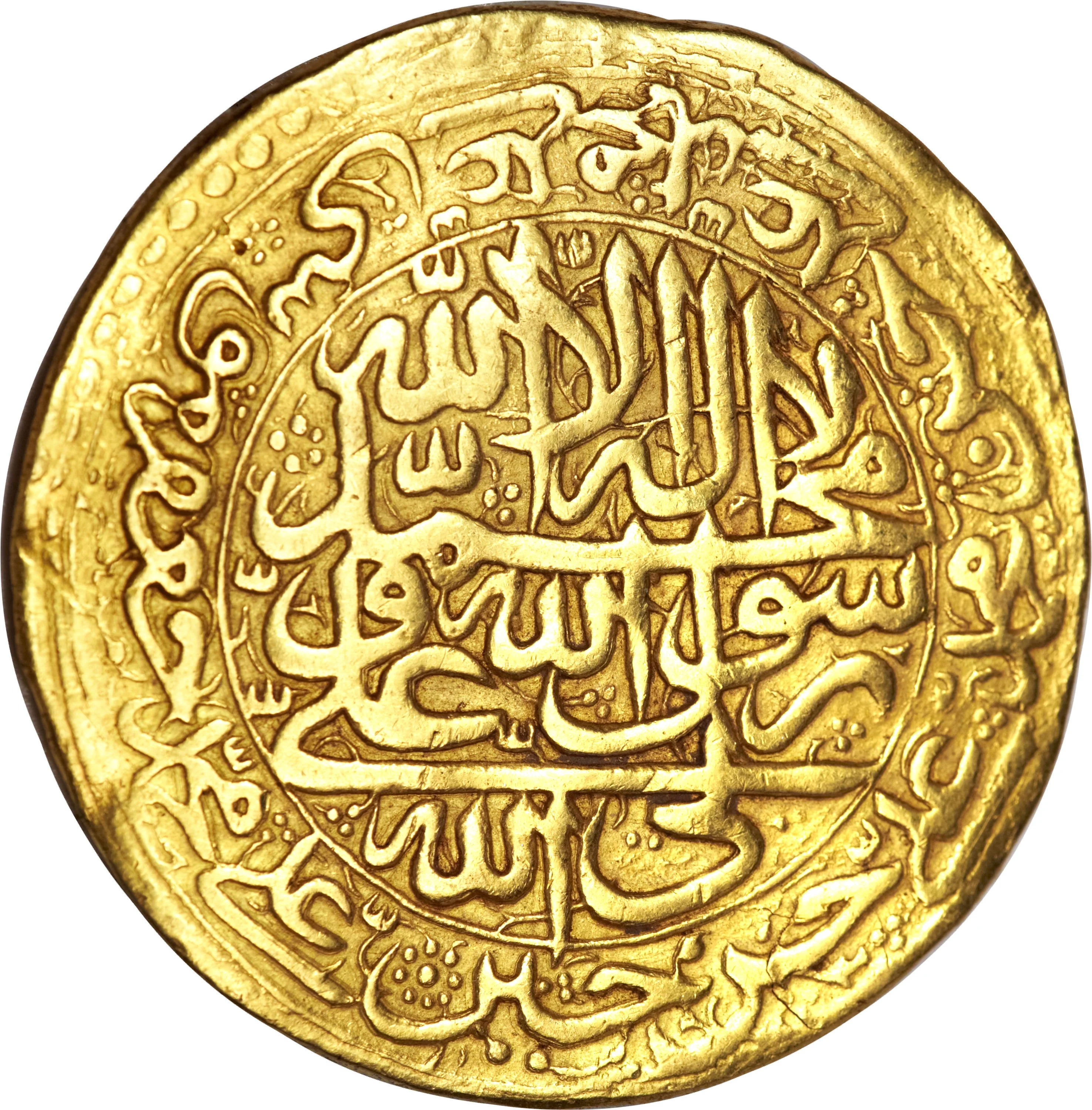
Reverse
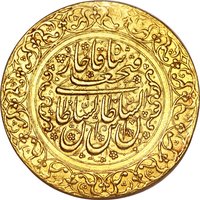
Inscription:
لا اله الا الله
محمّد رسول الله
علی ولی الله
علی حسن حسین علی محمد جعفر موسی علی محمد علی حسن محمد
محمّد رسول الله
علی ولی الله
علی حسن حسین علی محمد جعفر موسی علی محمد علی حسن محمد
Script: Persian
Edge
Mints
| Name | Mark |
|---|---|
| Isfahan | — |
Mintings
| Year | Mint Mark | Mintage | Quality | Collection |
|---|---|---|---|---|
| 1685 | — | — |
Historical background
In 1685, Iran under the Safavid dynasty (1501–1736) operated on a bimetallic monetary system, primarily utilizing silver ‘abbasi coins and gold tuman coins. The ‘abbasi, named for Shah ‘Abbas I (r. 1588–1629), who standardized the currency, was the workhorse of daily commerce. However, the period was marked by significant currency instability and debasement. A long-term decline in the quality and weight of silver coinage had been ongoing for decades, driven by fiscal pressures from costly military campaigns, court extravagance, and a shortage of fresh bullion from mines. This resulted in a loss of public confidence and frequent fluctuations in the exchange rates between coins of different provinces and mints.
The currency situation was further complicated by the widespread circulation of foreign coins, particularly Ottoman and Mughal rupees and European gold pieces, which were often preferred for their reliable silver content and weight. This practice was especially common in port cities and along trade routes, undermining the authority of the royal mint. Internally, provincial governors sometimes issued their own coinage, leading to a lack of uniformity. The state’s primary response to revenue shortfalls was often to further reduce the silver content in newly minted coins, a short-term fix that exacerbated inflation, harmed long-distance trade, and created a complex hierarchy of old "heavy" coins and new "light" coins.
Consequently, the monetary landscape in 1685 was one of fragmentation and erosion. While the Safavid Empire was still a major economic power, its currency system was under severe strain. The debasement acted as a hidden tax, eroding purchasing power and creating economic uncertainty for merchants and peasants alike. This financial weakness was a symptom of broader administrative challenges that would, within a few decades, contribute to the empire's rapid collapse in the 1720s.
The currency situation was further complicated by the widespread circulation of foreign coins, particularly Ottoman and Mughal rupees and European gold pieces, which were often preferred for their reliable silver content and weight. This practice was especially common in port cities and along trade routes, undermining the authority of the royal mint. Internally, provincial governors sometimes issued their own coinage, leading to a lack of uniformity. The state’s primary response to revenue shortfalls was often to further reduce the silver content in newly minted coins, a short-term fix that exacerbated inflation, harmed long-distance trade, and created a complex hierarchy of old "heavy" coins and new "light" coins.
Consequently, the monetary landscape in 1685 was one of fragmentation and erosion. While the Safavid Empire was still a major economic power, its currency system was under severe strain. The debasement acted as a hidden tax, eroding purchasing power and creating economic uncertainty for merchants and peasants alike. This financial weakness was a symptom of broader administrative challenges that would, within a few decades, contribute to the empire's rapid collapse in the 1720s.
✨ Legendary