

20 pesos – Guinea-Bissau
Add to wishlist
Circulating commemorative coins
Commemoration: F.A.O.
Guinea-Bissau
Context
Year: 1977
Issuer: Guinea-Bissau
Ruler: Republic
Currency:
(1975—1997)
Demonetization: May 1997
Total mintage: 2,500,000
Material
References
KM: #
Numista: #11940
Value
Exchange value: 20 GWP
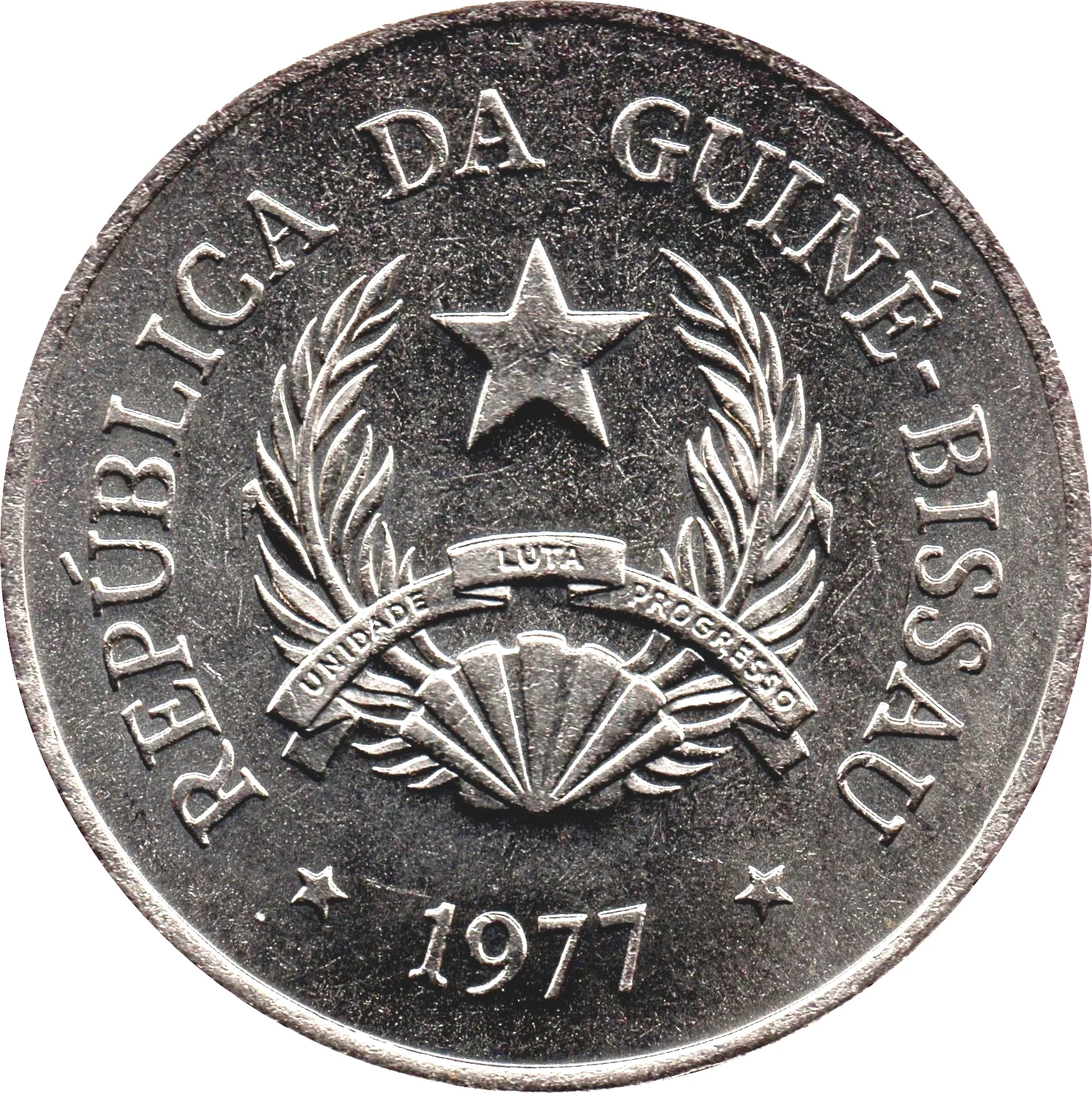
Obverse
Description:
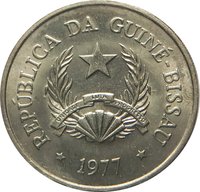
National arms, date beneath.
Inscription:
REPÚBLICA DA GUINÉ-BISSAU
UNIDADE LUTA PROGRESSO
* 1977 *
UNIDADE LUTA PROGRESSO
* 1977 *
Translation:
REPUBLIC OF GUINEA-BISSAU
UNITY STRUGGLE PROGRESS
* 1977 *
UNITY STRUGGLE PROGRESS
* 1977 *
Script: Latin
Language: Portuguese
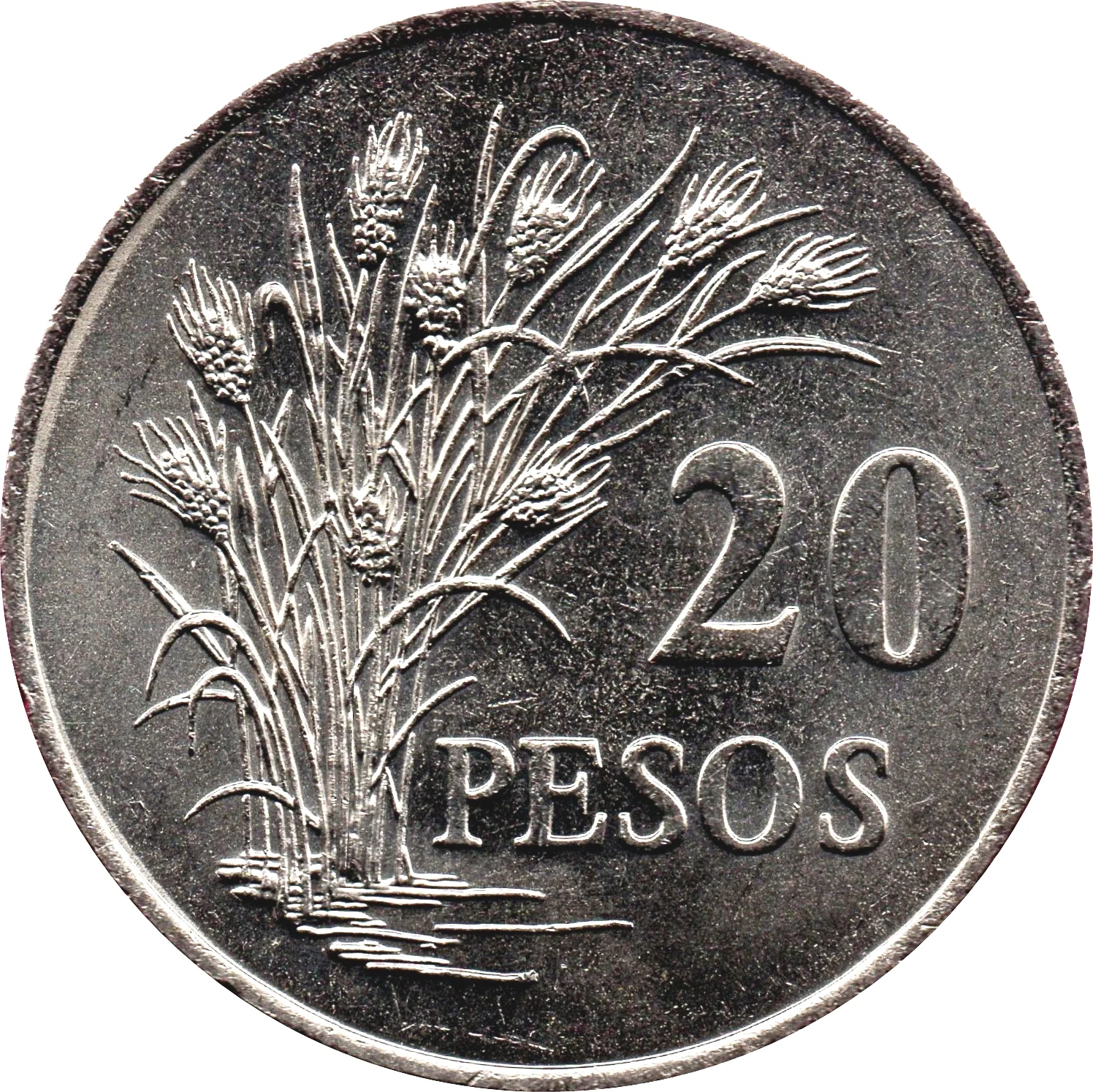
Reverse
Edge
Reeded
Categories
| Organization> FAO |
| Symbols> Coat of Arms |
Mints
| Name | Mark |
|---|---|
| Royal Mint | — |
Mintings
| Year | Mint Mark | Mintage | Quality | Collection |
|---|---|---|---|---|
| 1977 | — | 2,500,000 |
Historical background
Following independence from Portugal in 1974, Guinea-Bissau entered 1977 grappling with the profound economic and monetary legacy of colonial rule. The country remained within the "Escudo Zone," using the Guinea-Bissau peso, which was pegged to and fully convertible with the Portuguese escudo. This arrangement provided a degree of monetary stability but critically tied the fledgling nation's currency to the economic fortunes and policies of its former colonizer. Furthermore, the economy was heavily damaged by the war for independence, reliant on a single cash crop (cashews), and suffered from a severe lack of infrastructure and skilled personnel, placing immense strain on the state's finances.
The government of President Luís Cabral, influenced by socialist policies, sought greater economic autonomy and control. A significant step in 1977 was the nationalization of the banking sector, bringing the Banco Nacional da Guiné-Bissau under full state control. This move was intended to direct credit toward national development goals and break from foreign financial dominance. However, the currency itself remained unchanged, and the fundamental challenges of a weak productive base, coupled with a large and inefficient state sector, began to foster inflationary pressures and budget deficits.
Therefore, the currency situation in 1977 was one of transitional dependence. While political and banking structures were being aggressively reshaped to assert sovereignty, the monetary unit itself remained an inherited colonial instrument, pegged to the Portuguese escudo. This created a contradictory landscape where the tools for independent economic management were being assembled, but the actual currency was still externally anchored, setting the stage for future monetary reforms that would eventually lead to the creation of the Guinea-Bissau peso's successor, the CFA franc, in 1997.
The government of President Luís Cabral, influenced by socialist policies, sought greater economic autonomy and control. A significant step in 1977 was the nationalization of the banking sector, bringing the Banco Nacional da Guiné-Bissau under full state control. This move was intended to direct credit toward national development goals and break from foreign financial dominance. However, the currency itself remained unchanged, and the fundamental challenges of a weak productive base, coupled with a large and inefficient state sector, began to foster inflationary pressures and budget deficits.
Therefore, the currency situation in 1977 was one of transitional dependence. While political and banking structures were being aggressively reshaped to assert sovereignty, the monetary unit itself remained an inherited colonial instrument, pegged to the Portuguese escudo. This created a contradictory landscape where the tools for independent economic management were being assembled, but the actual currency was still externally anchored, setting the stage for future monetary reforms that would eventually lead to the creation of the Guinea-Bissau peso's successor, the CFA franc, in 1997.
🌱 Common