

1 Grosso – Papal States
Vatican City
Context
Years: 1743–1744
Country: Vatican City 
Issuer: Papal States
Ruler: Benedict XIV
Currency:
(1534—1835)
Demonetization: 1861
Material
References
KM: #Click to copy to clipboard949
Numista: #118046
Value
Bullion value: $3.51
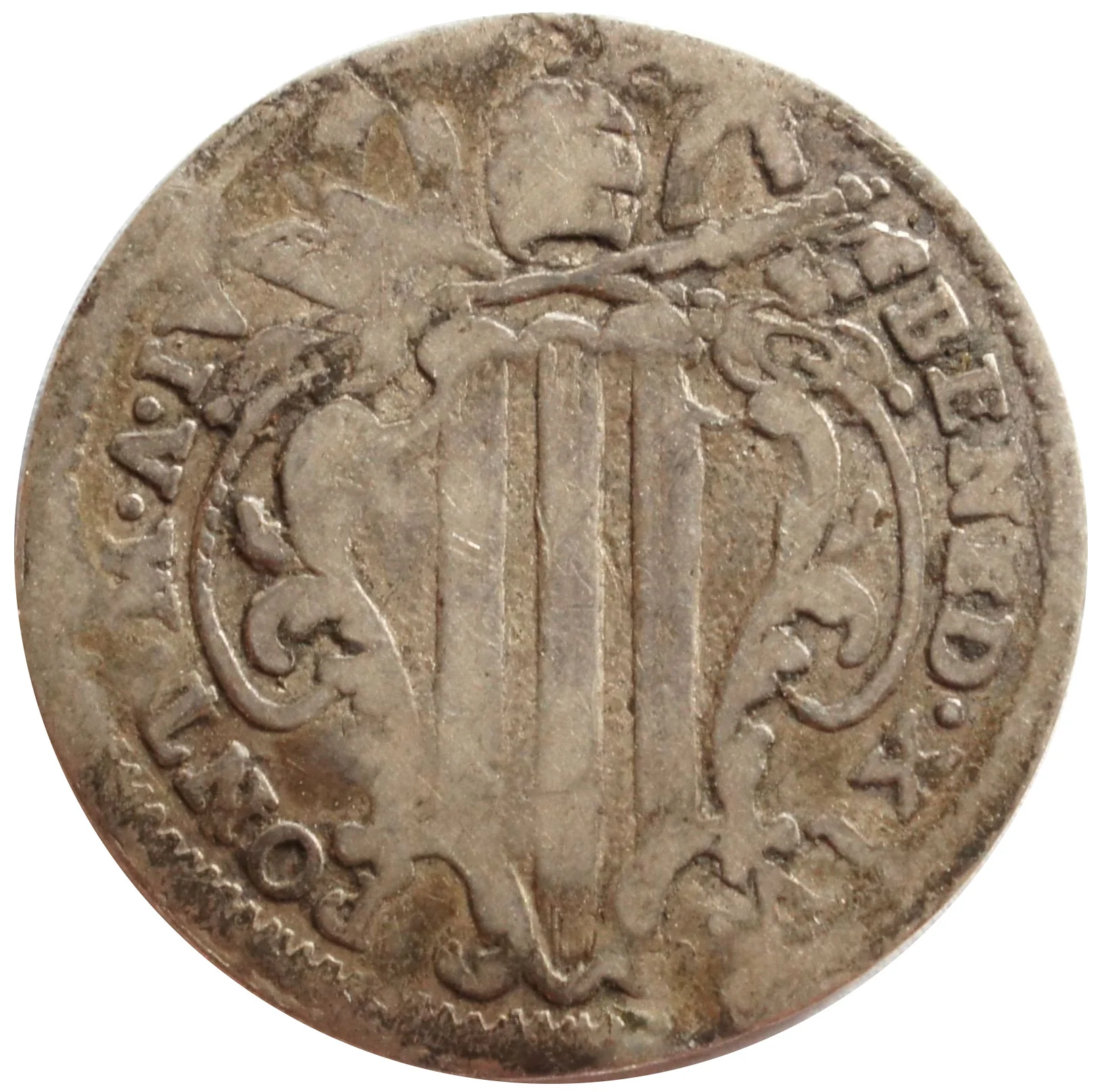
Obverse
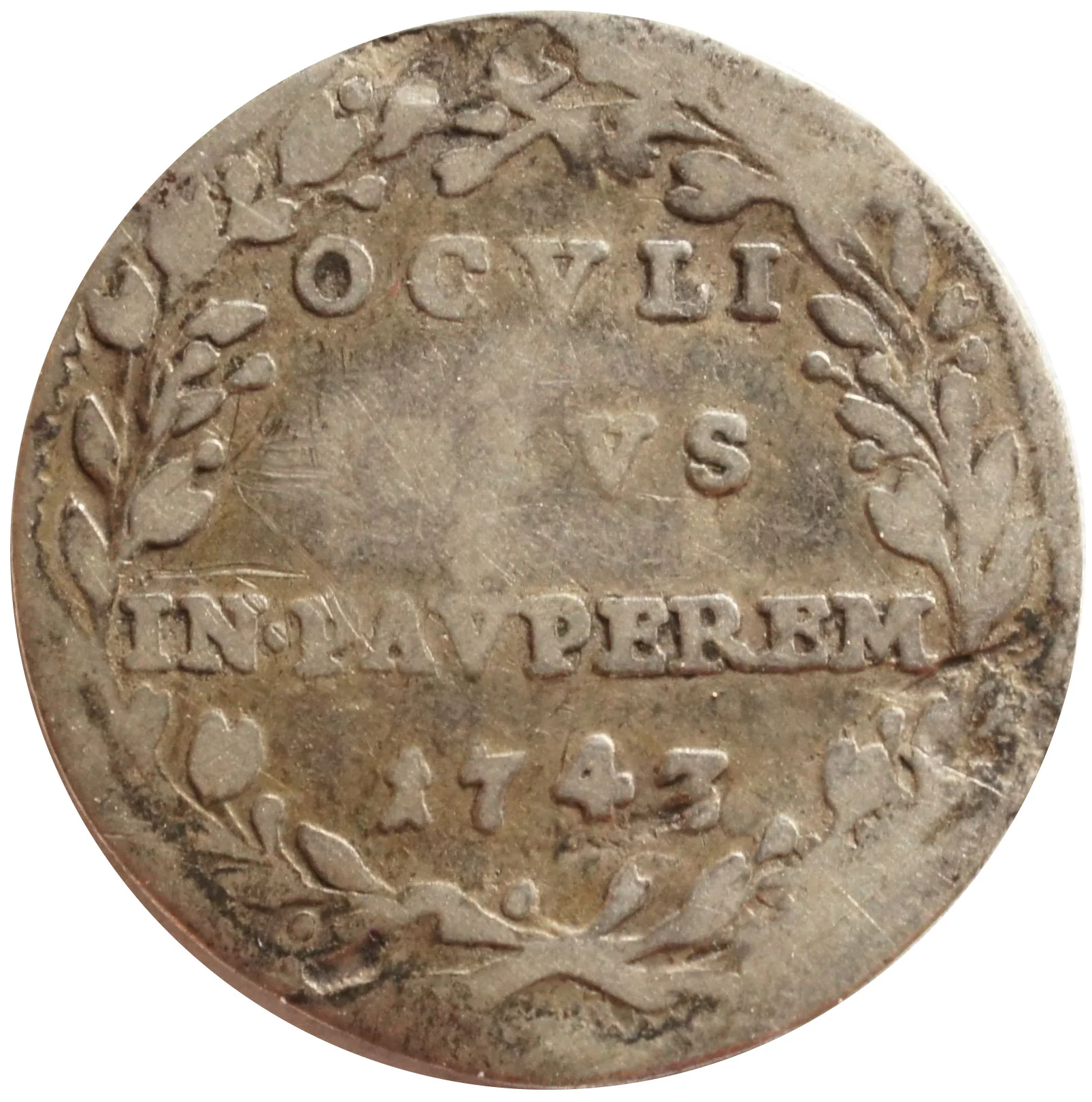
Reverse
Description:
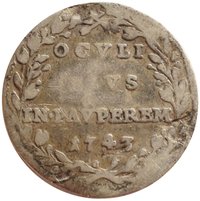
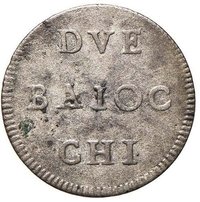
Inscription and date within wreath.
Inscription:
OCVLI
EIVS
IN·PAVPEREM
1743
EIVS
IN·PAVPEREM
1743
Script: Latin
Edge
Plain
Mints
| Name | Mark |
|---|---|
| Rome | — |
Mintings
| Year | Mint Mark | Mintage | Quality | Collection |
|---|---|---|---|---|
| 1743 | — | — | ||
| 1744 | — | — |
Historical background
In 1743, the Papal States under Pope Benedict XIV faced a complex and challenging monetary situation typical of the fragmented Italian peninsula. The state lacked a unified, authoritative currency, leading to a chaotic circulation of diverse coins. Alongside the official papal issues from mints in Rome and Bologna, a plethora of foreign coins—especially Spanish reales and doppie from Genoa and Florence—circulated widely. This created a system where exchange rates fluctuated based on the perceived metal content and wear of individual coins, complicating trade and tax collection.
The core problem was widespread debasement and counterfeiting. The intrinsic value of the silver in many coins, particularly the lower-denomination baiocco and grosso, had been eroded over time by successive administrations seeking seigniorage revenue. Furthermore, counterfeit coins, often of inferior alloy, flooded the market from neighboring states and illegal mints, undermining public trust in the currency. This "bad money" drove out the "good," as holders hoarded full-weight coins, leaving the debased and counterfeit ones in active circulation, which in turn drove up prices and caused economic instability.
Pope Benedict XIV, recognizing the crisis, initiated significant but incremental reforms during this period. His administration began a meticulous program of recalling old, worn, and suspect coinage and minting new, standardized issues with more reliable precious metal content. The most notable step was the introduction of the Scudo Romano in 1746, a silver coin intended to become a stable monetary unit. Thus, 1743 represents a pivotal moment of diagnosis and the beginning of a concerted, if protracted, effort to restore monetary integrity and central papal authority over the currency after decades of decline.
The core problem was widespread debasement and counterfeiting. The intrinsic value of the silver in many coins, particularly the lower-denomination baiocco and grosso, had been eroded over time by successive administrations seeking seigniorage revenue. Furthermore, counterfeit coins, often of inferior alloy, flooded the market from neighboring states and illegal mints, undermining public trust in the currency. This "bad money" drove out the "good," as holders hoarded full-weight coins, leaving the debased and counterfeit ones in active circulation, which in turn drove up prices and caused economic instability.
Pope Benedict XIV, recognizing the crisis, initiated significant but incremental reforms during this period. His administration began a meticulous program of recalling old, worn, and suspect coinage and minting new, standardized issues with more reliable precious metal content. The most notable step was the introduction of the Scudo Romano in 1746, a silver coin intended to become a stable monetary unit. Thus, 1743 represents a pivotal moment of diagnosis and the beginning of a concerted, if protracted, effort to restore monetary integrity and central papal authority over the currency after decades of decline.
✨ Legendary