

1 Giulio – Papal States
Vatican City
Context
Year: 1701
Country: Vatican City 
Issuer: Papal States
Ruler: Clement XI
Currency:
(1534—1835)
Demonetized: Yes
Material
References
KM: #Click to copy to clipboardB660
Numista: #117934
Value
Bullion value: $7.95
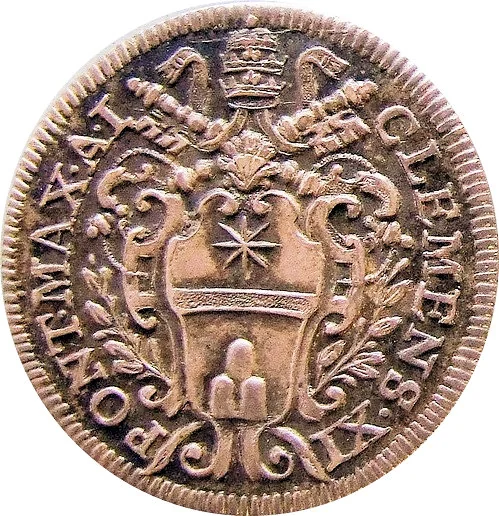
Obverse
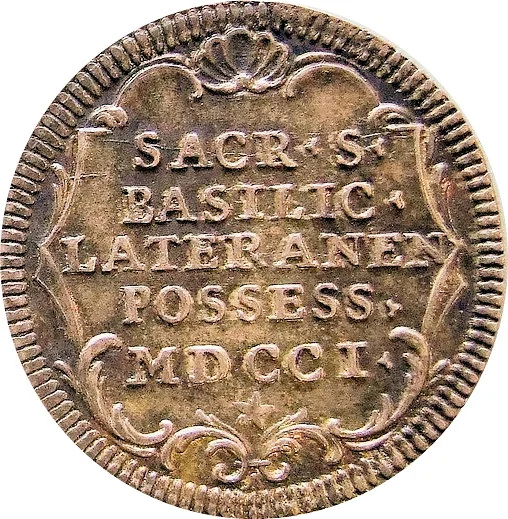
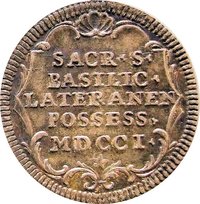
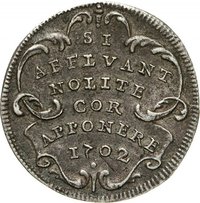
Reverse
Description:
Inscription and date in Roman numerals within a cartouche.
Inscription:
SACR·S·
BASILIC·
LATERANEN
POSSESS·
MDCCI·
BASILIC·
LATERANEN
POSSESS·
MDCCI·
Script: Latin
Edge
Mintings
| Year | Mint Mark | Mintage | Quality | Collection |
|---|---|---|---|---|
| 1701 | — | — |
Historical background
In 1701, the Papal States operated under a complex and debased monetary system, a legacy of chronic fiscal strain. The primary unit was the papal scudo, a silver coin that existed alongside a plethora of regional and historical coins, including the giulio, baiocco, and grosso. However, decades of financial pressure, often to fund lavish artistic projects, military needs, and administrative costs, had led successive popes to systematically reduce the silver content in these coins. This practice of debasement meant the nominal value of a coin far exceeded its intrinsic metal worth, leading to instability and a loss of confidence in the currency both within the states and in international trade.
The situation was further complicated by the circulation of foreign coins, particularly Spanish pieces of eight and gold coins from other Italian and European states, which were often preferred for their reliable metal content. This effectively created a dual system where high-value transactions were conducted in stable foreign gold or full-weight silver, while the debased local coinage was used for everyday commerce, causing frequent exchange disputes. The papal treasury, the Camera Apostolica, struggled to manage this fragmented system and control the influx of foreign currency, which fluctuated with political and economic events across Europe.
Pope Clement XI, reigning in 1701, inherited these severe monetary challenges amidst the wider War of the Spanish Succession, which disrupted trade and exerted new fiscal pressures on the region. While some administrative reforms were attempted, a comprehensive recoinage or monetary unification was not achieved. Thus, the currency situation remained characterized by internal debasement, external dependence on foreign coin, and general economic fragility, reflecting the broader political and financial decline of the Papal States in the early 18th century.
The situation was further complicated by the circulation of foreign coins, particularly Spanish pieces of eight and gold coins from other Italian and European states, which were often preferred for their reliable metal content. This effectively created a dual system where high-value transactions were conducted in stable foreign gold or full-weight silver, while the debased local coinage was used for everyday commerce, causing frequent exchange disputes. The papal treasury, the Camera Apostolica, struggled to manage this fragmented system and control the influx of foreign currency, which fluctuated with political and economic events across Europe.
Pope Clement XI, reigning in 1701, inherited these severe monetary challenges amidst the wider War of the Spanish Succession, which disrupted trade and exerted new fiscal pressures on the region. While some administrative reforms were attempted, a comprehensive recoinage or monetary unification was not achieved. Thus, the currency situation remained characterized by internal debasement, external dependence on foreign coin, and general economic fragility, reflecting the broader political and financial decline of the Papal States in the early 18th century.
✨ Legendary