

1 Kopeck – Russian Empire
Russia
Context

Material
References
KM: #Click to copy to clipboard135
Numista: #101763
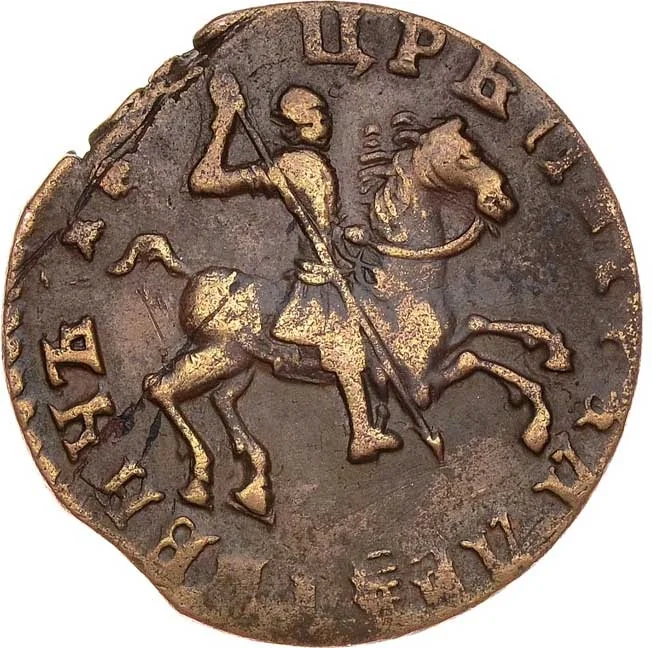
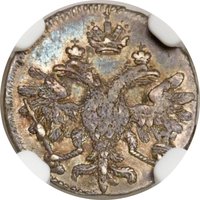
Obverse
Description:
Saint George slaying the dragon.
Inscription:
ЦРЬ ∙ ПЕТРЪ ∙ АЛЕѮIЕВИЧЪ *
Script: Cyrillic
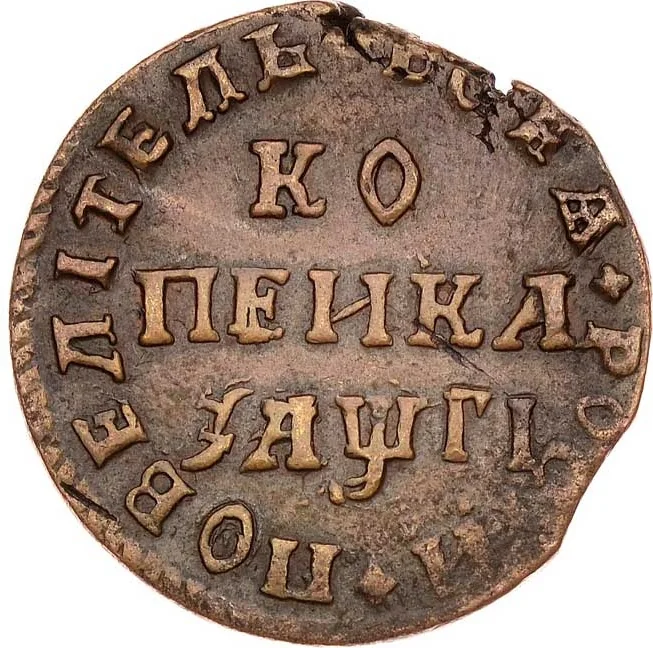
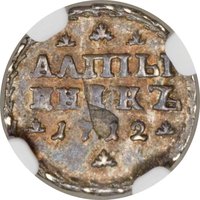
Reverse
Description:
Denomination, date in Cyrillic numerals.
Inscription:
ВСЕѦ + РОСIИ + ПОВЕЛIТЕЛЬ +
КО
ПЕИКА
҂АΨГI
КО
ПЕИКА
҂АΨГI
Script: Cyrillic
Edge
Plain
Mints
| Name | Mark |
|---|---|
| Kadashevsky Mint | — |
| Naberezhny Mint | — |
Mintings
| Year | Mint Mark | Mintage | Quality | Collection |
|---|---|---|---|---|
| 1711 | — | — | ||
| 1712 | — | — | ||
| 1713 | — | — |
Historical background
In 1711, the Russian Empire’s currency system was in a state of profound strain, shaped directly by the immense costs of the Great Northern War (1700–1721). Tsar Peter the Great’s ambitious military reforms and the protracted conflict against Sweden demanded vast expenditures on armies, a nascent navy, and armaments. To finance this, the state treasury, under the guidance of the Governing Senate established that same year, resorted heavily to debasement—reducing the silver content in small denomination coins like kopecks and dengas. This practice, while generating short-term revenue, triggered severe inflation, eroding public trust and the real value of money.
The monetary landscape was a complex mix of old and new. Large-scale trade and state finance often relied on imported European silver thalers (known as yefimki in Russia), which were restruck into Russian coins at mints. Domestically, the primary circulating coins were the silver kopeck and its fractions, but their weight and fineness were unstable. The iconic, machine-minted copper polushka (½ kopeck) introduced in 1700 was gaining circulation, but the older, hand-stamped "wire money" kopecks from the pre-Petrine era still circulated, creating a confusing and heterogeneous system.
Overall, the year 1711 represents a critical point within Peter’s wider monetary reform. The immediate situation was one of inflationary crisis due to war finance. However, these painful measures were part of a longer, deliberate transition from a medieval coinage to a more modern, decimal-based system, which would be fully realized with the landmark reforms of 1718-1723 that introduced the ruble divided into 100 kopecks. Thus, the currency situation was volatile and difficult for the populace, but it was also a workshop for the financial modernization of the empire.
The monetary landscape was a complex mix of old and new. Large-scale trade and state finance often relied on imported European silver thalers (known as yefimki in Russia), which were restruck into Russian coins at mints. Domestically, the primary circulating coins were the silver kopeck and its fractions, but their weight and fineness were unstable. The iconic, machine-minted copper polushka (½ kopeck) introduced in 1700 was gaining circulation, but the older, hand-stamped "wire money" kopecks from the pre-Petrine era still circulated, creating a confusing and heterogeneous system.
Overall, the year 1711 represents a critical point within Peter’s wider monetary reform. The immediate situation was one of inflationary crisis due to war finance. However, these painful measures were part of a longer, deliberate transition from a medieval coinage to a more modern, decimal-based system, which would be fully realized with the landmark reforms of 1718-1723 that introduced the ruble divided into 100 kopecks. Thus, the currency situation was volatile and difficult for the populace, but it was also a workshop for the financial modernization of the empire.

✨ Legendary