

8 reales – Bolivia
Add to wishlist
Bolivia
Context
Years: 1746–1760
Issuer: Bolivia
Ruler: Ferdinand VI
Currency:
(1574—1825)
Demonetized: Yes
Total mintage: 1,659,506
Material
References
KM: #
Numista: #61928
Value
Bullion value: $60.89
Obverse
Description:
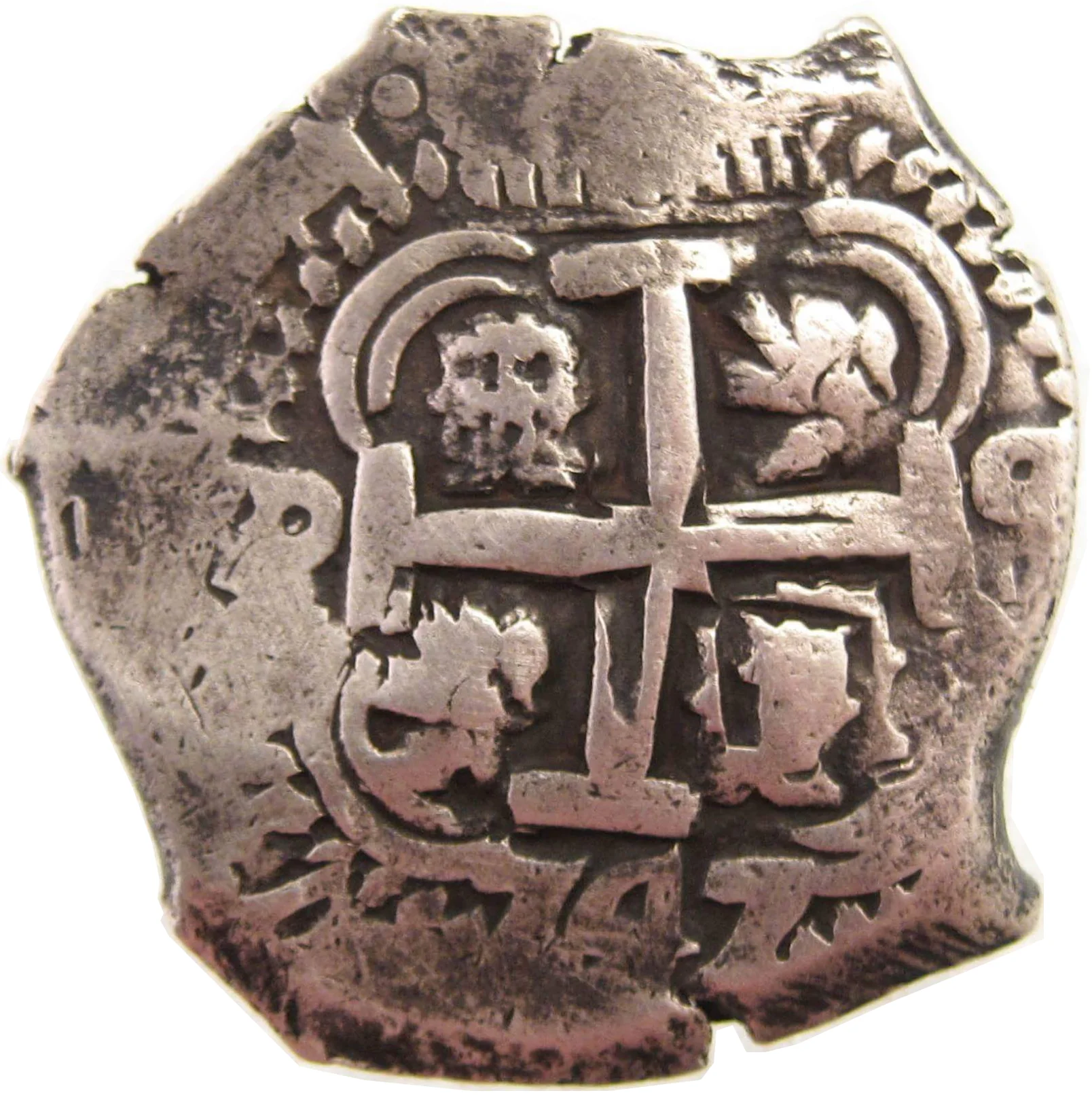
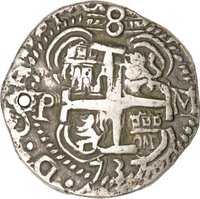
Cross potent with lions and castles, within a partial tressure. Mint and assayers' marks flank the cross. "8" above, date below, inside a roped border with king's legend.
Inscription:
PHILIPVS.V.D.G.HISP (1747)
FERDINANDVS.VI.D.G.HISP(ANIARVM) (1747-1760)
FERDINANDVS.VI.D.G.HISP(ANIARVM) (1747-1760)
Reverse
Description:
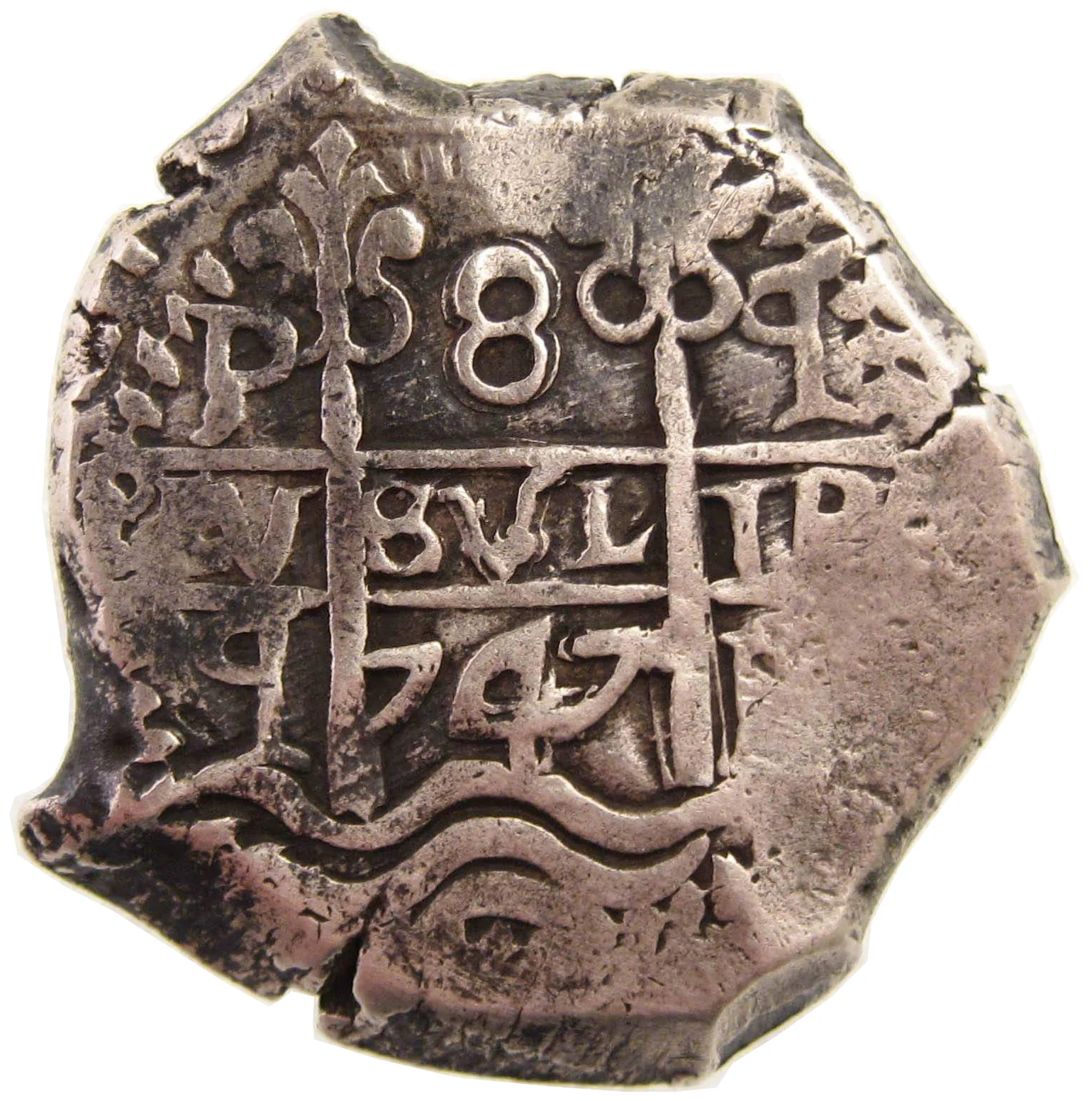
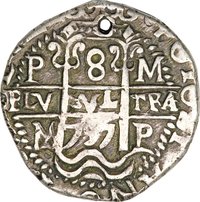
Two pillars rise from waves with a banner reading “PLVS VLTRA”. The mint mark “P” is at upper left and lower right, with assayers’ marks opposite. An “8” sits above the pillars’ fleur-de-lis below a crown. The date is between the pillars above the waves. All within a roped border and surrounding legend.
Inscription:
•POTOSI•ANO•1747•EL•PERV•
Engraver: Luis de Quintanilla
Edge
Plain with mint shearing.
Mints
| Name | Mark |
|---|---|
| Potosi | — |
Mintings
| Year | Mint Mark | Mintage | Quality | Collection |
|---|---|---|---|---|
| 1746 | q | — | ||
| 1747 | q | 1,659,506 | ||
| 1748 | q | — | ||
| 1749 | q | — | ||
| 1750 | E | — | ||
| 1750 | q | — | ||
| 1751 | E | — | ||
| 1751 | q | — | ||
| 1752 | q | — | ||
| 1753 | C | — | ||
| 1753 | q | — | ||
| 1754 | C | — | ||
| 1754 | q | — | ||
| 1755 | q | — | ||
| 1756 | q | — | ||
| 1757 | q | — | ||
| 1758 | q | — | ||
| 1759 | q | — | ||
| 1760 | — | — | ||
| 1760 | q | — |
Historical background
In 1746, the currency situation in the Province of Charcas (modern Bolivia, then part of the Viceroyalty of Peru) was characterized by a severe shortage of circulating specie (coinage), which crippled local commerce and fueled regional tensions. The primary source of silver, the legendary Cerro Rico of Potosí, continued to produce vast wealth, but this metal was systematically extracted by the Spanish Crown. Minted coins, primarily silver reales and gold escudos from the Potosí mint, were heavily taxed and shipped to Spain, leaving the local economy starved of a reliable medium of exchange. This scarcity was exacerbated by a global decline in silver production during the early 18th century and the Crown's strict mercantilist policies that limited trade within the colonies.
The vacuum created by the lack of official coinage led to the widespread use of informal and substitute currencies. In everyday transactions, particularly among the indigenous majority and in rural markets, goods were often bartered. More significantly, pasta de plata (unminted silver ingots) and even coca leaves served as de facto currency. The Spanish authorities viewed this proliferation of alternative mediums with suspicion, as it operated outside royal control and facilitated tax evasion. Furthermore, the shortage intensified a long-standing political struggle between local elites (criollos) and peninsular authorities over who should benefit from Potosí's wealth and who had the right to manage economic activity.
This monetary crisis occurred against a backdrop of major administrative change. In 1746, the newly appointed Viceroy of Peru, José Antonio Manso de Velasco, was just beginning his tenure, with the economic woes of Charcas being a pressing concern. The situation would ultimately contribute to the growing discontent that fueled major indigenous rebellies later in the century. While no immediate resolution was achieved in 1746, the persistent currency shortage underscored the deep contradictions of a colonial system that extracted raw wealth from a region while stifling its internal economic development, a tension that would define Bolivia's economic landscape for decades to come.
The vacuum created by the lack of official coinage led to the widespread use of informal and substitute currencies. In everyday transactions, particularly among the indigenous majority and in rural markets, goods were often bartered. More significantly, pasta de plata (unminted silver ingots) and even coca leaves served as de facto currency. The Spanish authorities viewed this proliferation of alternative mediums with suspicion, as it operated outside royal control and facilitated tax evasion. Furthermore, the shortage intensified a long-standing political struggle between local elites (criollos) and peninsular authorities over who should benefit from Potosí's wealth and who had the right to manage economic activity.
This monetary crisis occurred against a backdrop of major administrative change. In 1746, the newly appointed Viceroy of Peru, José Antonio Manso de Velasco, was just beginning his tenure, with the economic woes of Charcas being a pressing concern. The situation would ultimately contribute to the growing discontent that fueled major indigenous rebellies later in the century. While no immediate resolution was achieved in 1746, the persistent currency shortage underscored the deep contradictions of a colonial system that extracted raw wealth from a region while stifling its internal economic development, a tension that would define Bolivia's economic landscape for decades to come.
💎 Extremely Rare