

¼ real – Bolivia
Add to wishlist
Bolivia
Context
Years: 1796–1809
Issuer: Bolivia
Ruler: Charles IV
Currency:
(1574—1825)
Demonetized: Yes
Total mintage: 275,885
Material
References
KM: #
Numista: #61816
Value
Bullion value: $1.86
Obverse
Description:
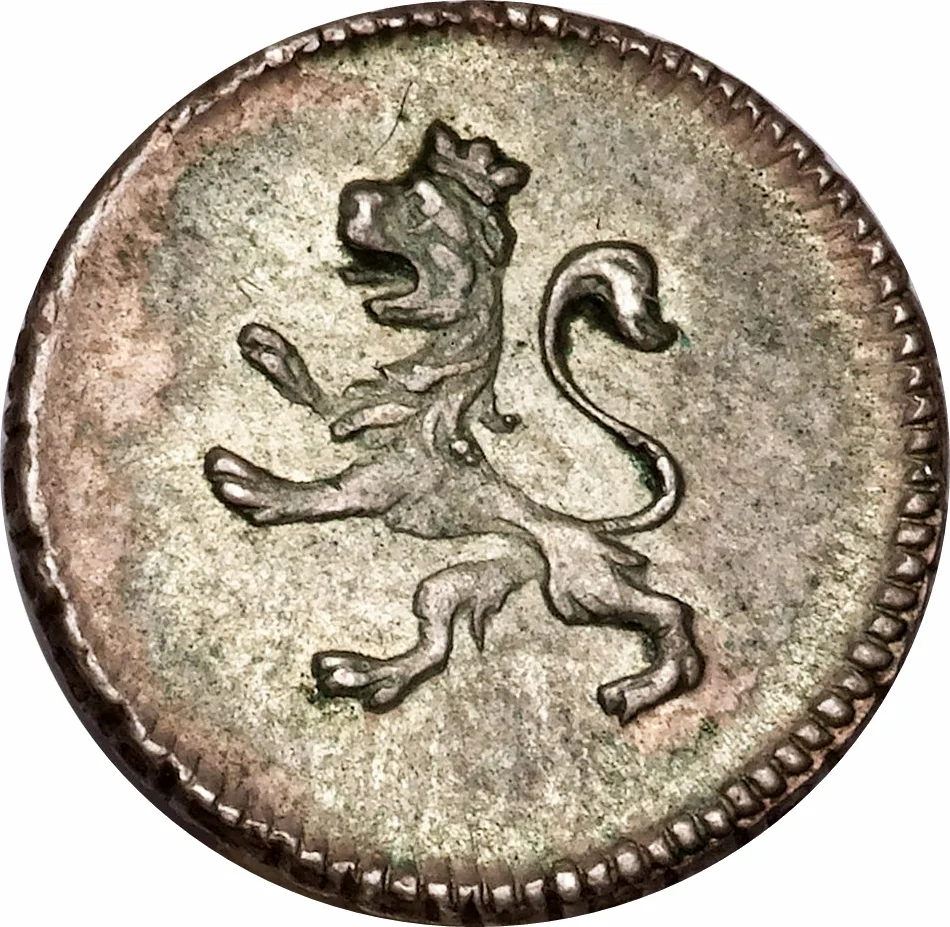
Rampant lion crowned.
Reverse
Edge
Categories
| Animal> Feline |
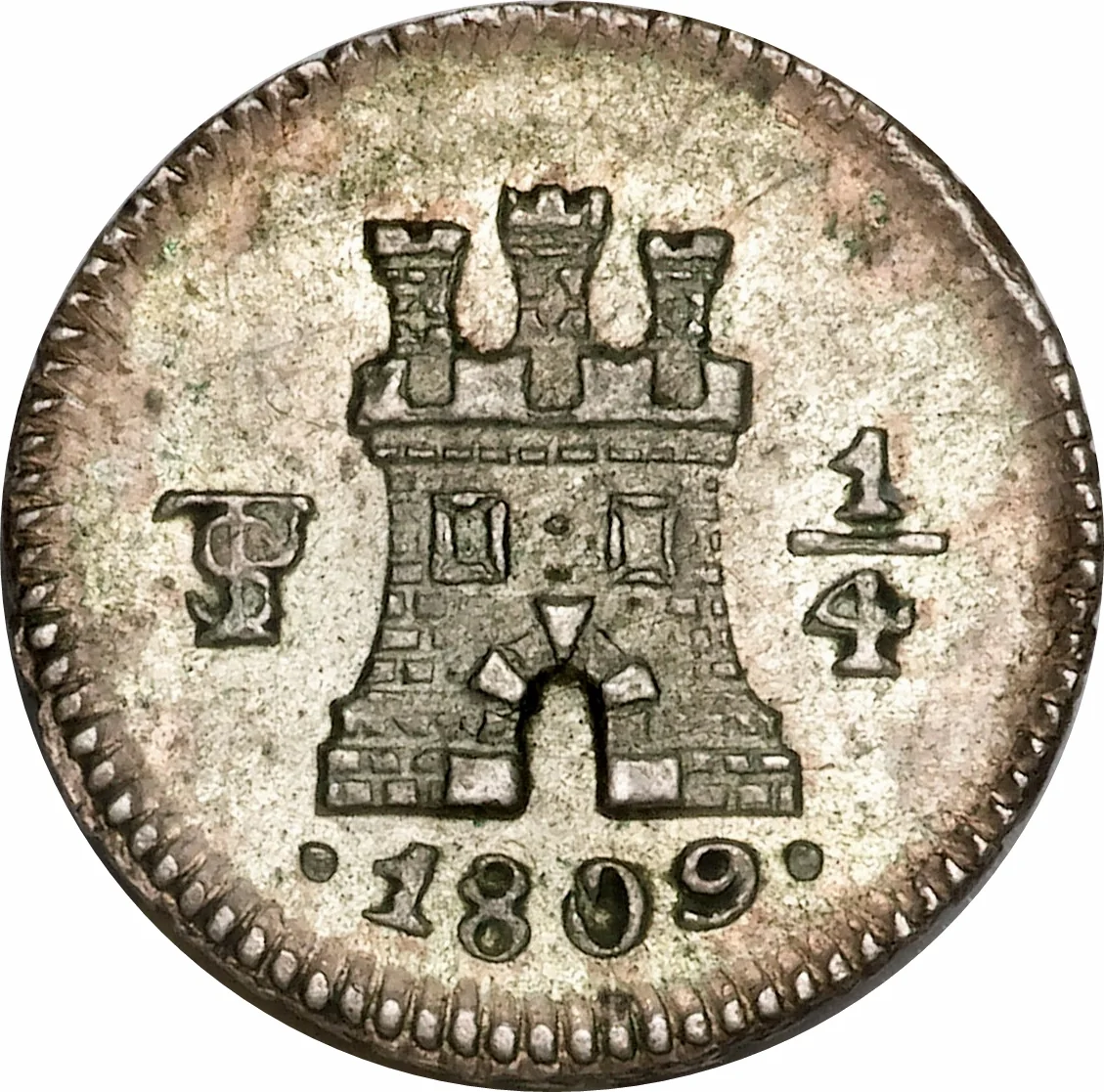
| Building> Castle or fortification |
Mintings
| Year | Mint Mark | Mintage | Quality | Collection |
|---|---|---|---|---|
| 1796 | PTS | — | ||
| 1797 | PTS | — | ||
| 1798 | PTS | — | ||
| 1799 | PTS | — | ||
| 1800 | PTS | — | ||
| 1801 | PTS | 17,000 | ||
| 1802 | PTS | 165,000 | ||
| 1803 | PTS | 29,000 | ||
| 1804 | PTS | 5,724 | ||
| 1805 | PTS | 11,000 | ||
| 1806 | PTS | 30,000 | ||
| 1807 | PTS | 10,000 | ||
| 1808 | PTS | 8,161 | ||
| 1809 | PTS | — |
Historical background
In 1796, the currency situation in the Royal Audience of Charcas (modern Bolivia) was a complex reflection of its role as the economic heart of the Spanish Viceroyalty of the Río de la Plata. The region's wealth was fundamentally anchored in the silver extracted from the legendary Cerro Rico of Potosí, which minted vast quantities of silver coins, primarily pesos and reales. These coins, stamped with the mint mark "P," circulated globally, making Potosí a central node in the world's monetary system. However, the official Spanish monetary system existed alongside a persistent reality of coin shortage in local markets, driven by the Crown's policy of exporting bullion to Spain and the high cost of imported goods.
The local economy was further complicated by the widespread use of moneda feble (weak or debased coinage). To address chronic shortages of small-denomination coins for everyday transactions, private merchants and local authorities often issued token coins or cut official coins into pieces. These practices, while pragmatic, created confusion and inefficiency, as the value of such currency was unstable and often discounted. The Spanish Crown viewed this informal system with suspicion, as it undermined royal control over the currency and facilitated tax evasion.
Ultimately, the monetary landscape of 1796 was one of stark contrast: immense mineral wealth and a globally significant mint coexisted with local scarcity and improvisation. This tension highlighted the extractive nature of colonial administration, where the primary function of Bolivian silver was to fuel the imperial treasury rather than to develop a robust, integrated local economy. These monetary frustrations contributed to the growing discontent among all social classes, foreshadowing the economic grievances that would fuel the independence movements just a few decades later.
The local economy was further complicated by the widespread use of moneda feble (weak or debased coinage). To address chronic shortages of small-denomination coins for everyday transactions, private merchants and local authorities often issued token coins or cut official coins into pieces. These practices, while pragmatic, created confusion and inefficiency, as the value of such currency was unstable and often discounted. The Spanish Crown viewed this informal system with suspicion, as it undermined royal control over the currency and facilitated tax evasion.
Ultimately, the monetary landscape of 1796 was one of stark contrast: immense mineral wealth and a globally significant mint coexisted with local scarcity and improvisation. This tension highlighted the extractive nature of colonial administration, where the primary function of Bolivian silver was to fuel the imperial treasury rather than to develop a robust, integrated local economy. These monetary frustrations contributed to the growing discontent among all social classes, foreshadowing the economic grievances that would fuel the independence movements just a few decades later.
💎 Very Rare