

Obverse
Description:
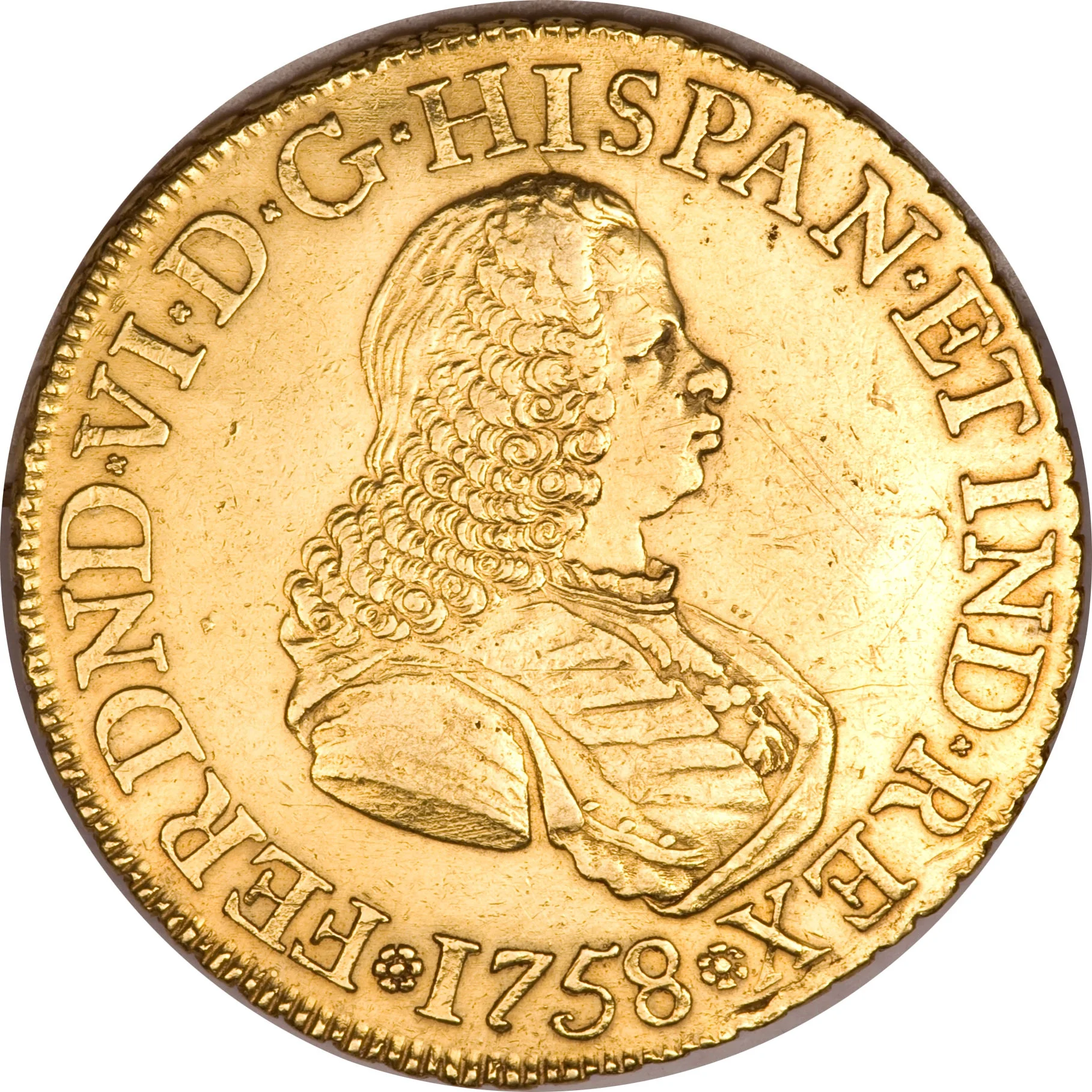
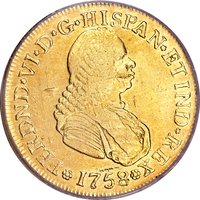
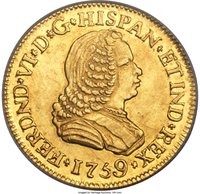
Bust of Fernando VI with legend. Date beneath.
Inscription:
FERDND VI D G HISPAN ET IND REX
1758
1758
Script: Latin
Reverse
Description:
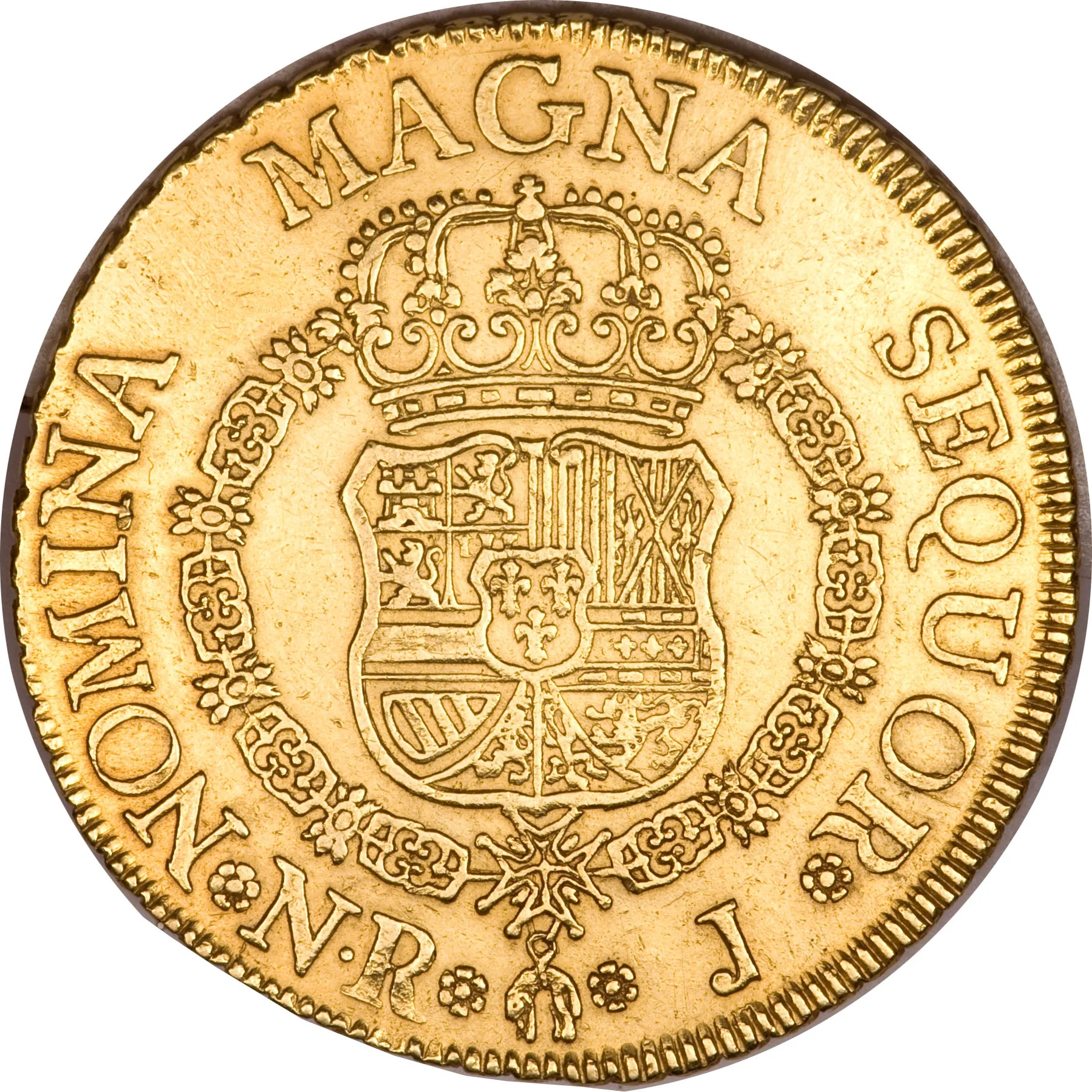
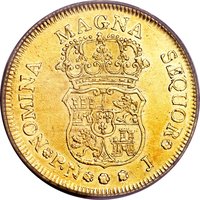
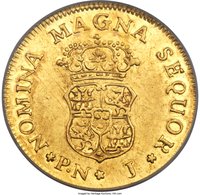
Coat of arms encircled by chain and inscription.
Inscription:
NOMINA MAGNA SEQUOR
NR J
NR J
Script: Latin
Edge
Categories
| Symbols> Coat of Arms |
| Person> Monarch |
Mints
| Name | Mark |
|---|---|
| Bogota Mint | NR |
| Casa de Moneda de Colombia | PN |
Mintings
Historical background
In 1755, the currency situation in the Kingdom of New Granada (modern-day Colombia) was characterized by chronic scarcity, rampant counterfeiting, and administrative confusion. The primary circulating coins were silver reales and gold escudos, minted at the royal mint in Santa Fe de Bogotá. However, the supply was insufficient for the needs of the local economy, a problem exacerbated by the colony's complex geography and the Crown's policy of extracting precious metals to Spain. This scarcity was compounded by the widespread circulation of clipped, worn, and counterfeit coins, which eroded public trust in the monetary system and disrupted commerce.
The Spanish Crown attempted to impose order through repeated tasas (official valuations) and the introduction of milled-edge coins from the Bogotá mint to prevent clipping. However, these efforts were undermined by the simultaneous circulation of a vast array of coins from other Spanish American mints (like Potosí and Mexico) and even foreign coins, each with fluctuating and disputed values relative to the official standard. Furthermore, the economy suffered from a severe lack of fractional currency (moneda menuda), making everyday small transactions difficult and leading to the use of crude, locally cut macuquinas (cobs) or even goods in barter.
Ultimately, the monetary chaos of 1755 reflected broader imperial weaknesses. Royal decrees from Madrid were often slow, impractical, or ignored locally, while colonial authorities struggled to balance the demands of the Crown with the realities of a frontier economy. This unstable environment persisted until more comprehensive reforms were later implemented under the Bourbon monarchs, particularly King Charles III, who sought to centralize and standardize the colonial fiscal system in the latter half of the 18th century.
The Spanish Crown attempted to impose order through repeated tasas (official valuations) and the introduction of milled-edge coins from the Bogotá mint to prevent clipping. However, these efforts were undermined by the simultaneous circulation of a vast array of coins from other Spanish American mints (like Potosí and Mexico) and even foreign coins, each with fluctuating and disputed values relative to the official standard. Furthermore, the economy suffered from a severe lack of fractional currency (moneda menuda), making everyday small transactions difficult and leading to the use of crude, locally cut macuquinas (cobs) or even goods in barter.
Ultimately, the monetary chaos of 1755 reflected broader imperial weaknesses. Royal decrees from Madrid were often slow, impractical, or ignored locally, while colonial authorities struggled to balance the demands of the Crown with the realities of a frontier economy. This unstable environment persisted until more comprehensive reforms were later implemented under the Bourbon monarchs, particularly King Charles III, who sought to centralize and standardize the colonial fiscal system in the latter half of the 18th century.
✨ Legendary