

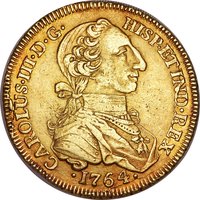
Obverse
Description:
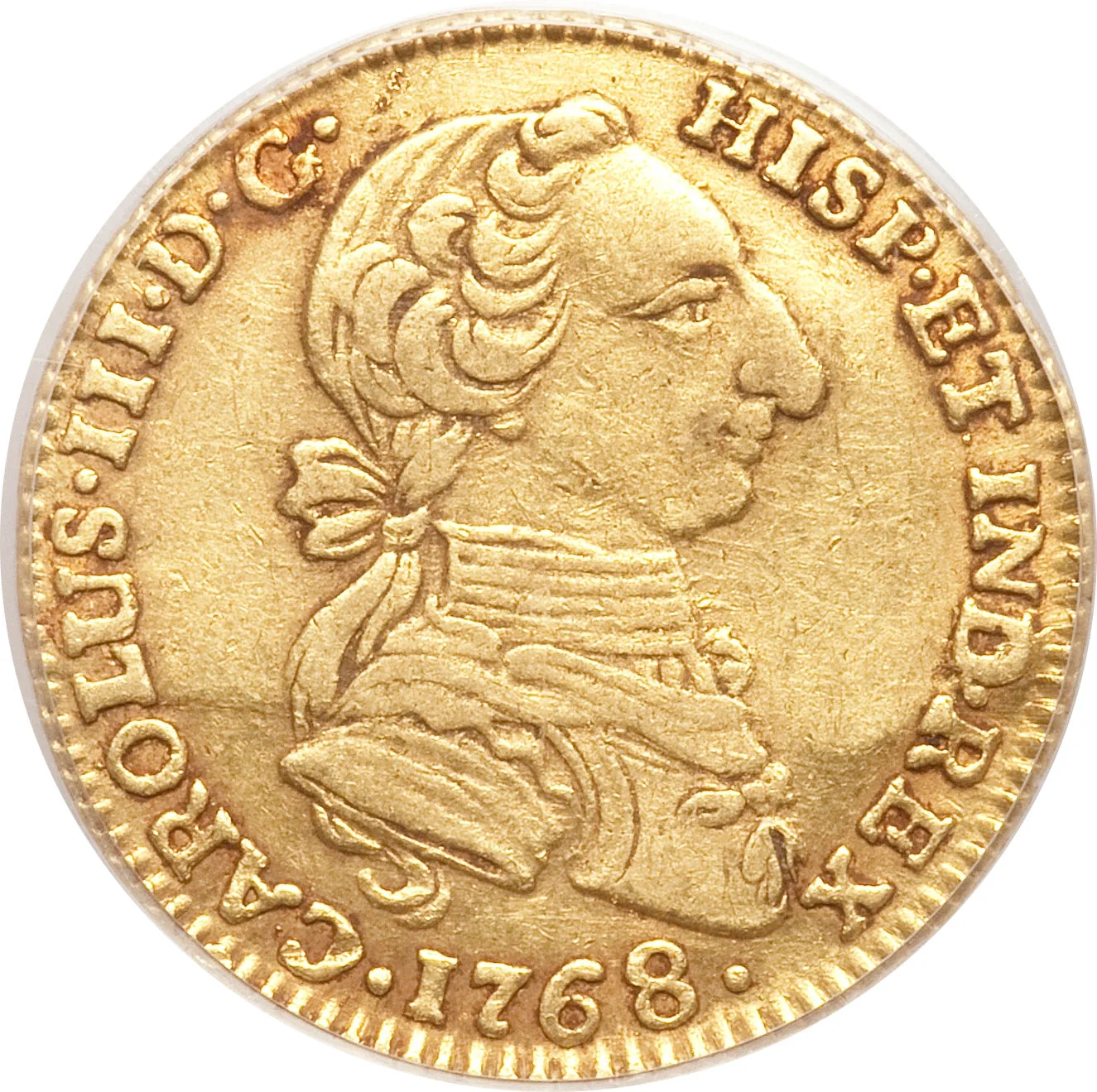
Carlos III bust with legend. Date beneath.
Inscription:
CAROLUS III D G HISP ET IND REX
1767
1767
Script: Latin
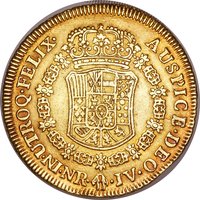
Reverse
Description:
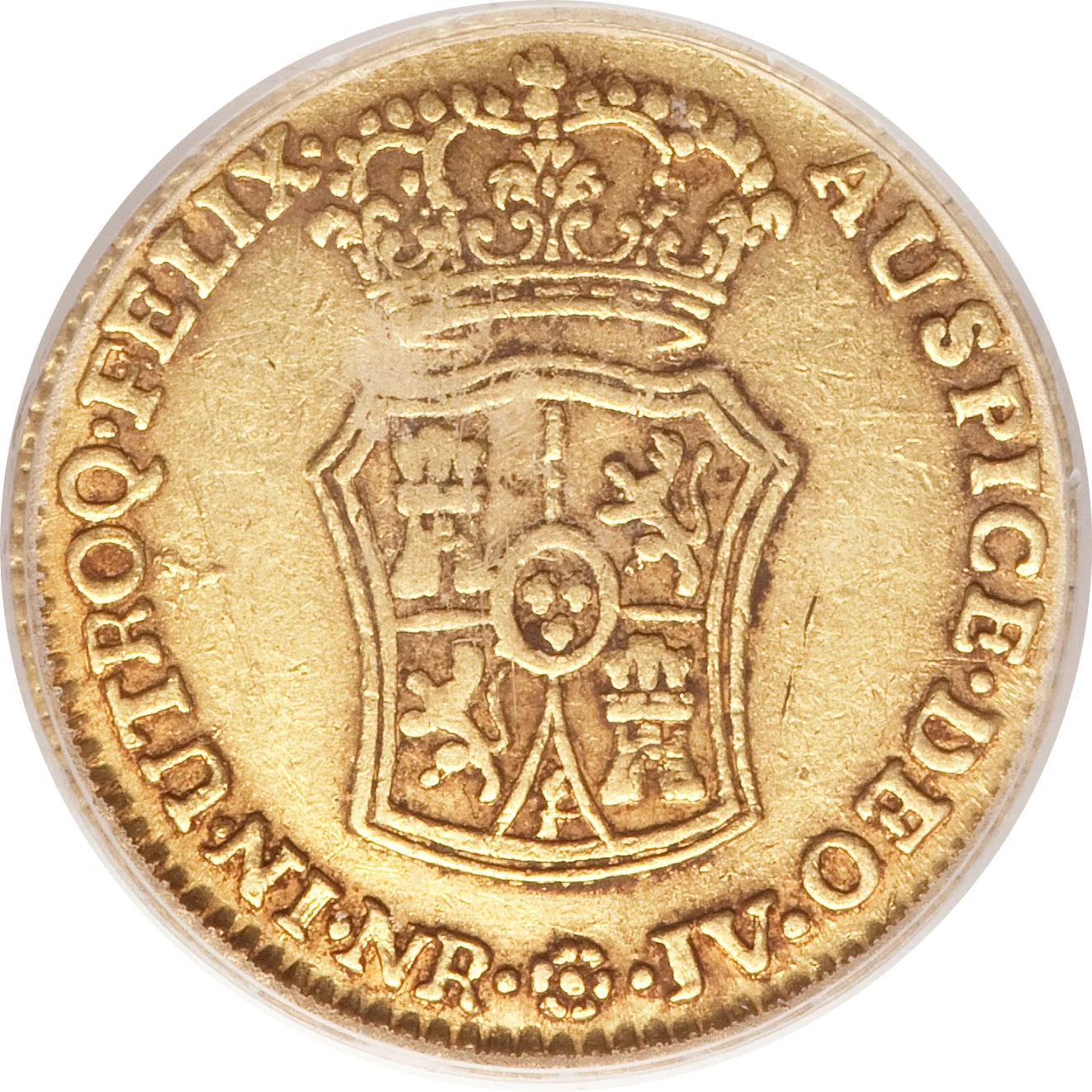
Crest encircled by inscription.
Inscription:
IN UTROQ FELIX AUSPICE DEO
NR JV
NR JV
Script: Latin
Edge
Categories
| Symbols> Coat of Arms |
| Person> Monarch |
Mints
| Name | Mark |
|---|---|
| Bogota Mint | NR |
Mintings
Historical background
In 1762, the currency situation in the Kingdom of New Granada (modern-day Colombia) was characterized by severe scarcity, complexity, and economic strain, largely a legacy of Spanish colonial policy. The primary circulating coin was the silver real, with eight reales making a peso. However, the colony suffered from a chronic shortage of specie (minted coin), as Spain's mercantilist system drained precious metals to the metropolis. Most large silver and gold shipments from mines in regions like Popayán were sent directly to Spain, leaving the local economy starved for a reliable medium of exchange. This scarcity was exacerbated by Spain's involvement in the global Seven Years' War (1756-1763), which further diverted resources and disrupted Atlantic trade.
The vacuum created by the lack of official coinage led to a proliferation of irregular and substitute currencies. To facilitate local trade, people resorted to cutting silver coins into fractional pieces, leading to the use of "macuquinas" (crudely hammered coins) and even cacao beans in some remote areas as a barter-like currency. More significantly, a substantial portion of commerce depended on moneda de la tierra (money of the land), which consisted of credit instruments, IOUs, and commodity valuations. This informal system created confusion, hindered larger transactions, and made the economy vulnerable to localized shocks and disputes over valuation.
Recognizing the paralyzing effects of this monetary chaos, the Spanish Crown had begun to implement reforms. The Bourbon monarchs sought to centralize and modernize colonial administration, including the fiscal system. Just a few years prior, in 1758, the mint in Bogotá had been renovated, and there were ongoing efforts to introduce more standardized, milled coinage to replace the irregular macuquinas. However, in 1762, these reforms were still in their early stages. The immediate situation remained one of monetary hardship, with a disjointed system of scarce official coin, crude physical cuttings, and unreliable credit—a reality that stifled economic growth and underscored the structural weaknesses of colonial rule.
The vacuum created by the lack of official coinage led to a proliferation of irregular and substitute currencies. To facilitate local trade, people resorted to cutting silver coins into fractional pieces, leading to the use of "macuquinas" (crudely hammered coins) and even cacao beans in some remote areas as a barter-like currency. More significantly, a substantial portion of commerce depended on moneda de la tierra (money of the land), which consisted of credit instruments, IOUs, and commodity valuations. This informal system created confusion, hindered larger transactions, and made the economy vulnerable to localized shocks and disputes over valuation.
Recognizing the paralyzing effects of this monetary chaos, the Spanish Crown had begun to implement reforms. The Bourbon monarchs sought to centralize and modernize colonial administration, including the fiscal system. Just a few years prior, in 1758, the mint in Bogotá had been renovated, and there were ongoing efforts to introduce more standardized, milled coinage to replace the irregular macuquinas. However, in 1762, these reforms were still in their early stages. The immediate situation remained one of monetary hardship, with a disjointed system of scarce official coin, crude physical cuttings, and unreliable credit—a reality that stifled economic growth and underscored the structural weaknesses of colonial rule.
✨ Legendary