

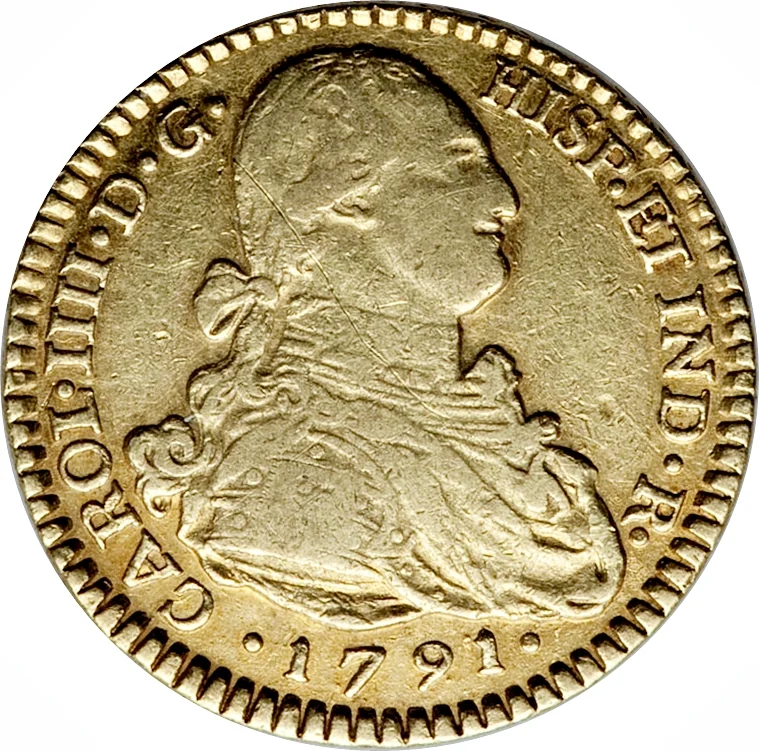
Obverse
Description:
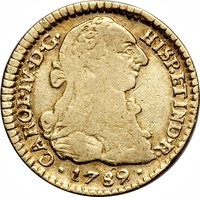
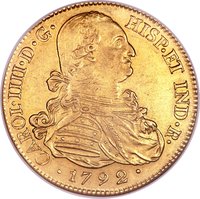
Bust of Carlos IV with legend, date below.
Inscription:
CAROL·IIII· D·G·
HISP· ET IND·R·
·1806·
HISP· ET IND·R·
·1806·
Script: Latin
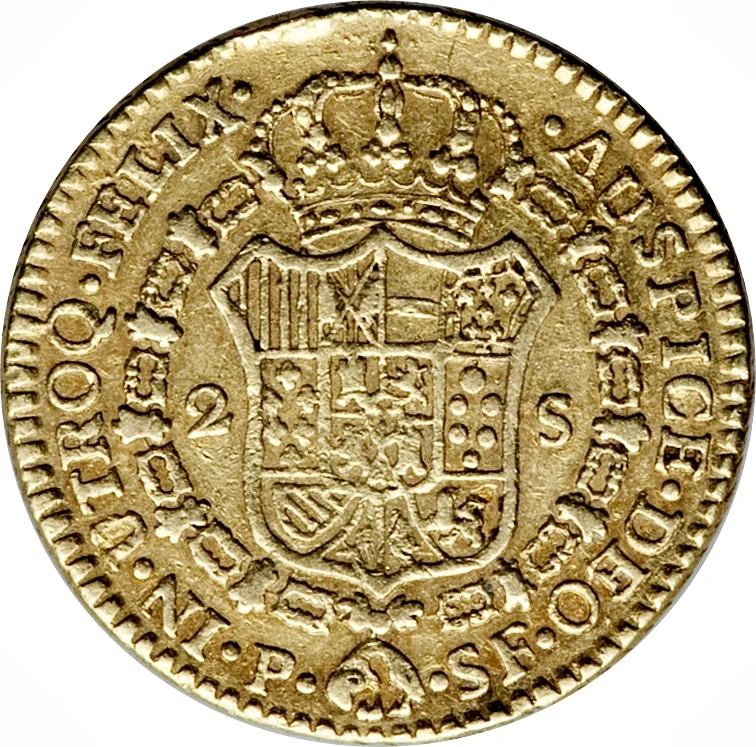
Reverse
Description:
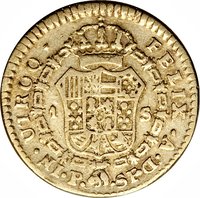
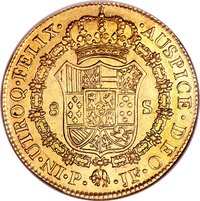
Coat of arms encircled by chain and inscription.
Inscription:
IN.UTROQ.FELIX. AUSPICE.DEO.
NR JJ
2 S
NR JJ
2 S
Script: Latin
Edge
Categories
| Symbols> Coat of Arms |
| Person> Monarch |
Mints
| Name | Mark |
|---|---|
| Bogota Mint | NR |
| Casa de Moneda de Colombia | P |
Mintings
Historical background
In 1791, the currency situation in the Kingdom of New Granada (modern-day Colombia) was a complex and fragmented system, a direct legacy of Spanish colonial administration. The official currency was the Spanish silver real, with eight reales equaling one silver peso, also known as the "piece of eight." However, the severe shortage of official minted coinage was the defining characteristic of the era. The limited supply of coins from the royal mint in Bogotá (founded in 1621) failed to meet the demands of a growing and geographically vast territory, leading to chronic scarcity in daily transactions.
This scarcity gave rise to a widespread and unofficial practice: the use of macuquinas (clipped and irregular cob coins) and, more prevalently, señas or fírmas—private tokens, credit notes, and simple ledger entries used as substitutes for hard currency. Much of the economy, especially outside major cities, operated on barter and these informal credit systems. Furthermore, a multitude of foreign coins, particularly Spanish colonial pesos from other mints and even coins from other European empires, circulated with varying and fluctuating acceptance rates, adding to the commercial confusion.
The situation was a significant point of contention between local criollo merchants and the Spanish Crown. The merchant class urgently petitioned for monetary reform, pleading for an increased and standardized coinage to facilitate trade and economic growth. From Madrid's perspective, however, the primary concern was fiscal control and the steady flow of silver bullion to Spain. Thus, in 1791, the system remained inefficient and locally adapted out of necessity, highlighting the tension between the colony's practical economic needs and the extractive priorities of the imperial metropolis, a friction that would contribute to the movements for independence in the following decades.
This scarcity gave rise to a widespread and unofficial practice: the use of macuquinas (clipped and irregular cob coins) and, more prevalently, señas or fírmas—private tokens, credit notes, and simple ledger entries used as substitutes for hard currency. Much of the economy, especially outside major cities, operated on barter and these informal credit systems. Furthermore, a multitude of foreign coins, particularly Spanish colonial pesos from other mints and even coins from other European empires, circulated with varying and fluctuating acceptance rates, adding to the commercial confusion.
The situation was a significant point of contention between local criollo merchants and the Spanish Crown. The merchant class urgently petitioned for monetary reform, pleading for an increased and standardized coinage to facilitate trade and economic growth. From Madrid's perspective, however, the primary concern was fiscal control and the steady flow of silver bullion to Spain. Thus, in 1791, the system remained inefficient and locally adapted out of necessity, highlighting the tension between the colony's practical economic needs and the extractive priorities of the imperial metropolis, a friction that would contribute to the movements for independence in the following decades.
💎 Extremely Rare