

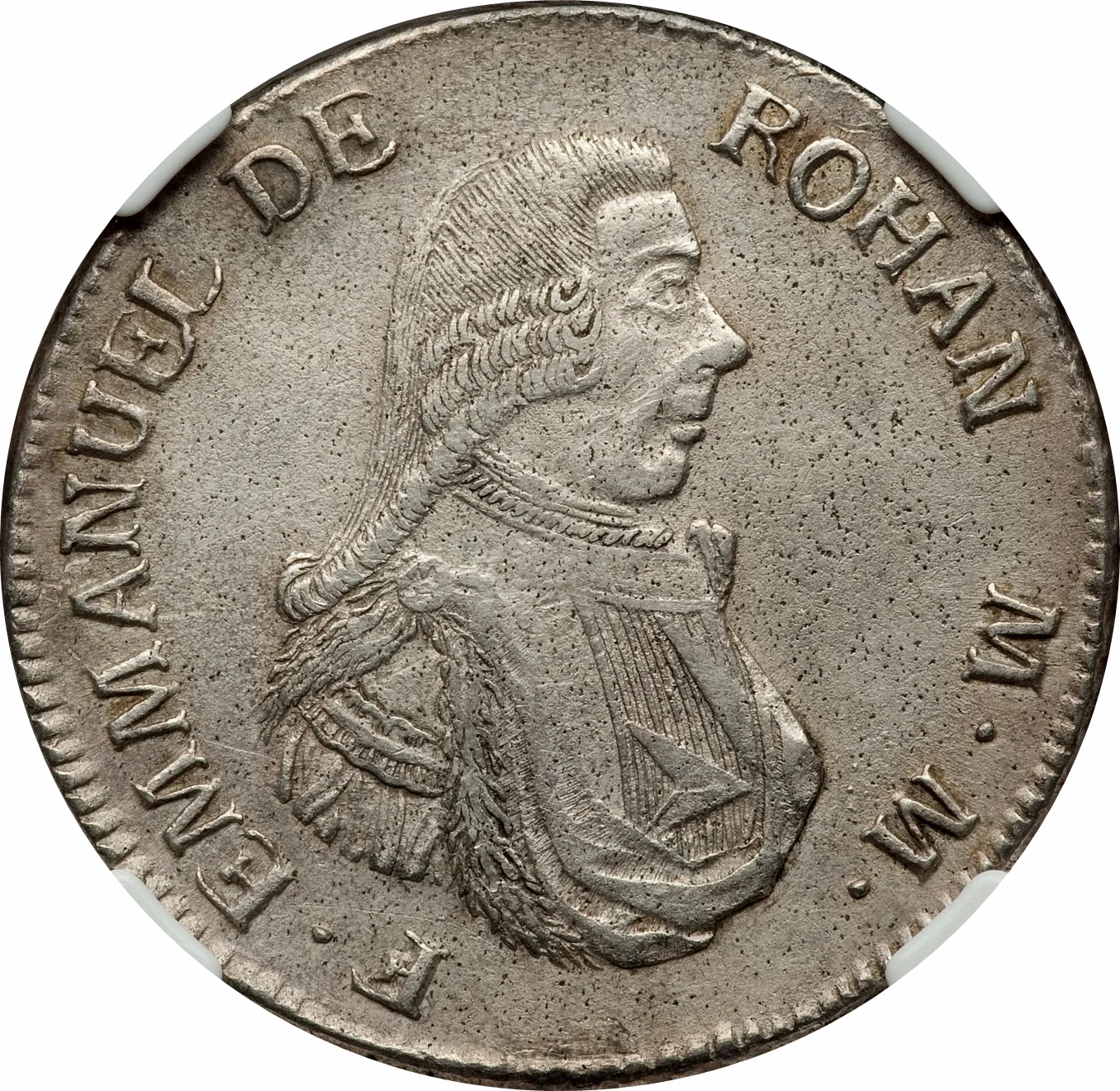
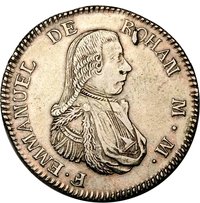
Obverse
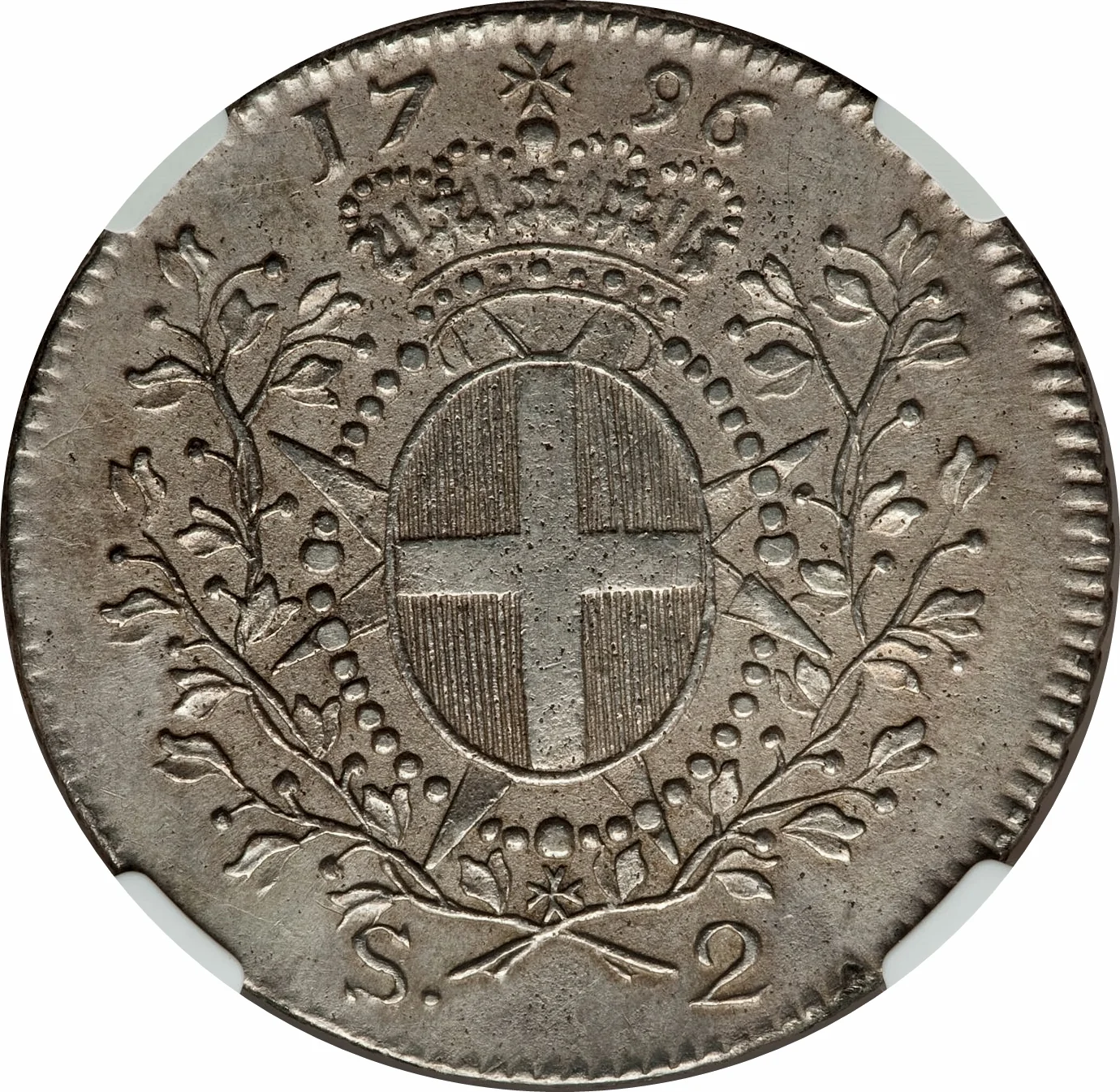
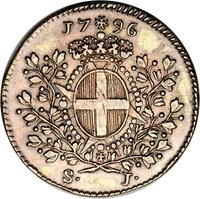
Reverse
Description:
Crowned oval shield with beaded spikes, flanked by sprigs, date above.
Inscription:
17 96
S. 2
S. 2
Script: Latin
Edge
Mintings
| Year | Mint Mark | Mintage | Quality | Collection |
|---|---|---|---|---|
| 1796 | — | — |
Historical background
In 1796, Malta's currency situation was complex and strained, reflecting the island's strategic position and turbulent political history. The archipelago was officially under the rule of the Knights of St. John, but their financial administration was notoriously inefficient and often in debt. The circulating medium was a chaotic mixture of coins from across Europe and the Mediterranean, primarily Spanish silver dollars (pieces of eight), Venetian sequins, Neapolitan and Sicilian coins, and French écus. This multiplicity of foreign coins, each with fluctuating values, created a confusing and unstable monetary environment for daily trade.
The root of the instability lay in the fact that the Knights did not mint a substantial local coinage to establish a dominant standard. While they produced small copper and silver coins (like the scudo and tari), these were insufficient to displace the plethora of foreign currencies. Exchange rates were officially set by the Jurati della Moneta (Sworn Money-Counters), but their valuations often conflicted with market realities, leading to widespread confusion, arbitrage, and distrust. This system was further strained by the Knights' practice of debasing their own token coinage to raise short-term revenue, eroding public confidence.
This fragile monetary order existed on the brink of profound change. By 1796, the winds of the French Revolutionary Wars were blowing close, and Napoleon's ambitions in the Mediterranean directly threatened the Knights' rule. The chaotic currency system was a symptom of the Order's weakening grip and administrative decline. Just two years later, in 1798, Napoleon would invade, expel the Knights, and briefly impose French rule, sweeping away the old monetary regime entirely and introducing a new, decimal-based currency tied to the French franc, before the British blockade and subsequent takeover would trigger another period of monetary upheaval.
The root of the instability lay in the fact that the Knights did not mint a substantial local coinage to establish a dominant standard. While they produced small copper and silver coins (like the scudo and tari), these were insufficient to displace the plethora of foreign currencies. Exchange rates were officially set by the Jurati della Moneta (Sworn Money-Counters), but their valuations often conflicted with market realities, leading to widespread confusion, arbitrage, and distrust. This system was further strained by the Knights' practice of debasing their own token coinage to raise short-term revenue, eroding public confidence.
This fragile monetary order existed on the brink of profound change. By 1796, the winds of the French Revolutionary Wars were blowing close, and Napoleon's ambitions in the Mediterranean directly threatened the Knights' rule. The chaotic currency system was a symptom of the Order's weakening grip and administrative decline. Just two years later, in 1798, Napoleon would invade, expel the Knights, and briefly impose French rule, sweeping away the old monetary regime entirely and introducing a new, decimal-based currency tied to the French franc, before the British blockade and subsequent takeover would trigger another period of monetary upheaval.
💎 Very Rare