

2 sovereigns – Spanish Netherlands
Add to wishlist
Netherlands
Context
Years: 1667–1694
Country: Netherlands
Issuer: Spanish Netherlands
Ruler: Charles II
Currency:
(1506—1713)
Demonetized: Yes
Material
Diameter: 35 mm
Weight: 11.08 g
Gold Weight:: 10.18 g
Shape: Irregular round
Composition: 91.9% Gold
Magnetic: No
Technique: Hammered
Alignment: Coin alignment
flip
References
KM: #
Numista: #61016
Value
Bullion value: $1585.28
Obverse
Description:
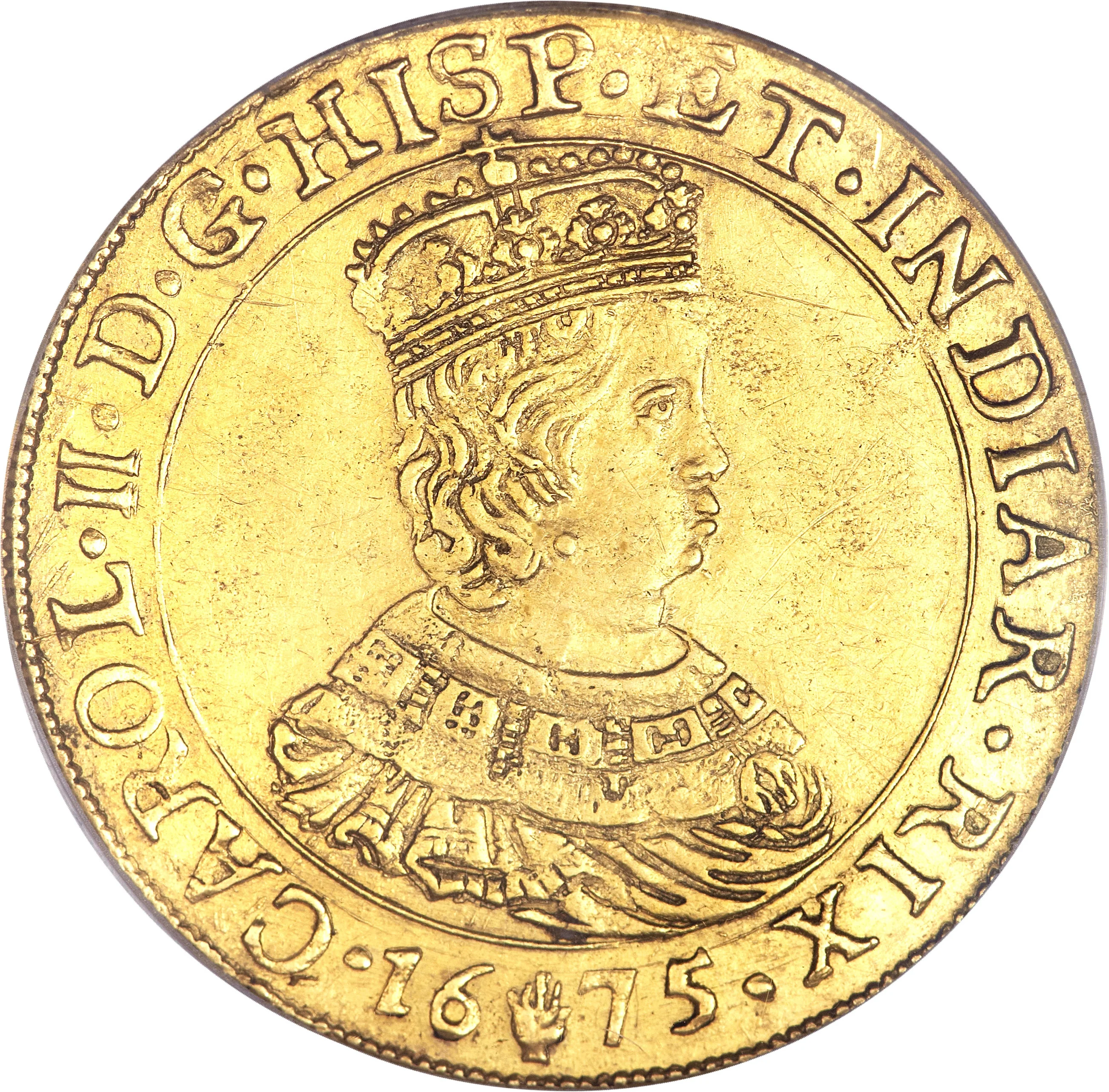
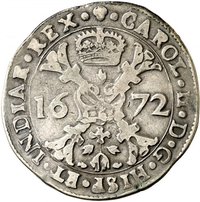
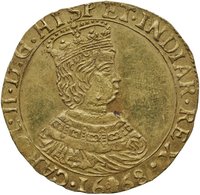
Crowned young Charles right in circle. Date split by mintmark below.
Inscription:
·CAROL · II · D · G · HISP · ET · INDIAR · REX ·
Script: Latin
Reverse
Description:
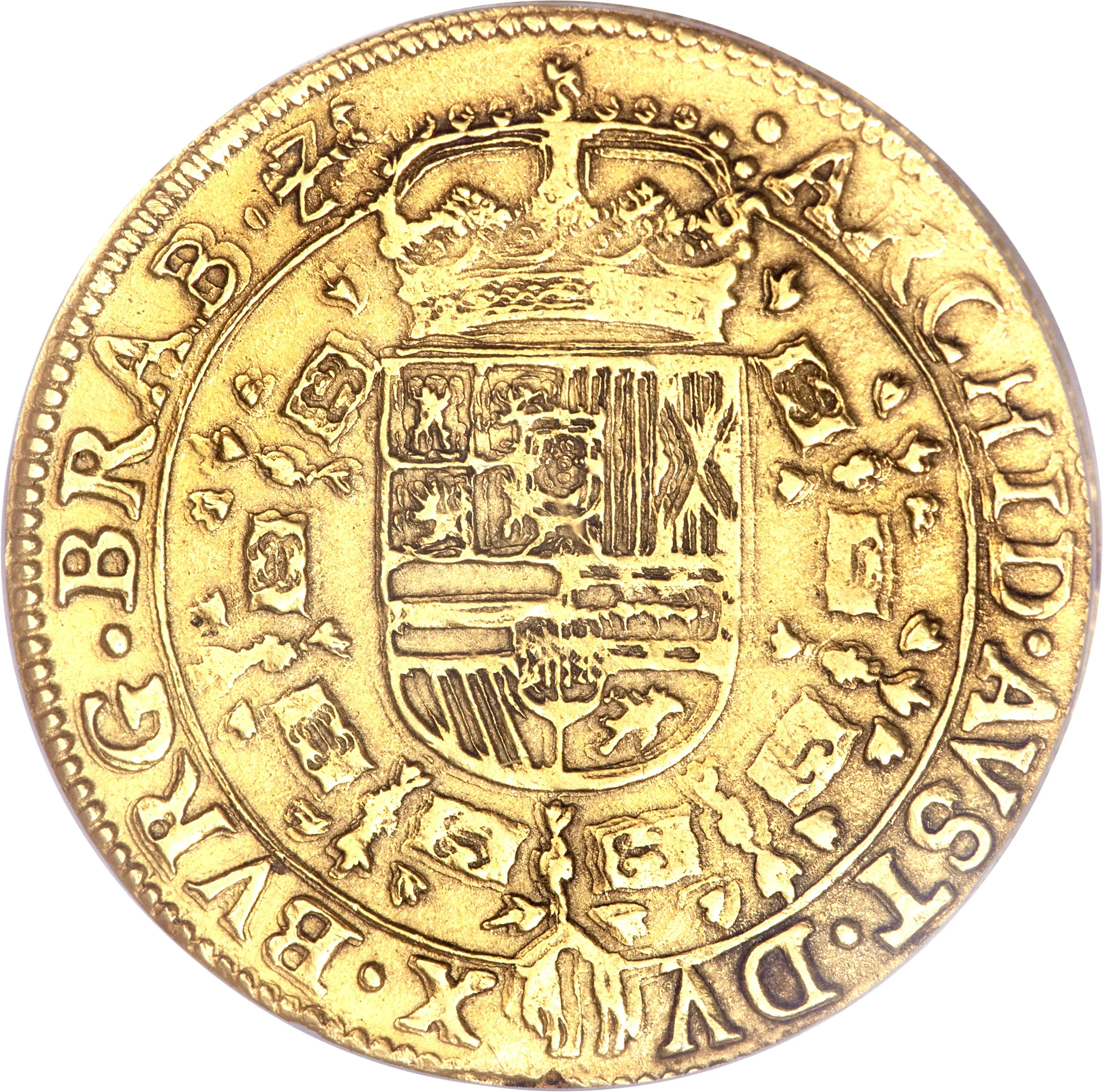
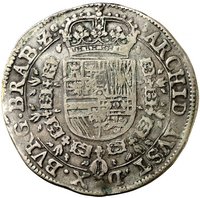
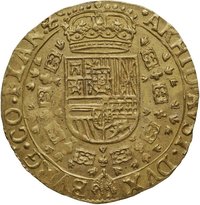
Arms crowned and encircled by the Golden Fleece collar.
Inscription:
· ARCHID · AVST · DVX ·BVRG · BRAB · Zc
Script: Latin
Edge
Mints
| Name | Mark |
|---|---|
| Antwerp | Hand |
| Royal Mint of Belgium | Head |
Mintings
| Year | Mint Mark | Mintage | Quality | Collection |
|---|---|---|---|---|
| 1667 | — | — | ||
| 1668 | — | — | ||
| 1669 | — | — | ||
| 1670 | — | — | ||
| 1671 | — | — | ||
| 1673 | — | — | ||
| 1675 | — | — | ||
| 1681 | — | — | ||
| 1684 | — | — | ||
| 1694 | — | — |
Historical background
In 1667, the Spanish Netherlands was grappling with a severe and protracted monetary crisis, a direct legacy of the long-running Franco-Spanish War (1635-1659) and the subsequent War of Devolution (1667-1668) itself. Decades of conflict had drained the treasury, forcing the Spanish crown to repeatedly debase the coinage—reducing the precious metal content—to fund its military efforts. This created a chaotic environment where coins of the same nominal value but different intrinsic worth (from various mintings and regions) circulated simultaneously, leading to widespread confusion, loss of public trust, and Gresham's Law in action, where "bad" debased money drove "good" full-weight money out of circulation or into hoards.
The situation was exacerbated by the influx of even more inferior foreign coins, particularly from the neighboring Dutch Republic, which flooded the market. Furthermore, the Spanish government's attempts to legislate values for these coins—often setting official rates above their intrinsic worth—consistently failed. Merchants and the public, understandably, refused to accept overvalued currency at face value, leading to a disconnect between government decree and market reality. This monetary instability crippled commerce, as the risks associated with uncertain payment values discouraged trade and investment at a time when the region's economy, centered in vibrant cities like Antwerp and Brussels, was struggling to recover from the devastation of war.
Therefore, the currency situation in 1667 was characterized by a fragmented and unreliable monetary system, undermining economic recovery and daily transactions. It was a critical problem for the local authorities, who had limited autonomy from Madrid, and for the population, who faced price inflation and financial insecurity. This economic distress formed a crucial backdrop to the political and military vulnerability of the region, as Louis XIV's armies invaded to press his territorial claims in the very same year, further destabilizing an already fragile polity.
The situation was exacerbated by the influx of even more inferior foreign coins, particularly from the neighboring Dutch Republic, which flooded the market. Furthermore, the Spanish government's attempts to legislate values for these coins—often setting official rates above their intrinsic worth—consistently failed. Merchants and the public, understandably, refused to accept overvalued currency at face value, leading to a disconnect between government decree and market reality. This monetary instability crippled commerce, as the risks associated with uncertain payment values discouraged trade and investment at a time when the region's economy, centered in vibrant cities like Antwerp and Brussels, was struggling to recover from the devastation of war.
Therefore, the currency situation in 1667 was characterized by a fragmented and unreliable monetary system, undermining economic recovery and daily transactions. It was a critical problem for the local authorities, who had limited autonomy from Madrid, and for the population, who faced price inflation and financial insecurity. This economic distress formed a crucial backdrop to the political and military vulnerability of the region, as Louis XIV's armies invaded to press his territorial claims in the very same year, further destabilizing an already fragile polity.
✨ Legendary