

1 Ducaton – Spanish Netherlands
Netherlands
Context
Years: 1623–1636
Country: Netherlands 
Issuer: Spanish Netherlands
Ruler: Philip IV
Currency:
(1506—1713)
Demonetized: Yes
Material
Diameter: 43 mm
Weight: 64.96 g
Silver weight: 61.32 g
Shape: Irregular round
Composition: 94.4% Silver
Magnetic: No
Technique: Hammered
Alignment: Coin alignment
flip
References
KM: #Click to copy to clipboard57
Numista: #61011
Value
Bullion value: $175.51
Obverse
Description:
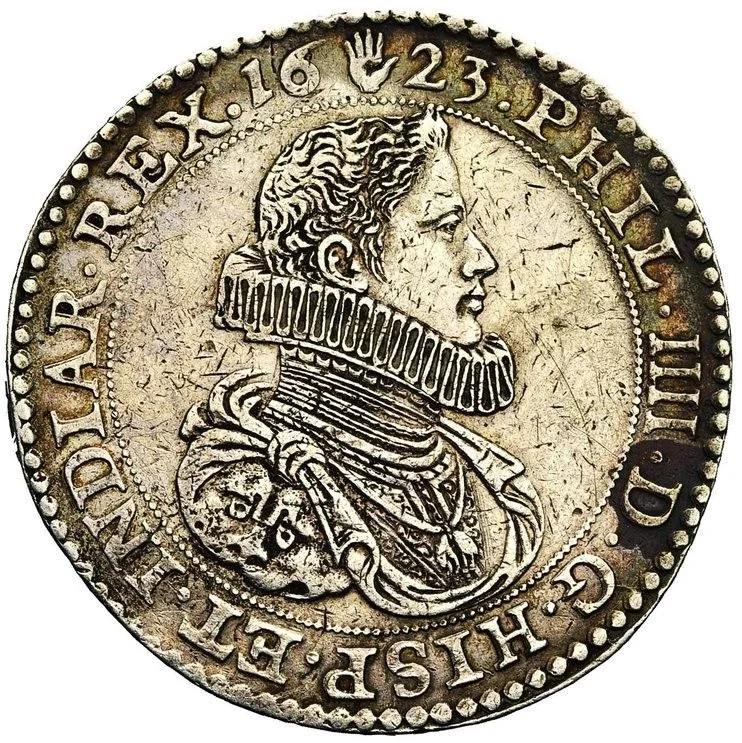
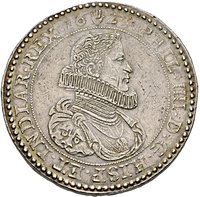
Bust of King Philip IV in armor, facing right, with a lion's head pauldron, ruff collar, mantle, and the Order of the Golden Fleece.
Inscription:
PHIL . IIII . D . G . HISP . ET . INDIAR . REX . 16 23
Script: Latin
Reverse
Description:
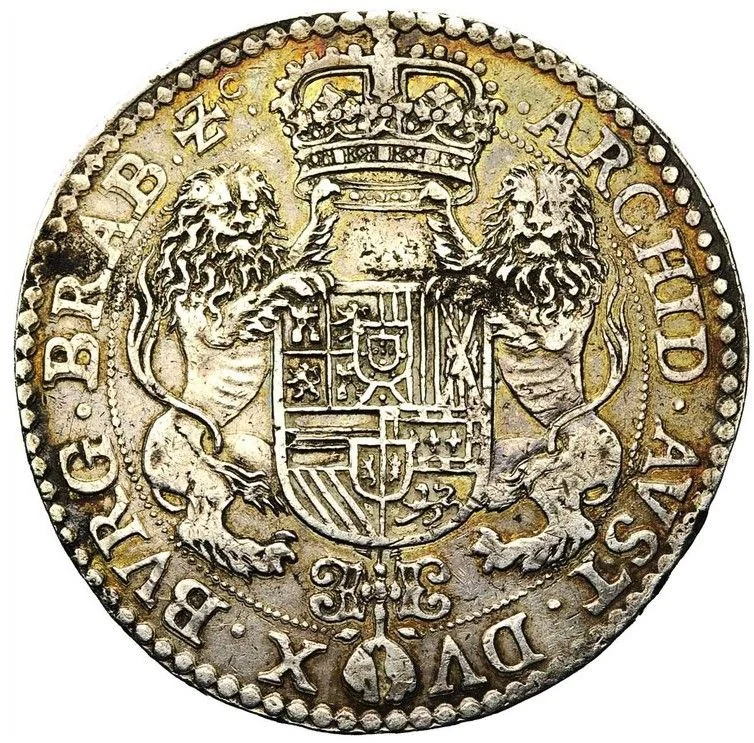
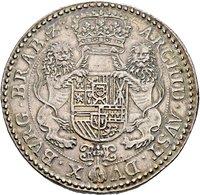
Philip IV's arms on a square shield, crowned lions above, Golden Fleece jewel below.
Inscription:
· ARCHID · AVST · DV X · BVRG · BRAB · Ƶc .
Script: Latin
Edge
Mints
| Name | Mark |
|---|---|
| Antwerp | — |
Mintings
| Year | Mint Mark | Mintage | Quality | Collection |
|---|---|---|---|---|
| 1623 | — | — | ||
| 1624 | — | — | ||
| 1628 | — | — | ||
| 1631 | — | — | ||
| 1632 | — | — | ||
| 1633 | — | — | ||
| 1634 | — | — | ||
| 1635 | — | — | ||
| 1636 | — | — |
Historical background
In 1623, the Spanish Netherlands was grappling with a severe and protracted monetary crisis, a direct consequence of the ongoing Eighty Years' War (1568-1648) against the Dutch Republic. The region's economy was strained by the immense costs of maintaining a large standing army, leading the government in Brussels to repeatedly debase the coinage. By lowering the silver content in coins like the patagon and ducatón, the authorities aimed to create more money from the same amount of bullion to pay troops, but this triggered a vicious cycle of inflation, loss of public confidence, and economic instability.
The situation was exacerbated by the circulation of a chaotic mix of domestic and foreign coins. Alongside the debased local currency, high-quality coins from the Dutch Republic and neighboring states flowed into the markets, as traders and citizens hoarded good money and spent bad. This practice, following Gresham's Law ("bad money drives out good"), further destabilized the economy. Furthermore, the Spanish Crown's policies, which often prioritized the finances of Castile over those of the Netherlands, led to periodic suspensions of payments and disruptions in the vital flow of silver from the Americas, deepening the liquidity crisis.
Consequently, everyday commerce in cities like Antwerp and Brussels was fraught with difficulty. Merchants, artisans, and consumers faced constantly fluctuating exchange rates and uncertainty about the real value of their money. While the government issued placards (edicts) attempting to fix official values for the myriad of coins in circulation, these measures were largely ineffective in practice. The monetary chaos of 1623 thus reflected not only the fiscal desperation of a war-weary state but also the profound social and economic dislocation experienced by its populace.
The situation was exacerbated by the circulation of a chaotic mix of domestic and foreign coins. Alongside the debased local currency, high-quality coins from the Dutch Republic and neighboring states flowed into the markets, as traders and citizens hoarded good money and spent bad. This practice, following Gresham's Law ("bad money drives out good"), further destabilized the economy. Furthermore, the Spanish Crown's policies, which often prioritized the finances of Castile over those of the Netherlands, led to periodic suspensions of payments and disruptions in the vital flow of silver from the Americas, deepening the liquidity crisis.
Consequently, everyday commerce in cities like Antwerp and Brussels was fraught with difficulty. Merchants, artisans, and consumers faced constantly fluctuating exchange rates and uncertainty about the real value of their money. While the government issued placards (edicts) attempting to fix official values for the myriad of coins in circulation, these measures were largely ineffective in practice. The monetary chaos of 1623 thus reflected not only the fiscal desperation of a war-weary state but also the profound social and economic dislocation experienced by its populace.
✨ Legendary