

1 Bu – Mimasaka Province
Japan
Context

Material
Shape: Irregular rectangular
Composition: Silver
Magnetic: No
Alignment: Medal alignment
flip
References
KM: #Click to copy to clipboard46
Numista: #60934
Obverse
Description:
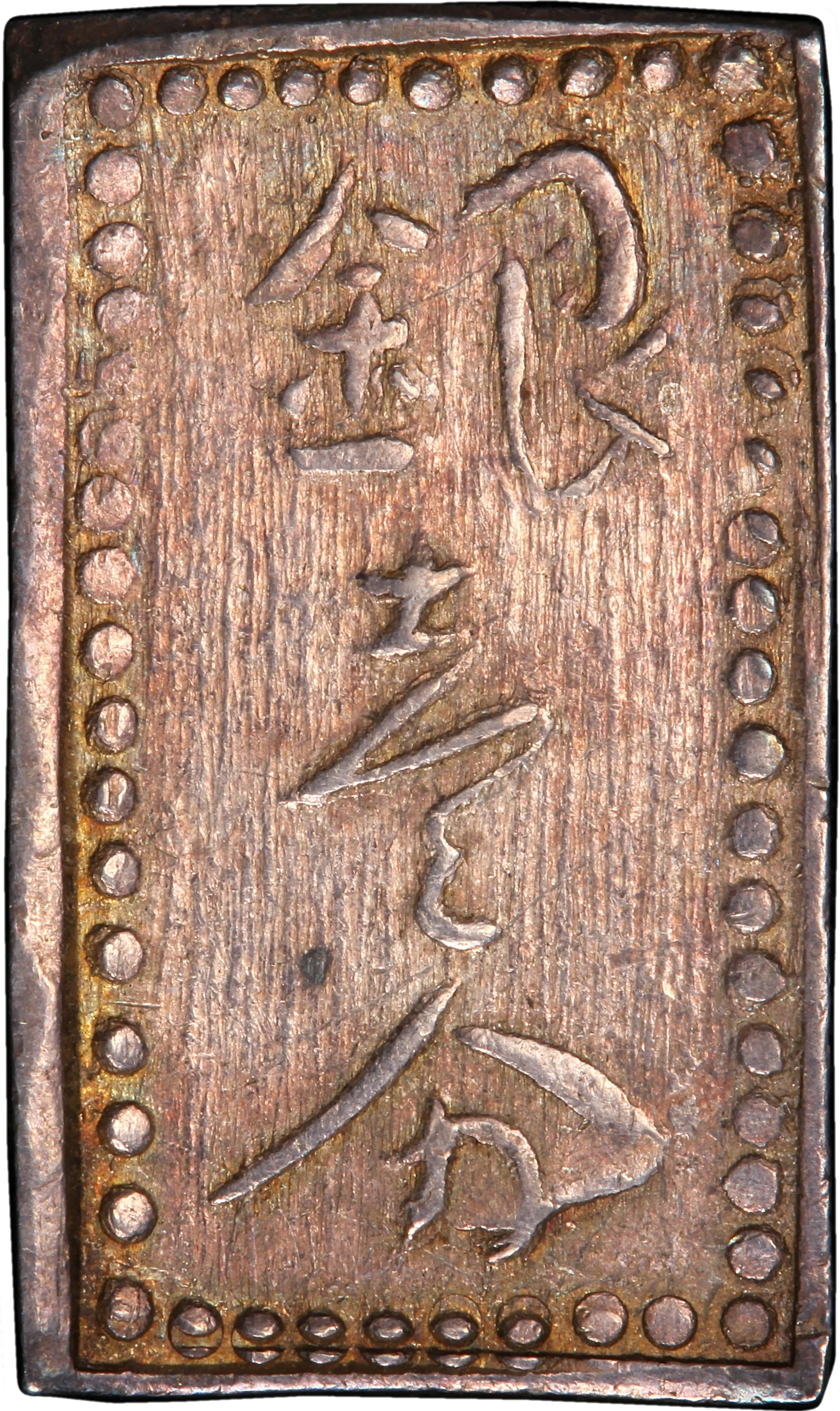
Three values in dotted border
Inscription:
銀
壱
分
壱
分
Reverse
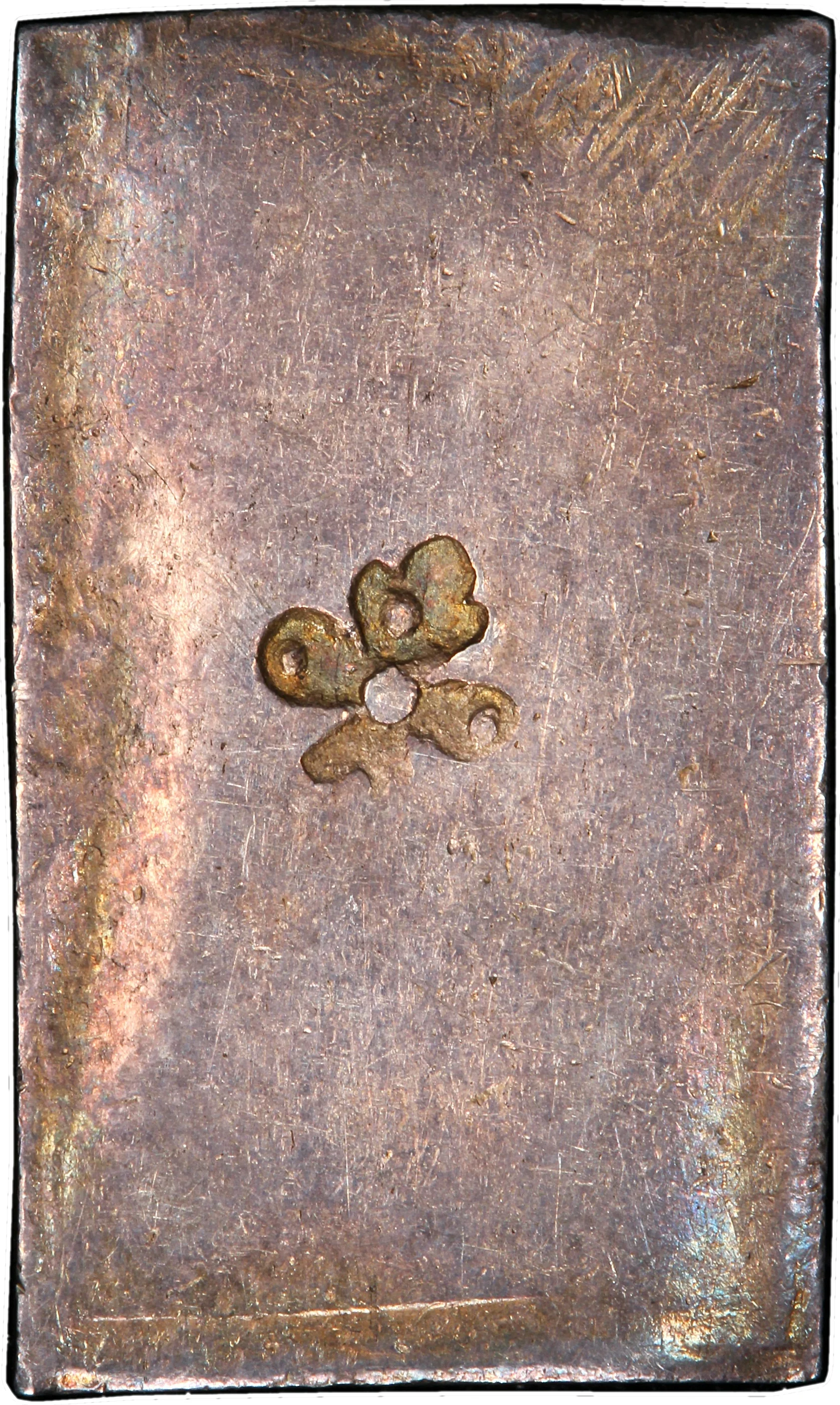
Description:
Floral-stamped plain (multiple variations)
Edge
Mintings
| Year | Mint Mark | Mintage | Quality | Collection |
|---|---|---|---|---|
| 1750 | — | — |
Historical background
In 1750, Mimasaka Province, a landlocked domain in western Honshu under the Tokugawa shogunate, operated within Japan's complex and often strained multi-metallic currency system. The province, ruled by the Ando clan from Tsuyama Castle, did not mint its own coinage but was subject to the shogunate's centralized monetary policies. These policies relied on three primary currencies: gold ryō (mainly for large domainal finances and the warrior elite), silver momme (used for larger commercial transactions, often by weight), and copper mon (for everyday local market purchases by commoners). The exchange rates between these metals were officially set by the shogunate in Edo, but in practice, local market fluctuations and scarcity created significant economic friction.
The currency situation in Mimasaka was particularly influenced by its geographical position. As a province on the important San'yōdō highway connecting Osaka and western Japan, it saw considerable commercial traffic. This exposed its local economy to the powerful financial currents of Osaka, the nation's mercantile hub, where silver was the dominant currency. Consequently, merchants and domain officials in Mimasaka had to constantly navigate the conversion between the silver-based trade economy and the gold-based taxation and stipend system mandated by the shogunate. Furthermore, the domain's finances were strained by the sankin-kōtai system, which required the daimyō to maintain a costly alternate-year residence in Edo, necessitating the conversion of local rice-based wealth into portable currency.
At the local level, the common people of Mimasaka most frequently handled copper mon and low-denomination silver in clipped fragments. However, a chronic shortage of standardized small-denomination coinage across Japan in this period led to the widespread use of private tokens, known as hansatsu (domainal paper notes). While Mimasaka is not recorded as a major issuer of hansatsu in 1750, neighboring domains' notes likely circulated unofficially, and local merchants may have issued their own scrip to facilitate trade. This patchwork system, combined with occasional shogunal debasements of coinage to address national fiscal shortfalls, created an environment of monetary uncertainty, where the real value of currency could differ significantly from its face value, impacting both peasant livelihoods and domainal stability.
The currency situation in Mimasaka was particularly influenced by its geographical position. As a province on the important San'yōdō highway connecting Osaka and western Japan, it saw considerable commercial traffic. This exposed its local economy to the powerful financial currents of Osaka, the nation's mercantile hub, where silver was the dominant currency. Consequently, merchants and domain officials in Mimasaka had to constantly navigate the conversion between the silver-based trade economy and the gold-based taxation and stipend system mandated by the shogunate. Furthermore, the domain's finances were strained by the sankin-kōtai system, which required the daimyō to maintain a costly alternate-year residence in Edo, necessitating the conversion of local rice-based wealth into portable currency.
At the local level, the common people of Mimasaka most frequently handled copper mon and low-denomination silver in clipped fragments. However, a chronic shortage of standardized small-denomination coinage across Japan in this period led to the widespread use of private tokens, known as hansatsu (domainal paper notes). While Mimasaka is not recorded as a major issuer of hansatsu in 1750, neighboring domains' notes likely circulated unofficially, and local merchants may have issued their own scrip to facilitate trade. This patchwork system, combined with occasional shogunal debasements of coinage to address national fiscal shortfalls, created an environment of monetary uncertainty, where the real value of currency could differ significantly from its face value, impacting both peasant livelihoods and domainal stability.
✨ Legendary