

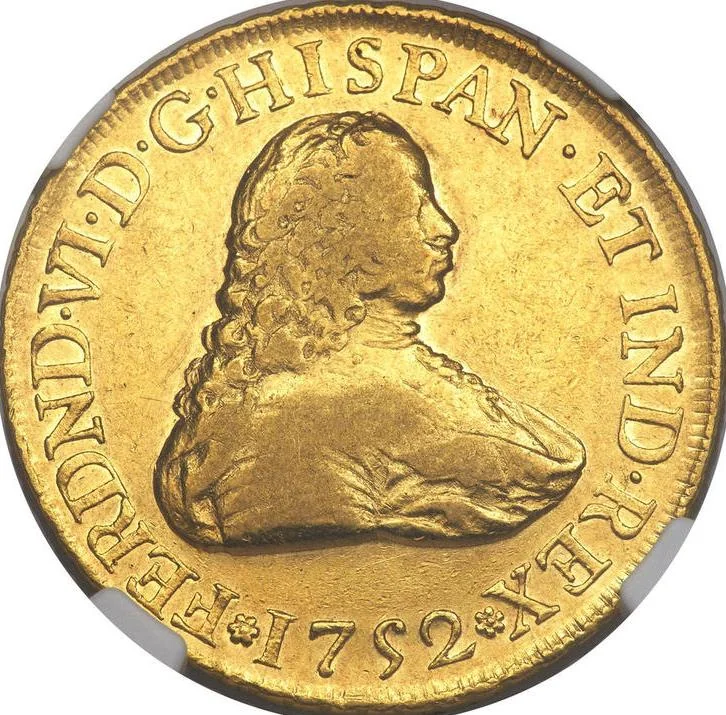
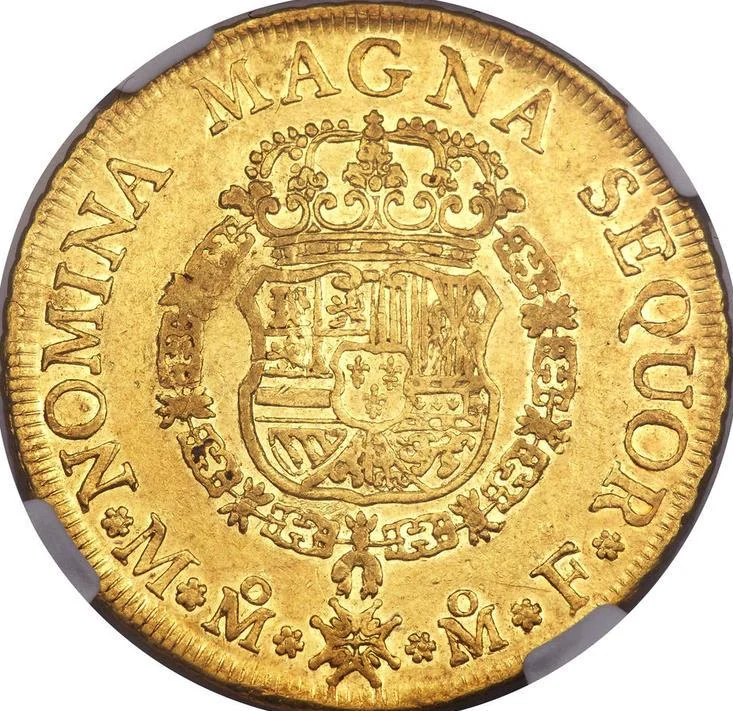
8 escudos – New Spain
Add to wishlist
Mexico
Context
Years: 1752–1756
Country: Mexico
Issuer: New Spain
Ruler: Ferdinand VI
Currency:
(1535—1897)
Demonetized: Yes
Material
References
KM: #
Numista: #57661
Value
Bullion value: $3831.44
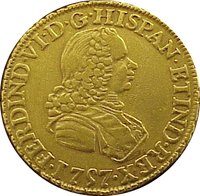
Obverse
Description:
Armored bust right above date.
Inscription:
FERDND•VI•D•G•HISPAN•ET IND•REX
*1752*
*1752*
Script: Latin
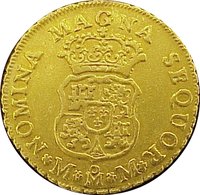
Reverse
Edge
Mintings
| Year | Mint Mark | Mintage | Quality | Collection |
|---|---|---|---|---|
| 1752 | MF | — | ||
| 1753 | MF | — | ||
| 1754 | MF | — | ||
| 1755 | MM | — | ||
| 1756 | MM | — |
Historical background
In 1752, the currency situation in New Spain (modern-day Mexico and much of the southwestern United States) was defined by a chronic shortage of official coinage amidst a booming colonial economy. The primary unit was the silver real, with eight reales making a peso (the famous "piece of eight"). While the Mexico City Mint was one of the most productive in the world, striking vast quantities of silver from mines like Zacatecas and Potosí, much of this coinage was quickly exported to Spain or used in the lucrative trade with the Philippines and China. This drain, combined with the needs of a large domestic population and complex internal markets, meant there was a persistent lack of circulating specie for everyday transactions.
This scarcity led to the widespread use of alternative and often problematic currencies. To facilitate local trade, merchants and municipal governments issued tlacos—token-like credit notes, often made of copper or leather. These were only redeemable in the specific shop or region that issued them, creating a fragmented and unreliable monetary landscape. More troublingly, the shortage also encouraged rampant clipping and counterfeiting of even the official silver coins, which eroded public trust. The Spanish Crown, while aware of these issues, was often more concerned with the steady flow of silver to the metropolis than with streamlining the colony's internal monetary system.
Consequently, the monetary environment in 1752 was one of contradiction: New Spain was the heart of global silver production, yet its own economy struggled with insufficient and debased currency. This situation placed a significant burden on the majority of the population, complicating tax collection, trade, and wages. The persistent problems of this period would eventually lead to attempts at reform, most notably under Charles III later in the century, but in 1752, the system remained a complex and inefficient patchwork of official royal coinage, local tokens, and adulterated money.
This scarcity led to the widespread use of alternative and often problematic currencies. To facilitate local trade, merchants and municipal governments issued tlacos—token-like credit notes, often made of copper or leather. These were only redeemable in the specific shop or region that issued them, creating a fragmented and unreliable monetary landscape. More troublingly, the shortage also encouraged rampant clipping and counterfeiting of even the official silver coins, which eroded public trust. The Spanish Crown, while aware of these issues, was often more concerned with the steady flow of silver to the metropolis than with streamlining the colony's internal monetary system.
Consequently, the monetary environment in 1752 was one of contradiction: New Spain was the heart of global silver production, yet its own economy struggled with insufficient and debased currency. This situation placed a significant burden on the majority of the population, complicating tax collection, trade, and wages. The persistent problems of this period would eventually lead to attempts at reform, most notably under Charles III later in the century, but in 1752, the system remained a complex and inefficient patchwork of official royal coinage, local tokens, and adulterated money.
✨ Legendary