

1 Rupee – Mughal Empire
India
Context
Years: 1661–1707
Country: India 
Issuer: Mughal Empire
Ruler: Aurangzeb
Currency:
(1540—1842)
Demonetized: Yes
Material
References
KM: #Click to copy to clipboard300.50
Numista: #56737
Value
Bullion value: $32.11
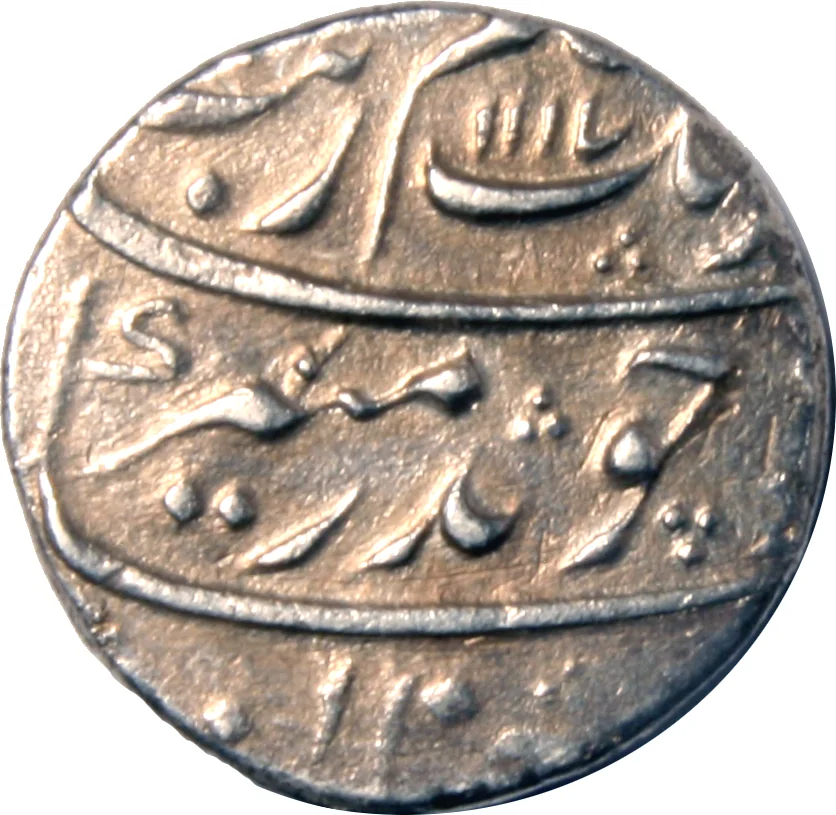
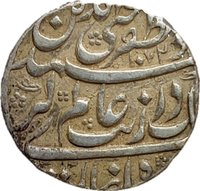
Obverse
Description:
KM#300.50. Franz Joseph I, 1915.
Inscription:
Alamgir
۱۱۱۷
۱۱۱۷
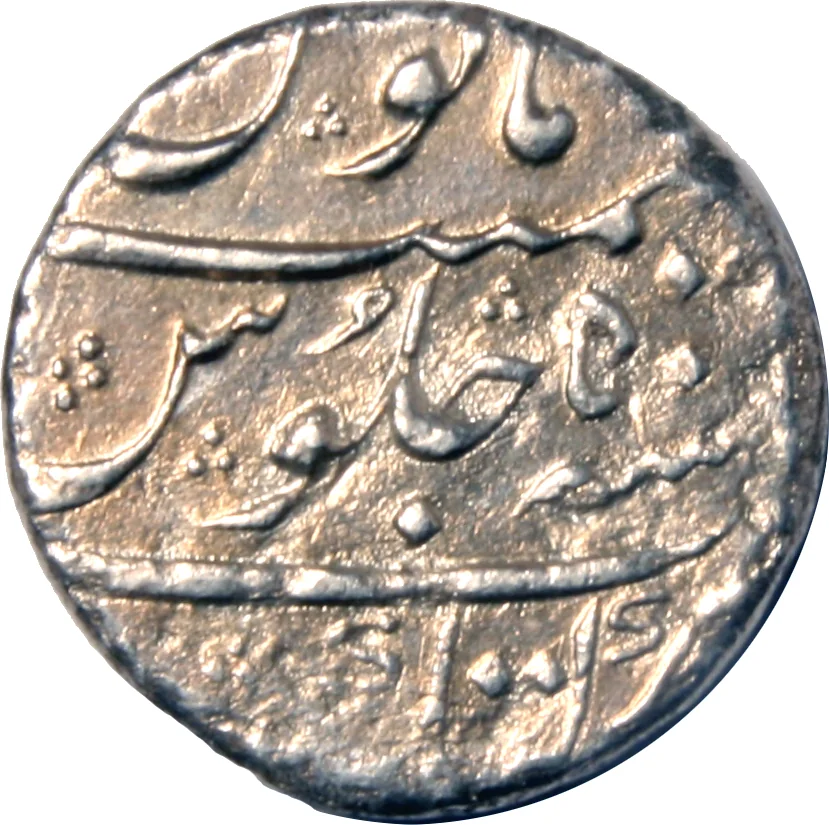
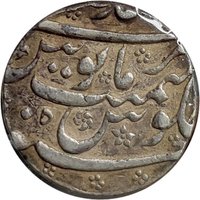
Reverse
Description:
RY date, Mint at bottom
Inscription:
۵۰
Edge
Plain
Mintings
| Year | Mint Mark | Mintage | Quality | Collection |
|---|---|---|---|---|
| 1661 | — | — | ||
| 1662 | — | — | ||
| 1663 | — | — | ||
| 1664 | — | — | ||
| 1665 | — | — | ||
| 1666 | — | — | ||
| 1667 | — | — | ||
| 1668 | — | — | ||
| 1669 | — | — | ||
| 1670 | — | — | ||
| 1671 | — | — | ||
| 1672 | — | — | ||
| 1673 | — | — | ||
| 1674 | — | — | ||
| 1675 | — | — | ||
| 1676 | — | — | ||
| 1676 | — | — | ||
| 1677 | — | — | ||
| 1678 | — | — | ||
| 1679 | — | — | ||
| 1680 | — | — | ||
| 1681 | — | — | ||
| 1682 | — | — | ||
| 1683 | — | — | ||
| 1684 | — | — | ||
| 1685 | — | — | ||
| 1686 | — | — | ||
| 1687 | — | — | ||
| 1688 | — | — | ||
| 1689 | — | — | ||
| 1690 | — | — | ||
| 1691 | — | — | ||
| 1692 | — | — | ||
| 1693 | — | — | ||
| 1694 | — | — | ||
| 1695 | — | — | ||
| 1696 | — | — | ||
| 1697 | — | — | ||
| 1698 | — | — | ||
| 1699 | — | — | ||
| 1700 | — | — | ||
| 1701 | — | — | ||
| 1702 | — | — | ||
| 1703 | — | — | ||
| 1704 | — | — | ||
| 1705 | — | — | ||
| 1706 | — | — | ||
| 1707 | — | — |
Historical background
In 1661, the Mughal Empire's currency system was a well-established and highly sophisticated bimetallic structure, underpinning the economy of one of the world's largest and wealthiest states. The system was centrally managed from the imperial mints (sikkas), with the silver rupee as the primary unit of account and medium for large transactions, taxation, and state expenditure. Its purity and weight (nearly 11 grams of high-grade silver) were meticulously standardized, earning it wide acceptance across the empire and in international trade. Alongside it, the gold mohur served for high-value transactions, hoarding, and ceremonial purposes, though it was not as commonly circulated. For everyday commerce, a plethora of copper dams (valued at 1/40th of a rupee) and smaller silver coins facilitated local trade, creating a multi-tiered monetary ecosystem.
This period, during the reign of Emperor Aurangzeb, saw a currency system that was generally stable but faced underlying pressures. The empire's immense wealth, particularly from land revenue (zat) and control over lucrative trade routes, fed a constant influx of precious metals, especially New World silver from the Americas which entered via European trade. This allowed for sustained minting and a reliable currency. However, challenges such as the cost of Aurangzeb's ongoing military campaigns in the Deccan and the persistent issue of older, clipped, or debased coins circulating alongside new imperial issues required continuous administrative attention. The state enforced strict protocols to ensure mint standards and profit (seigniorage), but enforcing these standards across the vast empire was difficult.
Furthermore, the monetary landscape was not uniformly centralized. While imperial mints in major cities like Delhi, Agra, and Lahore set the standard, numerous regional and local mints also operated, sometimes leading to variations. The system's robustness was evidenced by the rupee's role as a trusted currency beyond Mughal borders. However, the very reliance on bullion flows made the economy vulnerable to external shocks. The year 1661 itself was not one of dramatic monetary crisis, but it existed within a framework where the empire's fiscal health and the integrity of its currency were perpetually linked to military success, administrative efficiency, and global silver markets.
This period, during the reign of Emperor Aurangzeb, saw a currency system that was generally stable but faced underlying pressures. The empire's immense wealth, particularly from land revenue (zat) and control over lucrative trade routes, fed a constant influx of precious metals, especially New World silver from the Americas which entered via European trade. This allowed for sustained minting and a reliable currency. However, challenges such as the cost of Aurangzeb's ongoing military campaigns in the Deccan and the persistent issue of older, clipped, or debased coins circulating alongside new imperial issues required continuous administrative attention. The state enforced strict protocols to ensure mint standards and profit (seigniorage), but enforcing these standards across the vast empire was difficult.
Furthermore, the monetary landscape was not uniformly centralized. While imperial mints in major cities like Delhi, Agra, and Lahore set the standard, numerous regional and local mints also operated, sometimes leading to variations. The system's robustness was evidenced by the rupee's role as a trusted currency beyond Mughal borders. However, the very reliance on bullion flows made the economy vulnerable to external shocks. The year 1661 itself was not one of dramatic monetary crisis, but it existed within a framework where the empire's fiscal health and the integrity of its currency were perpetually linked to military success, administrative efficiency, and global silver markets.
💎 Extremely Rare