

1 Stuiver – Spanish Netherlands
Netherlands
Context
Years: 1679–1680
Country: Netherlands 
Issuer: Spanish Netherlands
Ruler: Charles II
Currency:
(1506—1713)
Demonetized: Yes
Total mintage: 1,503,564
Material
Diameter: 25 mm
Weight: 1.9 g
Thickness: 0.6 mm
Shape: Irregular round
Technique: Hammered
Alignment: Coin alignment
flip
References
KM: #Click to copy to clipboard75
Numista: #54392
Obverse
Description:
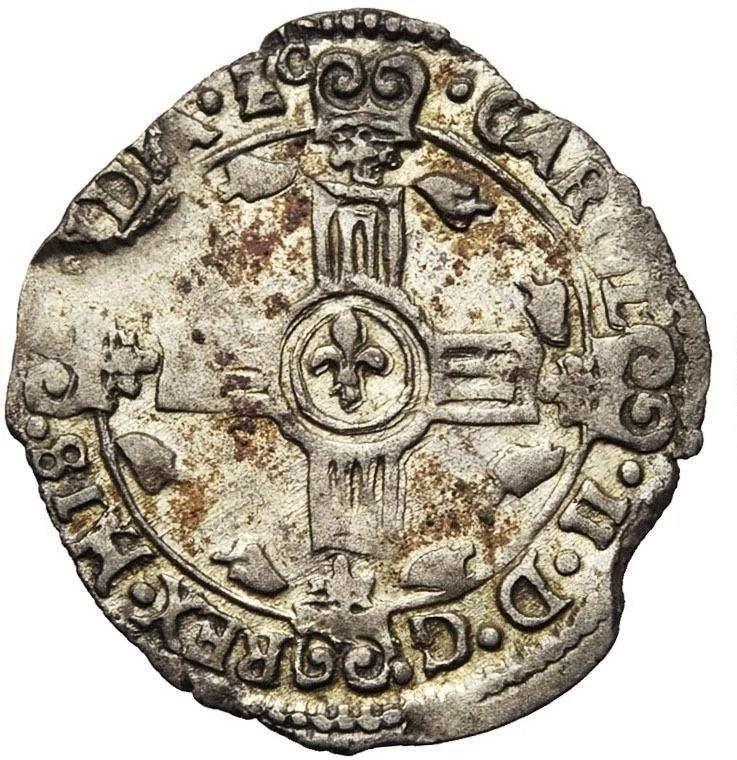
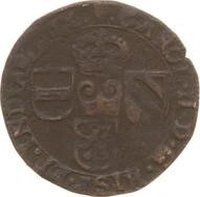
Cross with fire-steel tips, central mintmark.
Inscription:
CAROL · II ·D · G · REX · HIS-INDIA . Zc
Script: Latin
Reverse
Description:
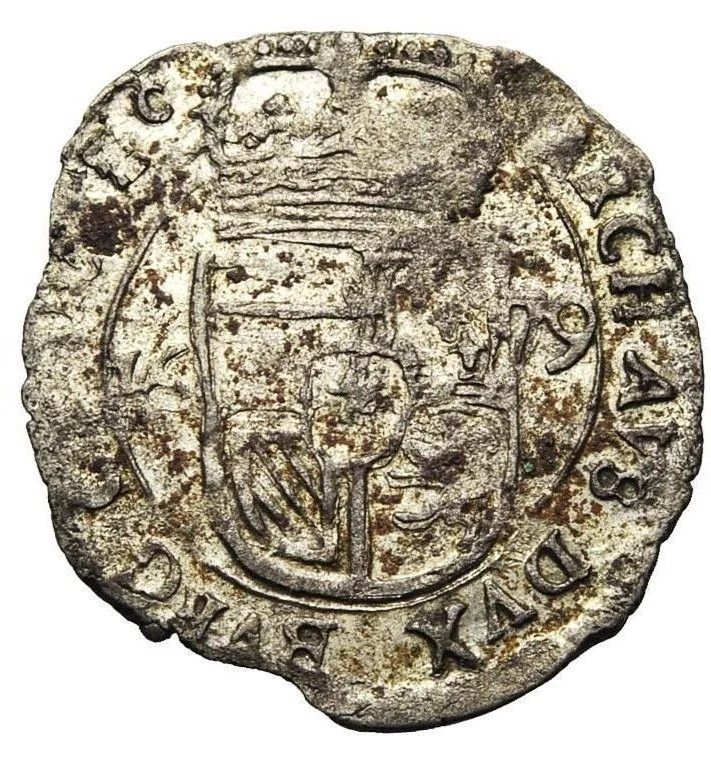
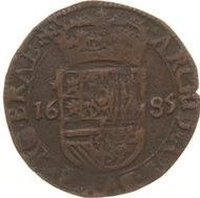
Crowned arms flank date.
Inscription:
ARCH · AVS · DVX · BVRG · CO · FL(AN) · Zc
Script: Latin
Edge
Plain
Mints
| Name | Mark |
|---|---|
| Bruges | — |
Mintings
| Year | Mint Mark | Mintage | Quality | Collection |
|---|---|---|---|---|
| 1679 | — | 1,503,564 | ||
| 1680 | — | — |
Historical background
In 1679, the Spanish Netherlands found itself in a precarious monetary situation, a legacy of decades of warfare and economic strain. The region, a patchwork of territories including much of modern-day Belgium and Luxembourg, had been a battleground during the recent Franco-Dutch War (1672-1678), which concluded with the Treaties of Nijmegen. The conflict had drained the treasury, disrupted trade, and placed immense fiscal pressure on the Spanish Habsburg administration in Brussels. This led to repeated debasements of the coinage, as the government reduced the precious metal content in coins to generate short-term revenue, thereby eroding public trust in the currency.
The circulating money was a chaotic mix of domestic and foreign coins of varying intrinsic values. Alongside officially minted patagons and ducatons, there was a proliferation of underweight, clipped, and counterfeit coins, as well as legal tender from neighboring states like France and the Dutch Republic. This confusion created a dual system: payments were often stipulated in stable guilders of account, but actual transactions were conducted in a medley of physical coins whose market value fluctuated daily based on their metal content. This instability hampered commerce, as merchants and money-changers engaged in complex and speculative arbitrage, to the detriment of everyday economic activity.
Authorities attempted to rectify the situation through periodic placards (edicts) that set official exchange rates for dozens of coin types, but these measures were largely reactive and ineffective. The edicts often failed to align with market realities, leading to Gresham's Law in practice: "bad" debased coins drove "good" full-weight coins out of circulation, as people hoarded the latter or exported them. Consequently, by 1679, the currency crisis was a chronic symptom of the Spanish Crown's wider administrative and financial decline, stifling economic recovery in the aftermath of war and contributing to the region's gradual loss of commercial primacy to its northern neighbor, the Dutch Republic.
The circulating money was a chaotic mix of domestic and foreign coins of varying intrinsic values. Alongside officially minted patagons and ducatons, there was a proliferation of underweight, clipped, and counterfeit coins, as well as legal tender from neighboring states like France and the Dutch Republic. This confusion created a dual system: payments were often stipulated in stable guilders of account, but actual transactions were conducted in a medley of physical coins whose market value fluctuated daily based on their metal content. This instability hampered commerce, as merchants and money-changers engaged in complex and speculative arbitrage, to the detriment of everyday economic activity.
Authorities attempted to rectify the situation through periodic placards (edicts) that set official exchange rates for dozens of coin types, but these measures were largely reactive and ineffective. The edicts often failed to align with market realities, leading to Gresham's Law in practice: "bad" debased coins drove "good" full-weight coins out of circulation, as people hoarded the latter or exported them. Consequently, by 1679, the currency crisis was a chronic symptom of the Spanish Crown's wider administrative and financial decline, stifling economic recovery in the aftermath of war and contributing to the region's gradual loss of commercial primacy to its northern neighbor, the Dutch Republic.
💎 Extremely Rare