

4 reales – New Spain
Add to wishlist
Mexico
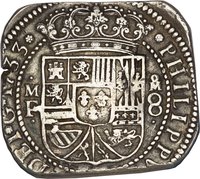
Obverse
Description:
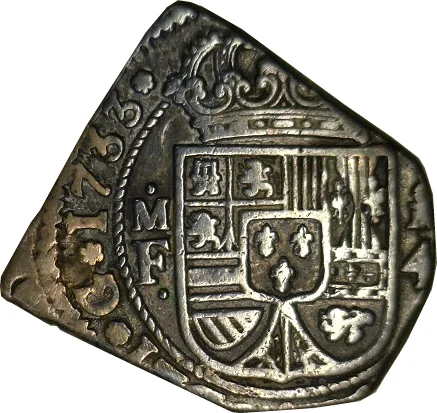
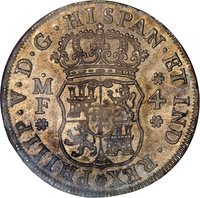
Felipe V's royal coat of arms, encircled by legend and date.
Inscription:
PHILIPVS V DEI G
Script: Latin
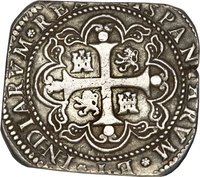
Reverse
Description:
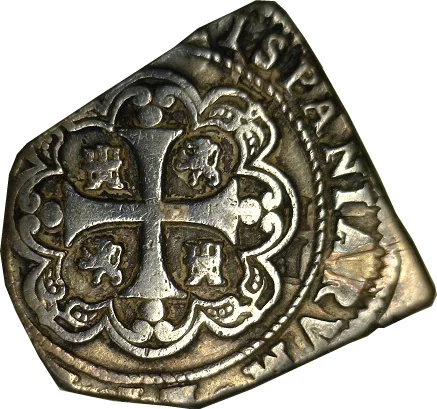
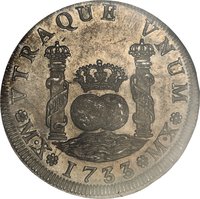
Spain's coat of arms.
Script: Latin
Edge
Mintings
| Year | Mint Mark | Mintage | Quality | Collection |
|---|---|---|---|---|
| 1733 | MF | — | ||
| 1734 | MF | — |
Historical background
In 1733, the currency system of New Spain, centered in modern-day Mexico, was a complex and often problematic fusion of Old World practices and New World realities. The colony was the financial heart of the Spanish Empire, its vast silver mines—particularly those at Zacatecas and Guanajuato—producing a flood of precious metal that fueled global trade. The official currency was based on the silver real and the gold escudo, with 8 reales equaling one peso (the famous "piece of eight") and 16 silver reales equaling one gold escudo. However, the system was chronically plagued by a severe shortage of small-denomination coinage for everyday transactions, leading to widespread use of cut or "clipped" coins, crude tokens, and even cacao beans as makeshift currency in local markets.
This scarcity was exacerbated by two main factors. First, the Spanish Crown prioritized the shipment of high-value, minted silver bars and coins to Spain, draining the colony of its finished currency. Second, while the Mexico City Mint was one of the oldest and most productive in the Americas, its output was inefficient and could not keep pace with the booming colonial economy. The result was a monetary environment where the official, full-weight coins existed alongside a chaotic circulation of underweight and adulterated currency, causing confusion, facilitating fraud, and hindering commerce.
Recognizing the destabilizing effects of this shortage, the Spanish authorities had taken a significant step just two years prior, in 1731, with the authorization of the first minting of copper maravedí coins in Mexico City. By 1733, these small, low-value coins were beginning to enter circulation with the aim of alleviating the chronic small-change problem and standardizing everyday transactions. Thus, the currency situation in 1733 was one of transition, caught between the enduring legacy of silver wealth and the practical, if humble, introduction of a copper-based fractional system intended to bring order to the colonial marketplace.
This scarcity was exacerbated by two main factors. First, the Spanish Crown prioritized the shipment of high-value, minted silver bars and coins to Spain, draining the colony of its finished currency. Second, while the Mexico City Mint was one of the oldest and most productive in the Americas, its output was inefficient and could not keep pace with the booming colonial economy. The result was a monetary environment where the official, full-weight coins existed alongside a chaotic circulation of underweight and adulterated currency, causing confusion, facilitating fraud, and hindering commerce.
Recognizing the destabilizing effects of this shortage, the Spanish authorities had taken a significant step just two years prior, in 1731, with the authorization of the first minting of copper maravedí coins in Mexico City. By 1733, these small, low-value coins were beginning to enter circulation with the aim of alleviating the chronic small-change problem and standardizing everyday transactions. Thus, the currency situation in 1733 was one of transition, caught between the enduring legacy of silver wealth and the practical, if humble, introduction of a copper-based fractional system intended to bring order to the colonial marketplace.
✨ Legendary