

10 macutas – Angola
Add to wishlist
Angola
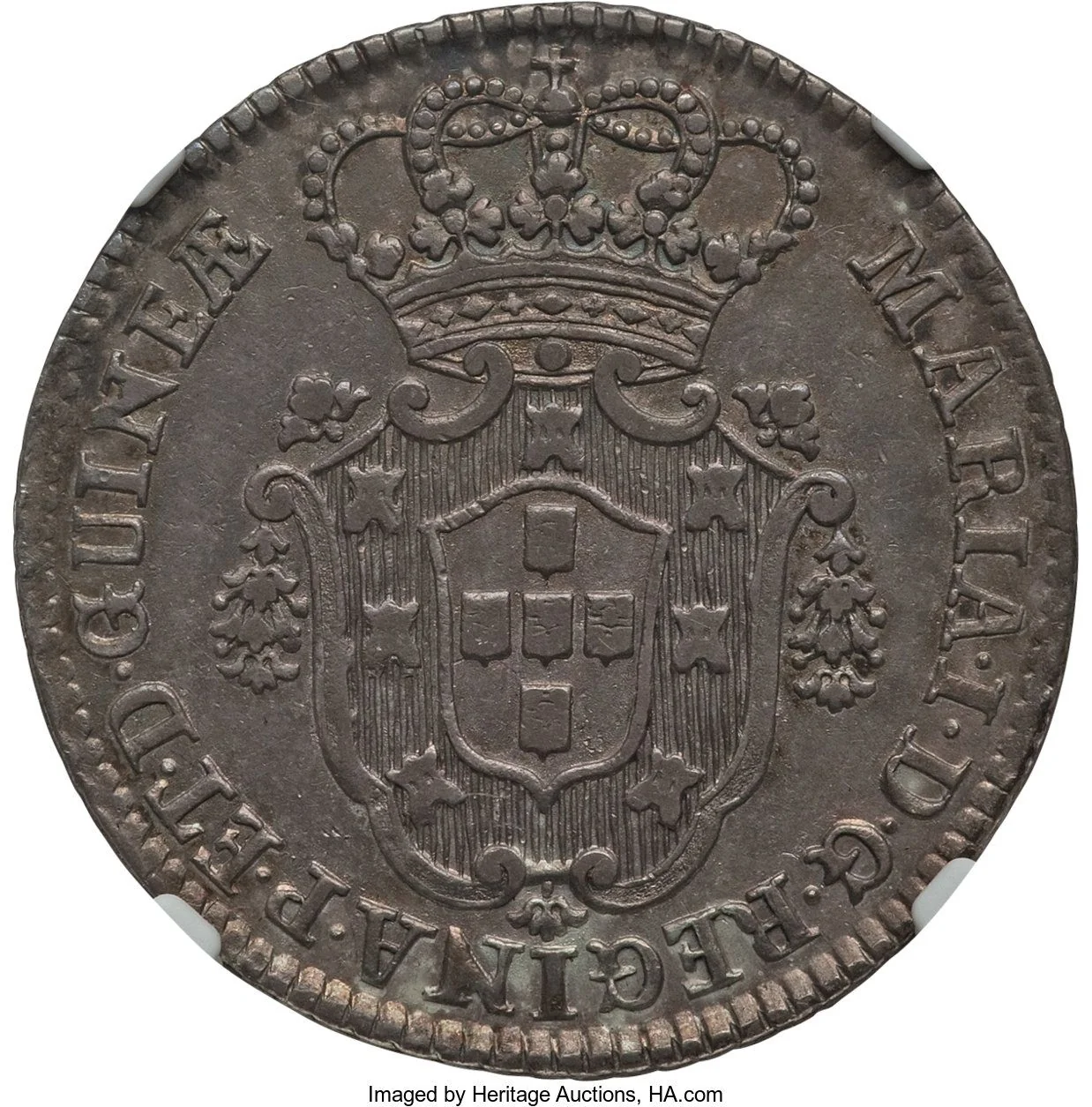
Obverse
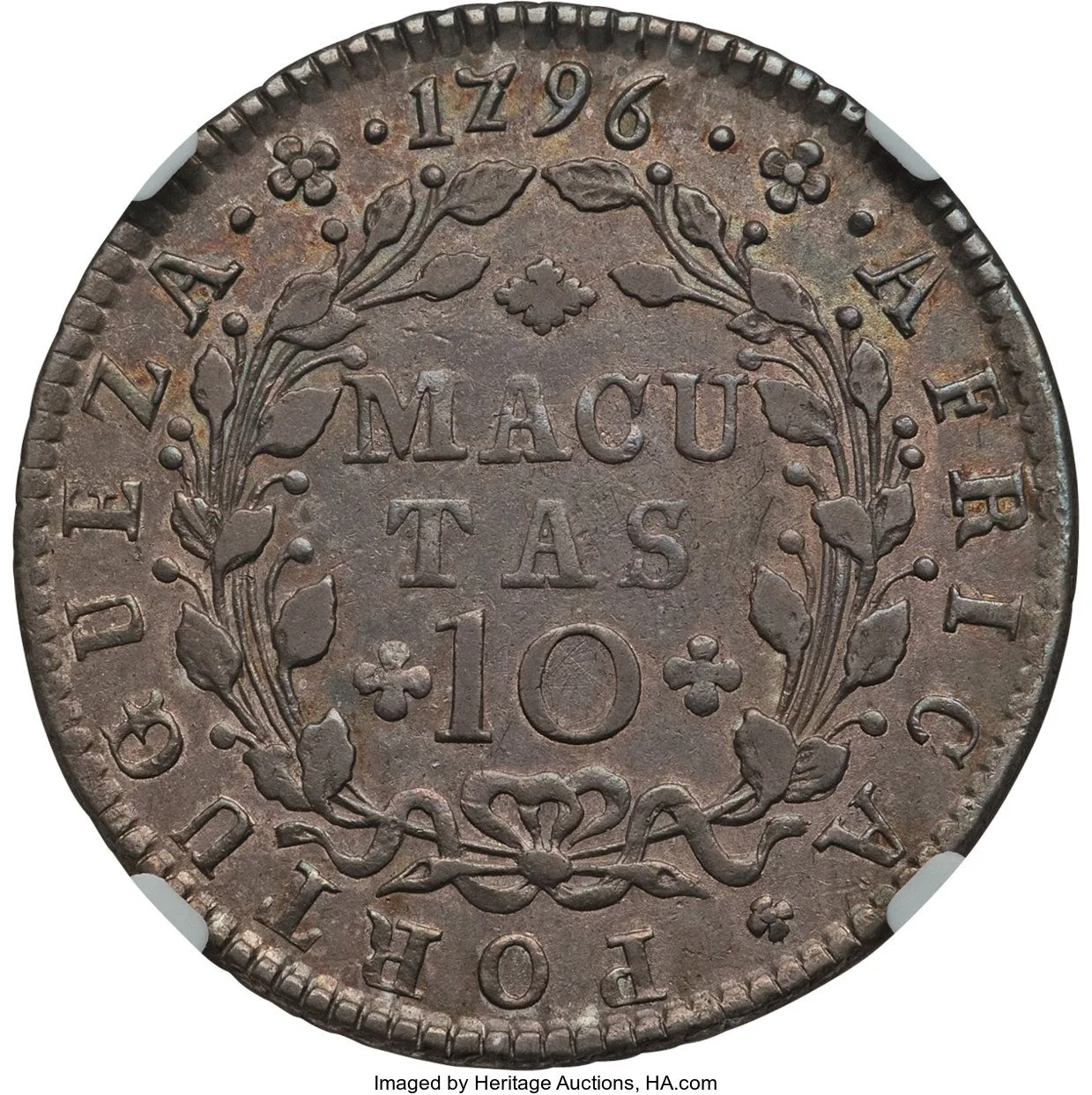
Reverse
Description:
Laurel wreath encircling denomination.
Inscription:
AFRICA·PORTUGUEZA·1796
MACUTAS
10
MACUTAS
10
Script: Latin
Edge
Milled
Mintings
| Year | Mint Mark | Mintage | Quality | Collection |
|---|---|---|---|---|
| 1796 | — | 24,000 |
Historical background
In 1796, the currency situation in the Kingdom of Angola, a Portuguese colony, was characterized by a complex and often chaotic system of multiple, competing mediums of exchange. The official Portuguese currency, the real, was theoretically in use, but in practice, it was scarce and often flowed directly back to Lisbon through trade imbalances. The colony's economy, heavily reliant on the transatlantic slave trade and subsistence agriculture, suffered from a chronic shortage of specie (minted coins), which stifled local commerce and complicated administration.
To fill this monetary vacuum, a variety of substitute currencies circulated widely. The most important of these was the libongo, a traditional cloth currency woven from raffia palm fiber, which held significant cultural and economic value for local African societies. Additionally, other commodities served as dinheiro de África (African money), including salt, beads, and especially zimbos (cowrie shells), which were imported in vast quantities from the Indian Ocean. Portuguese authorities and traders were forced to engage with this system, often using bundles of cloth as a standard unit of account for valuing slaves and goods.
This duality created a fragmented economic landscape. While Portuguese merchants and the colonial government in Luanda attempted to impose their monetary standard for official taxes and large-scale slave transactions, the day-to-day economy of the interior and local markets operated on the older, embedded systems of commodity money. Consequently, 1796 represents a period of monetary tension, where the imposed European system struggled to function without adapting to and absorbing the resilient, practical currencies that had facilitated regional trade for centuries.
To fill this monetary vacuum, a variety of substitute currencies circulated widely. The most important of these was the libongo, a traditional cloth currency woven from raffia palm fiber, which held significant cultural and economic value for local African societies. Additionally, other commodities served as dinheiro de África (African money), including salt, beads, and especially zimbos (cowrie shells), which were imported in vast quantities from the Indian Ocean. Portuguese authorities and traders were forced to engage with this system, often using bundles of cloth as a standard unit of account for valuing slaves and goods.
This duality created a fragmented economic landscape. While Portuguese merchants and the colonial government in Luanda attempted to impose their monetary standard for official taxes and large-scale slave transactions, the day-to-day economy of the interior and local markets operated on the older, embedded systems of commodity money. Consequently, 1796 represents a period of monetary tension, where the imposed European system struggled to function without adapting to and absorbing the resilient, practical currencies that had facilitated regional trade for centuries.

💎 Extremely Rare