

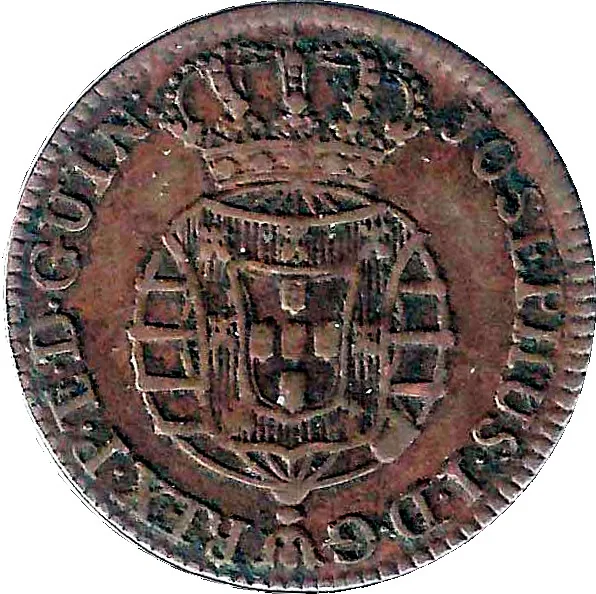
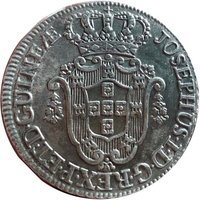
Obverse
Inscription:
JOSEPHUS·I·D·G·REX·P·ET·D·GUIN·
Script: Latin
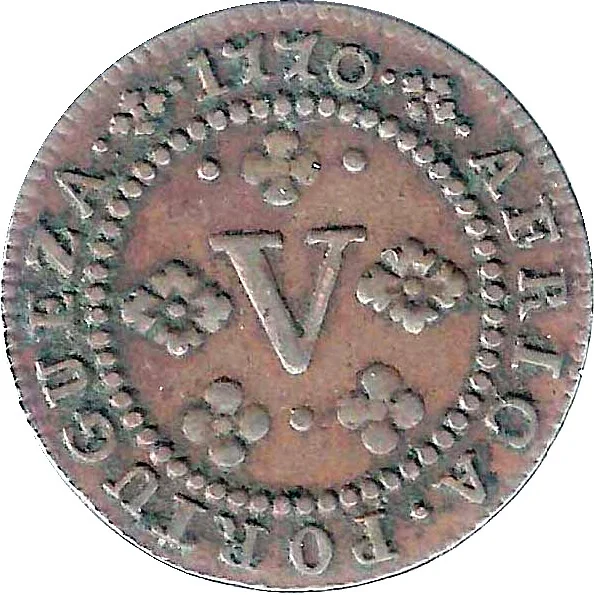
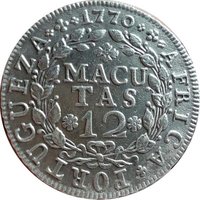
Reverse
Inscription:
AFRICA·PORTUGUEZA·1770
· V ·
· V ·
Script: Latin
Edge
Plain
Mints
| Name | Mark |
|---|---|
| Imprensa Nacional - Casa da Moeda | — |
Mintings
| Year | Mint Mark | Mintage | Quality | Collection |
|---|---|---|---|---|
| 1770 | — | 400,000 | ||
| 1771 | — | 533,000 |
Historical background
In 1770, Angola was not a sovereign nation issuing its own currency but a Portuguese colony, fundamentally integrated into the Atlantic slave trade economy. The official currency in circulation was Portuguese, primarily copper réis coins and higher-value gold coins like the cruzado. However, this official coinage was chronically scarce in the colony, especially outside the coastal administrative centers of Luanda and Benguela. The Portuguese crown’s mercantilist policies tightly controlled trade, aiming to extract wealth, which limited the regular influx of sufficient coinage to facilitate a complex internal market.
Consequently, a multi-layered system of commodity and substitute currencies dominated daily transactions. The most significant unit of account and a de facto currency was the libra (pound) of prime enslaved African men, a standard against which all other goods were valued. In practice, a variety of commodities served as money, including lengths of cloth (particularly African and Indian textiles like barafulas and beatilhas), bundles of tobacco, jugs of rum (gerebita), and especially rolls of imported Brazilian tobacco. These goods, traded from the coast inland, were used to purchase slaves and other commodities, creating a complex barter-based economy with standardized exchange rates.
This monetary environment reflected Angola’s role as a predatory extractive state. The economy was oriented almost entirely toward the capture and purchase of human beings, with currency systems—both official and makeshift—serving that end. The scarcity of coinage underscored Portugal’s focus on extracting slaves rather than developing the colony’s internal infrastructure. Meanwhile, the use of trade goods as currency tied Angola’s financial system directly to the fluctuations of international commerce and the demands of the slave trade, leaving it underdeveloped and vulnerable.
Consequently, a multi-layered system of commodity and substitute currencies dominated daily transactions. The most significant unit of account and a de facto currency was the libra (pound) of prime enslaved African men, a standard against which all other goods were valued. In practice, a variety of commodities served as money, including lengths of cloth (particularly African and Indian textiles like barafulas and beatilhas), bundles of tobacco, jugs of rum (gerebita), and especially rolls of imported Brazilian tobacco. These goods, traded from the coast inland, were used to purchase slaves and other commodities, creating a complex barter-based economy with standardized exchange rates.
This monetary environment reflected Angola’s role as a predatory extractive state. The economy was oriented almost entirely toward the capture and purchase of human beings, with currency systems—both official and makeshift—serving that end. The scarcity of coinage underscored Portugal’s focus on extracting slaves rather than developing the colony’s internal infrastructure. Meanwhile, the use of trade goods as currency tied Angola’s financial system directly to the fluctuations of international commerce and the demands of the slave trade, leaving it underdeveloped and vulnerable.
💎 Very Rare