

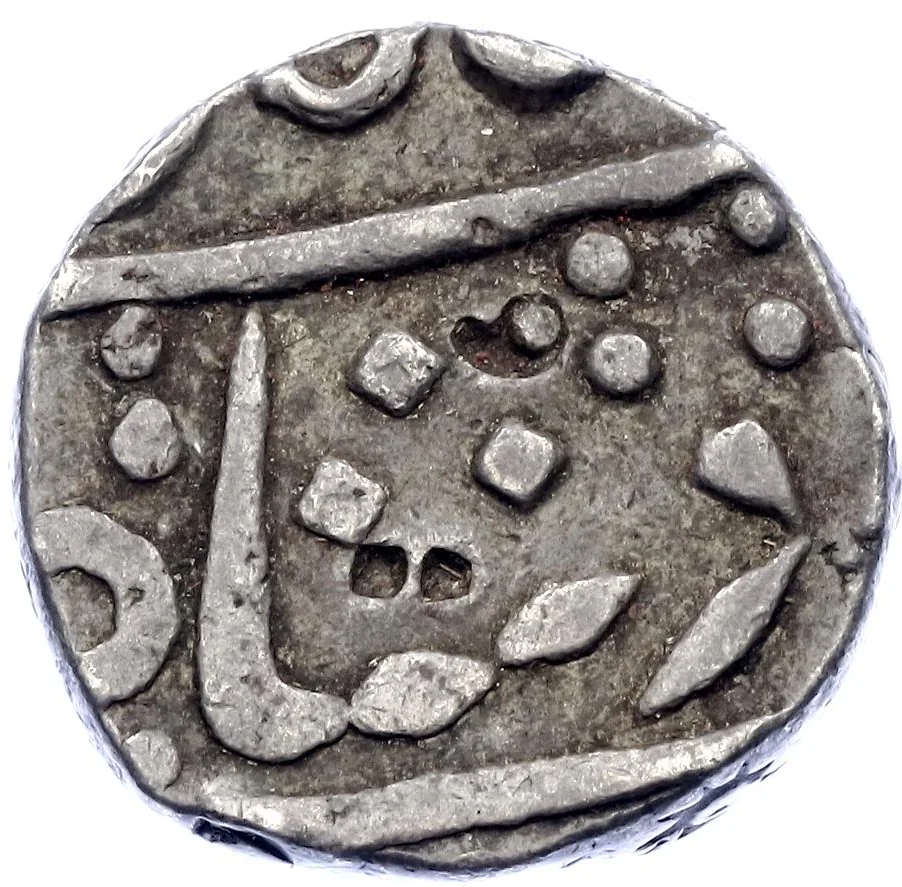

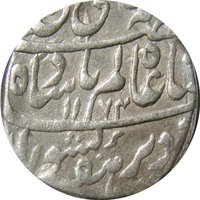
Obverse
Description:
By Shah Alam II.
Inscription:
Sikka-e-mubarak badshah ghazi shah alam II
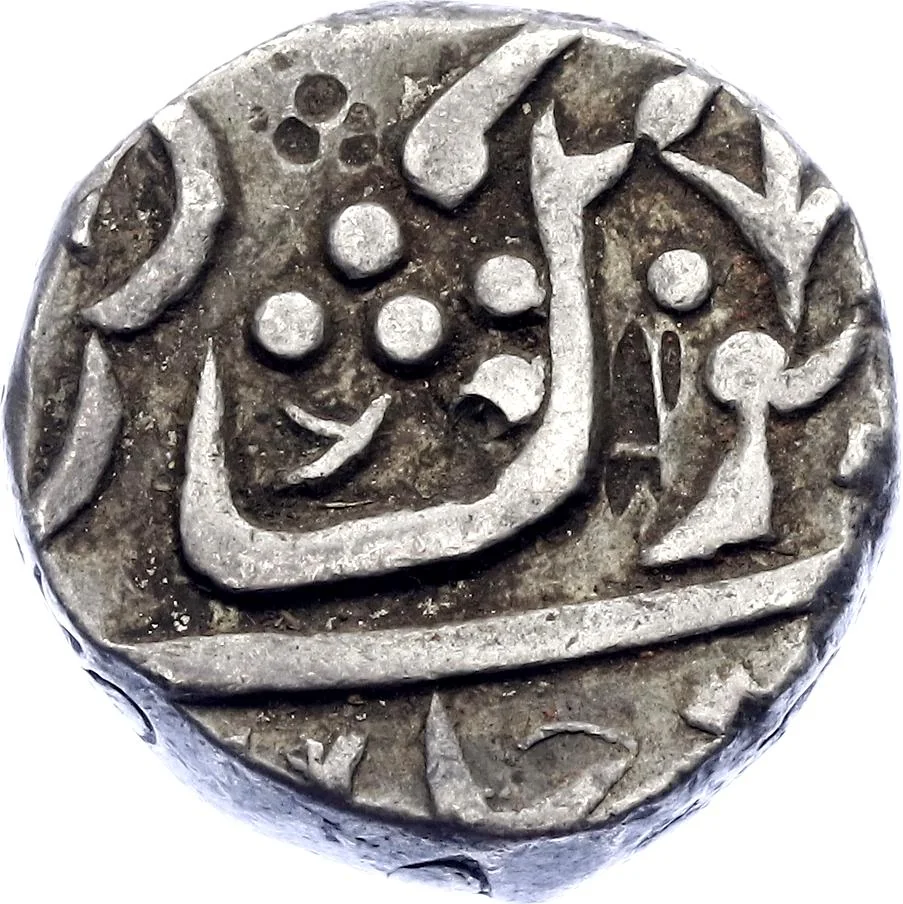
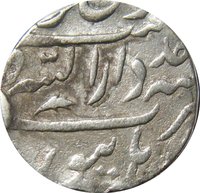
Reverse
Inscription:
Manus memanat julus zarab J'afarabad 'urf Chandor
Edge
Plain
Mintings
| Year | Mint Mark | Mintage | Quality | Collection |
|---|---|---|---|---|
| — | — | — |
Historical background
By 1760, the Maratha Empire's currency system reflected its vast but decentralized political structure. The heartland, or Swarajya, primarily used the Shivrai copper coin, a durable and trusted currency introduced by Shivaji, alongside silver Rupees minted in major centers like Pune and Satara. These rupees often bore the name of the current Chhatrapati (Shivaji II) and the Persian month of minting, but their weight and purity were inconsistent. Beyond the core territories, powerful regional chiefs and commanders—like the Gaekwads in Gujarat, the Bhonsles of Nagpur, and the Holkars in Malwa—operated their own mints, issuing coins in the name of the emperor but according to local standards, leading to a complex mosaic of circulating currencies.
This monetary fragmentation was exacerbated by the immense financial strain of the Third Battle of Panipat (1761). The years leading up to 1760 saw the Peshwa's government in Pune directing colossal resources northward to fund the massive campaign. This involved draining the treasury of precious metals, demanding extraordinary taxes (levies), and borrowing heavily from bankers (sahukars). The need to pay and supply a huge army far from home placed severe pressure on the empire's fiscal stability, distorting local economies and likely leading to debasement of coinage in some areas to meet short-term expenses.
Consequently, while the Maratha monetary network was extensive and facilitated trade, it lacked uniform central control. The system relied heavily on the skills of money-changers (sarrafs) to assess the varying values of coins from different mints. The impending disaster at Panipat would soon trigger a deep financial and political crisis, further weakening central monetary authority and accelerating the shift towards the semi-independent "confederacy" era, where regional coinage would become even more prominent.
This monetary fragmentation was exacerbated by the immense financial strain of the Third Battle of Panipat (1761). The years leading up to 1760 saw the Peshwa's government in Pune directing colossal resources northward to fund the massive campaign. This involved draining the treasury of precious metals, demanding extraordinary taxes (levies), and borrowing heavily from bankers (sahukars). The need to pay and supply a huge army far from home placed severe pressure on the empire's fiscal stability, distorting local economies and likely leading to debasement of coinage in some areas to meet short-term expenses.
Consequently, while the Maratha monetary network was extensive and facilitated trade, it lacked uniform central control. The system relied heavily on the skills of money-changers (sarrafs) to assess the varying values of coins from different mints. The impending disaster at Panipat would soon trigger a deep financial and political crisis, further weakening central monetary authority and accelerating the shift towards the semi-independent "confederacy" era, where regional coinage would become even more prominent.
💎 Very Rare