Logo Title
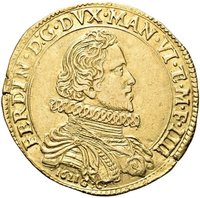
obverse
reverse
Ctucker CC BY

1 Soldo – Duchy of Montferrat

Italy
Context
Year: 1661
Country: Italy Country flag
Currency:
Demonetized: Yes
Material
Diameter: 19.5 mm
Weight: 1.45 g
Shape: Round
Composition: Copper
Magnetic: No
References
KM: #Click to copy to clipboard66
Numista: #52657

Obverse

Description:
Left-facing draped bust.
Inscription:
·CAR II D G DVX MANT·
Script: Latin

Reverse

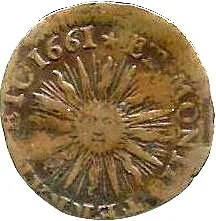
Description:
Radiant sun encircled by letters.
Inscription:
ET MONTIS FERRATI ECT 1661
Script: Latin

Edge
Categories

Symbol> Sun

Mints

NameMark
Mantua

Mintings

YearMint MarkMintageQualityCollection
1661

Historical background

In 1661, the Duchy of Montferrat, a small but strategically significant state in northwestern Italy, operated within a complex and fragmented monetary landscape. As a possession of the Gonzaga dynasty of Mantua, its currency system was deeply intertwined with that of the Mantuan state, but it also reflected broader regional influences. The primary unit of account was the lira (divided into 20 soldi and 240 denari), but the actual coins in circulation were a diverse mix. These included local issues from the Mantuan mint, such as sesini and trilline, alongside a heavy influx of foreign silver coins, particularly Spanish reales and Piedmontese scudi, due to Montferrat's location on the border of Spanish-controlled Milan and the Duchy of Savoy.

The period was one of significant monetary instability and debasement. The Mantuan state, under the financially strained Duke Charles II Gonzaga, frequently resorted to reducing the silver content in its coinage to raise short-term revenue. This practice, common across many Italian states during the 17th century, led to chronic inflation, a loss of public confidence in local currency, and the hoarding of older, purer coins. Consequently, the effective money supply in Montferrat was dictated more by the inflow and valuation of foreign specie than by local minting, creating a confusing system where exchange rates fluctuated and transactions required expert knowledge.

This monetary confusion was exacerbated by Montferrat's precarious political situation. Following the War of the Mantuan Succession (1628–1631), much of the duchy was under de facto French influence, though officially held by the Gonzaga. This political ambiguity meant monetary policy was often reactive rather than sovereign. The local economy, primarily agricultural, suffered from this instability, as taxes collected in debased coinage and prices in markets were difficult to stabilize. Thus, in 1661, Montferrat's currency situation was characterized by dependency, debasement, and disorder, mirroring the duchy's own vulnerable position amidst the competing powers of 17th-century Italy.
💎 Very Rare