

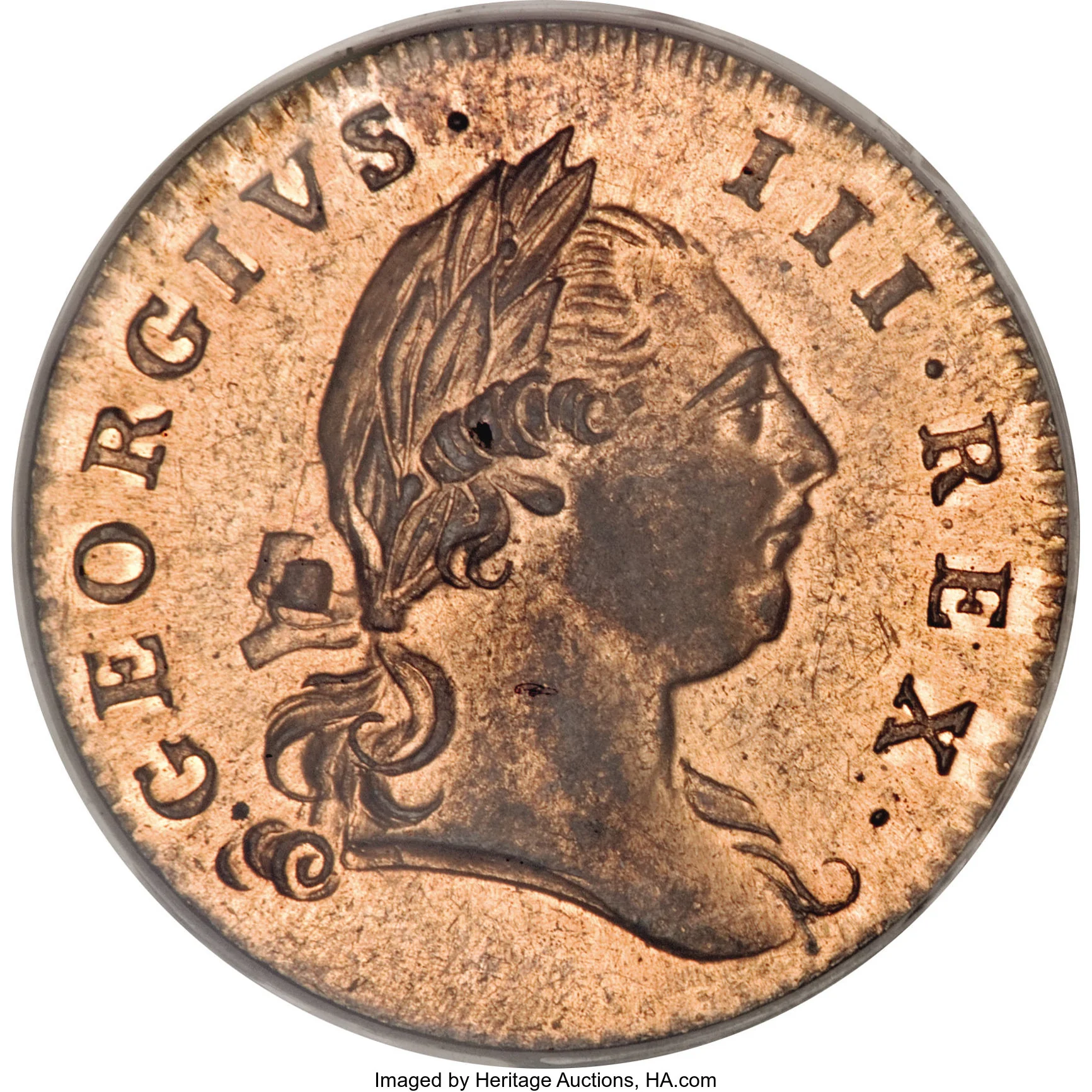
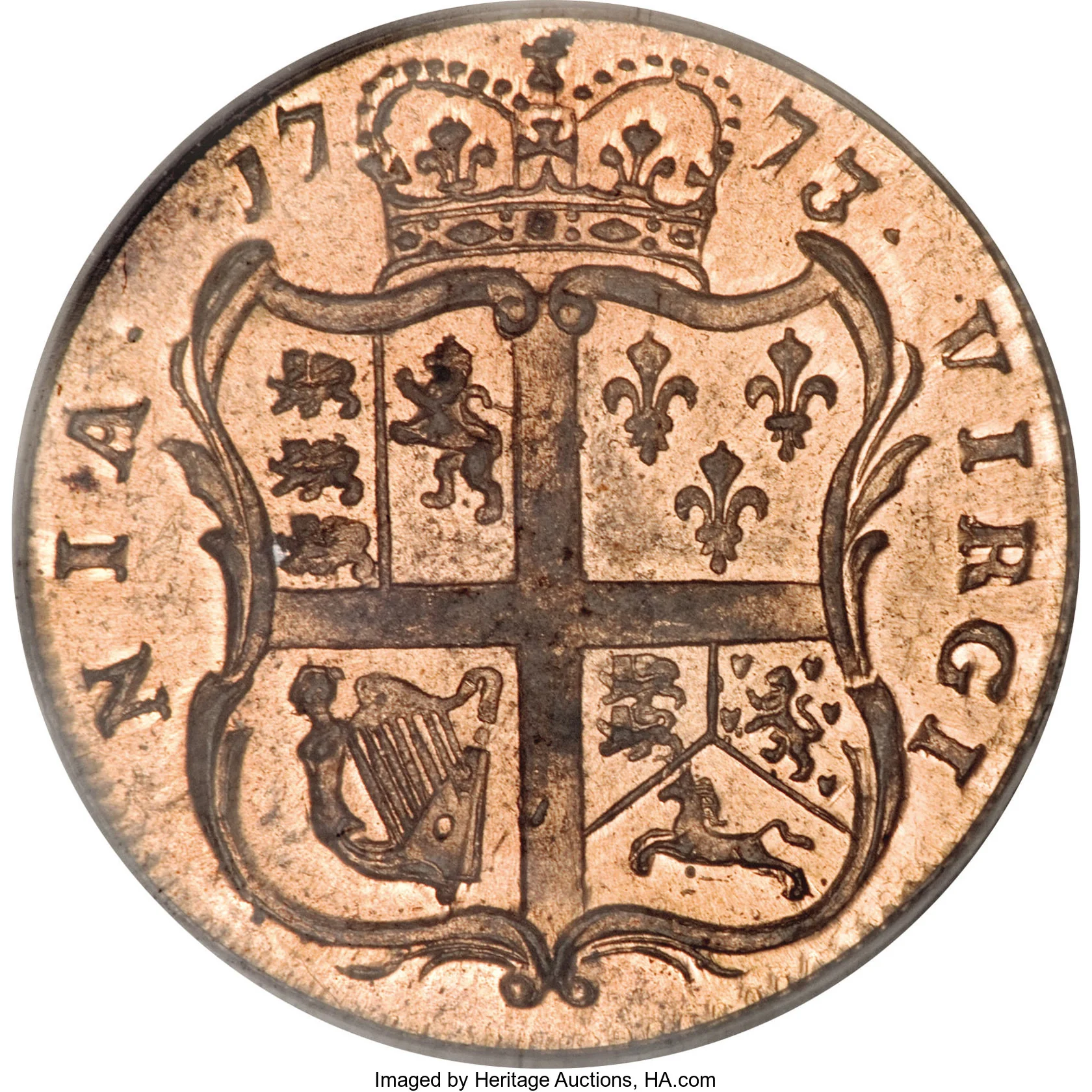
½ Penny – Virginia
United States
Context
Year: 1773
Country: United States 
Issuer: Virginia
Period:
(1607—1776)
Ruler: George III
Currency:
Demonetized: Yes
Material
References
KM: #Click to copy to clipboardTn25
Numista: #52458
Obverse
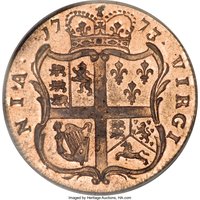
Reverse
Edge
Plain
Categories
| Person> Monarch |
| Symbols> Coat of Arms |
Mints
| Name | Mark |
|---|---|
| Royal Mint (Tower of London) | — |
Mintings
| Year | Mint Mark | Mintage | Quality | Collection |
|---|---|---|---|---|
| 1773 | — | — |
Historical background
In 1773, Virginia, like the other American colonies, operated within a complex and strained monetary system dictated by British mercantilist policy. The colony was chronically short of specie (gold and silver coin), as these hard currencies were constantly drained away to pay for imported British manufactured goods, creating a persistent trade imbalance. To facilitate everyday commerce, Virginians relied heavily on a patchwork of paper currencies, including notes issued by the colonial government itself and, more problematically, a flood of often-depreciated paper money from other colonies. The most trusted medium for large transactions, especially for paying imperial taxes and settling debts to British merchants, remained the British pound sterling.
The British government, through acts like the Currency Act of 1764, severely restricted the colonies' ability to issue their own legal tender paper money, aiming to protect British creditors from being paid in depreciated colonial currency. This placed Virginia's planters, including many in the House of Burgesses, in a difficult position. They were land-rich but cash-poor, and the scarcity of sound money made it exceedingly difficult to pay their growing debts to Scottish and English tobacco factors. This monetary constraint fueled deep resentment, as it was seen as a deliberate British strategy to keep the colonies economically subservient and debtor-dependent.
Thus, by 1773, the currency situation was a significant point of political and economic friction. While local transactions persisted using a confusing array of paper bills and commodity tobacco notes (used as a form of currency in the tobacco trade), the structural lack of control over their own monetary supply was a powerful grievance for Virginia's elite. This issue intertwined with broader themes of self-governance and economic sovereignty, making the currency question a key ingredient in the rising discontent that would, within two years, lead to open rebellion.
The British government, through acts like the Currency Act of 1764, severely restricted the colonies' ability to issue their own legal tender paper money, aiming to protect British creditors from being paid in depreciated colonial currency. This placed Virginia's planters, including many in the House of Burgesses, in a difficult position. They were land-rich but cash-poor, and the scarcity of sound money made it exceedingly difficult to pay their growing debts to Scottish and English tobacco factors. This monetary constraint fueled deep resentment, as it was seen as a deliberate British strategy to keep the colonies economically subservient and debtor-dependent.
Thus, by 1773, the currency situation was a significant point of political and economic friction. While local transactions persisted using a confusing array of paper bills and commodity tobacco notes (used as a form of currency in the tobacco trade), the structural lack of control over their own monetary supply was a powerful grievance for Virginia's elite. This issue intertwined with broader themes of self-governance and economic sovereignty, making the currency question a key ingredient in the rising discontent that would, within two years, lead to open rebellion.
⭐ Somewhat Rare