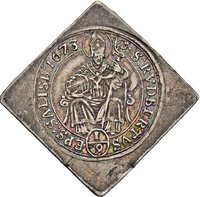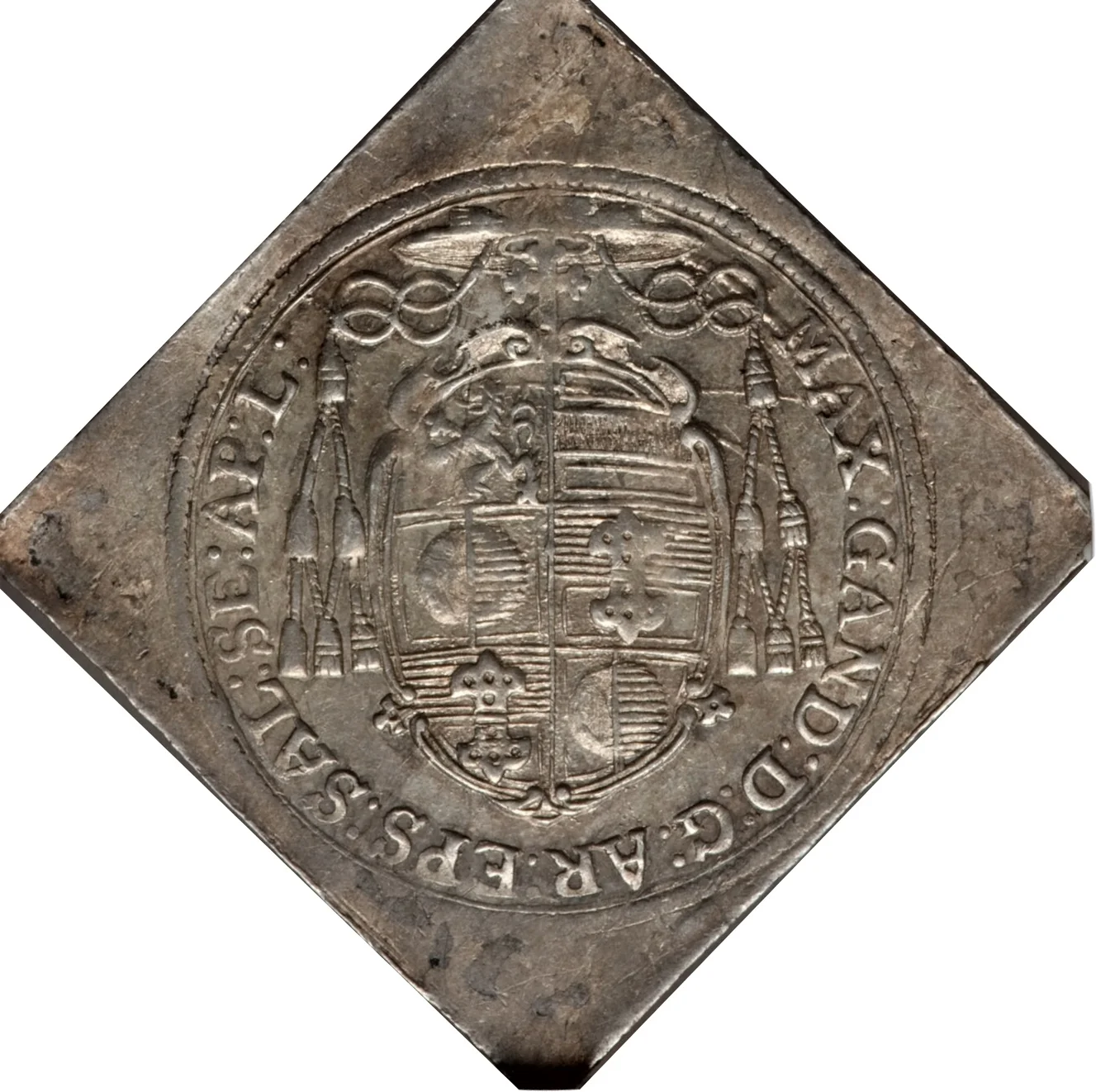
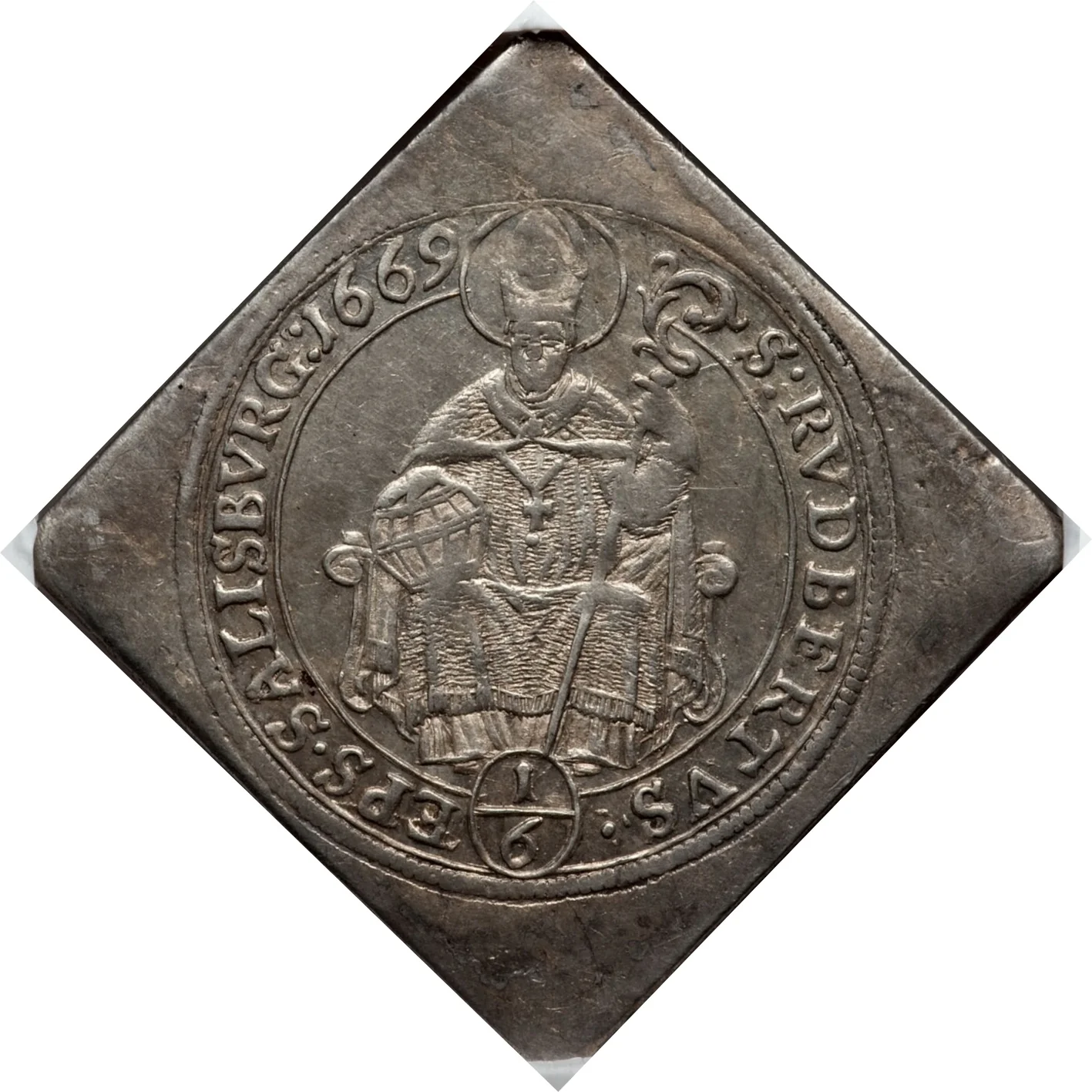
In 1669, the Bishopric of Salzburg operated within the complex monetary landscape of the Holy Roman Empire, a system characterized by a multitude of circulating coins from different states and cities. Salzburg itself, as a powerful ecclesiastical principality, held the right of
Münzregal (coinage regality), minting its own currency, primarily silver Guldiner, Kreuzer, and Pfennigs. However, its monetary policy was heavily influenced by the imperial framework, particularly the official
Reichsmünzordnung (Imperial Coinage Ordinance), which attempted—with limited success—to standardize the silver content and value of coins across the Empire to facilitate trade and reduce chaos.
The specific situation in 1669 was one of transition and tension following the great monetary crisis of the
Kipper- und Wipperzeit (1618–1623), a period of severe debasement and inflation. While the worst was over, the legacy of debased coins and distrust lingered. Archbishop Maximilian Gandolf von Kuenburg, ruling from 1668, inherited a treasury strained by the costs of maintaining Salzburg's autonomy and lavish Baroque building projects. The pressure to generate revenue could tempt a prince-bishop to engage in slight debasement or currency manipulation, a common practice among contemporary rulers, though Salzburg generally maintained a reputation for relatively sound coinage compared to many of its secular neighbors.
Practically, this meant that trade in Salzburg's bustling markets involved constant evaluation of coins from Bavaria, the Habsburg lands, Italy, and beyond. Merchants and money-changers had to assess the actual silver content and weight of each coin, as the face value often differed from its intrinsic worth. The year 1669 itself did not see a major monetary reform, but it existed within this fragile equilibrium where the bishopric's fiscal needs, imperial regulations, and the practical demands of commerce were in a constant, delicate balance, setting the stage for the more standardized conventions that would emerge in the following decades.