

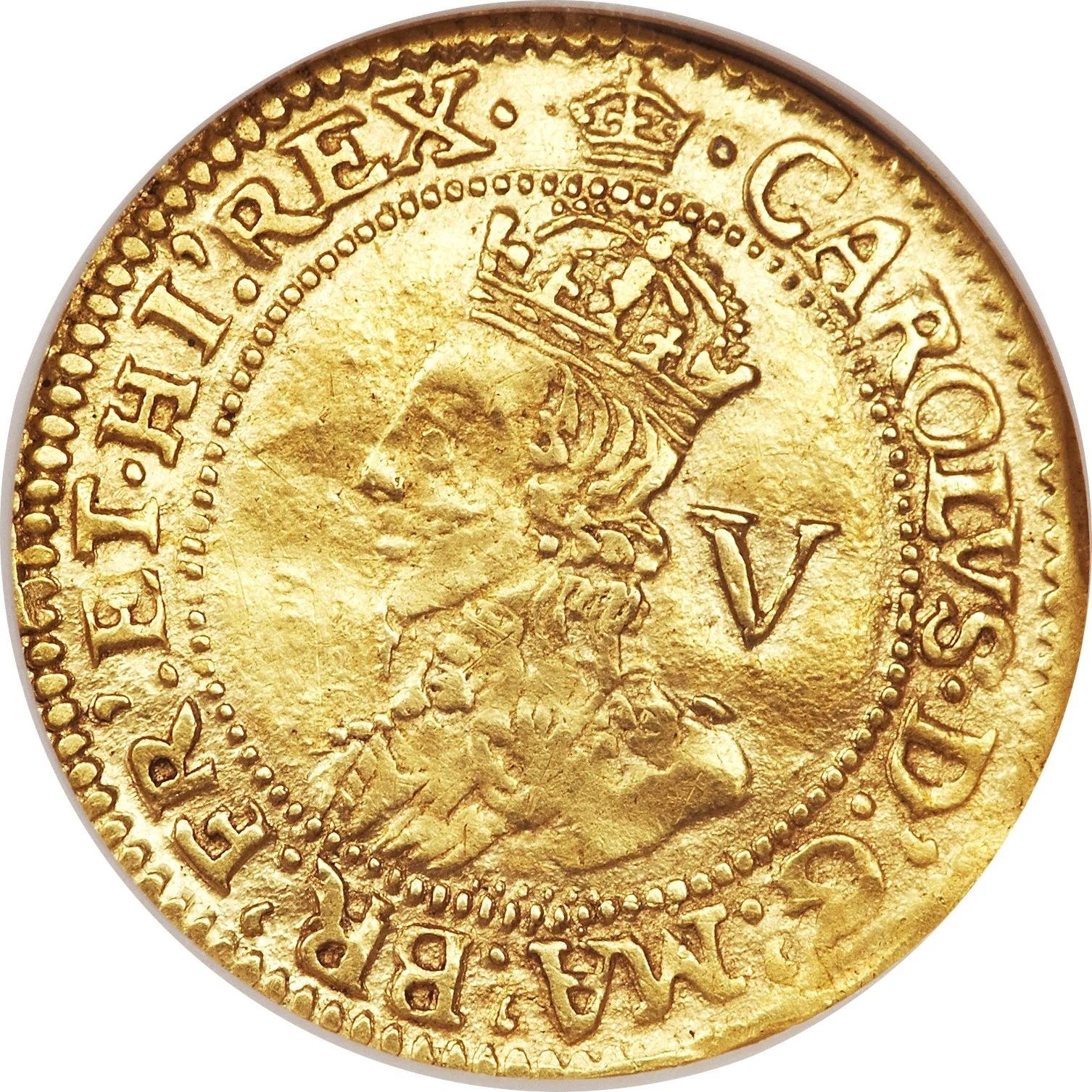
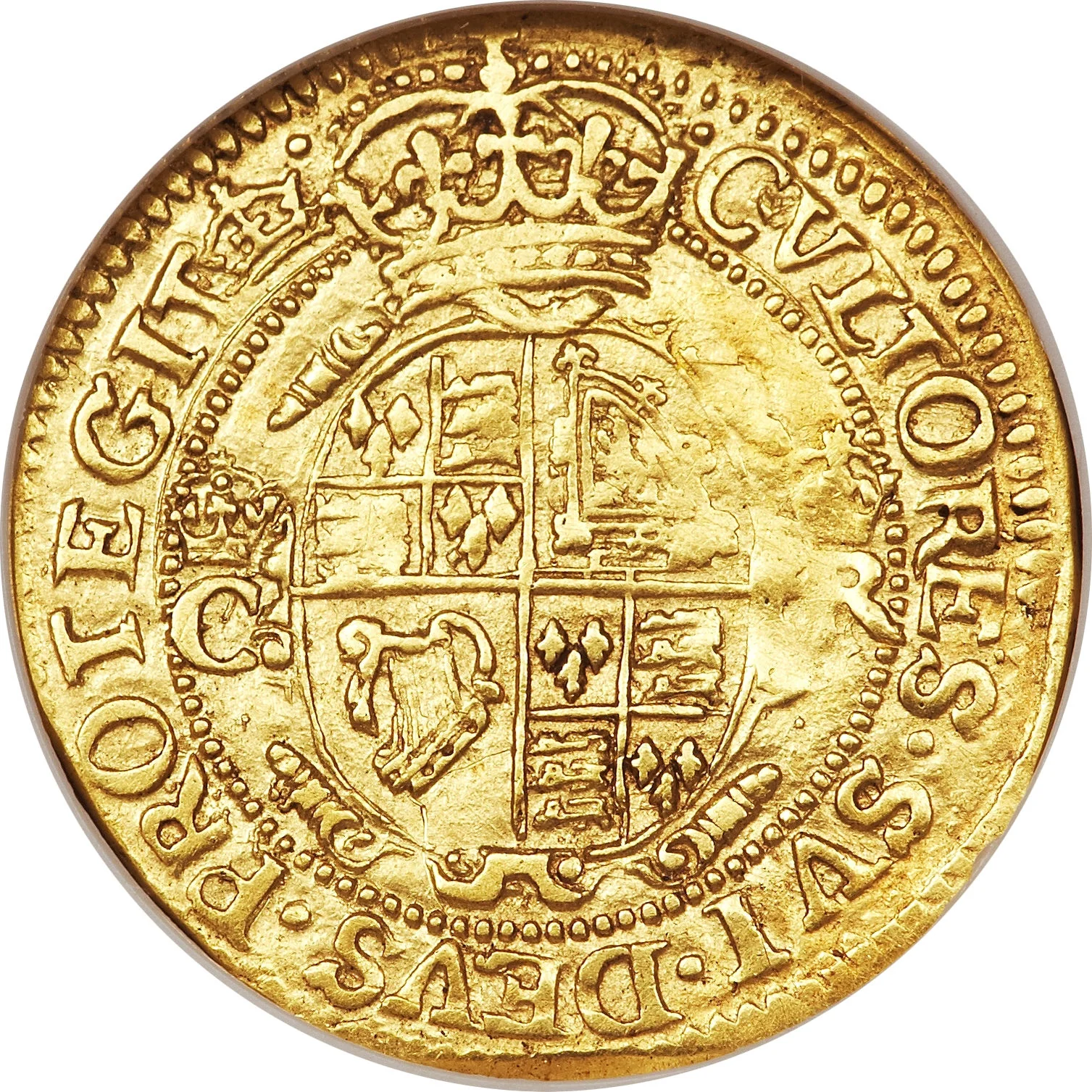
1 Crown – England
United Kingdom
Context
Years: 1635–1636
Country: United Kingdom 
Issuer: England 
Ruler: Charles I
Currency:
(1158—1970)
Demonetized: Yes
References
KM: #Click to copy to clipboard139
Numista: #52425
Value
Bullion value: $344.86
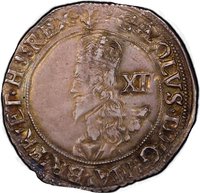
Obverse
Inscription:
CAROLVS D:G: MA: BR: FR: ET HI: REX
Script: Latin
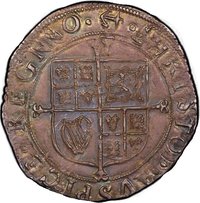
Reverse
Inscription:
CVLTORES SVI DEVS PROTEGIT
Script: Latin
Edge
Mintings
| Year | Mint Mark | Mintage | Quality | Collection |
|---|---|---|---|---|
| — | — | — |
Historical background
In 1635, England operated under a bimetallic monetary system, with the pound sterling (£) as the unit of account, divided into 20 shillings and 240 pence. The physical currency consisted of hand-hammered silver coins, primarily shillings and crowns, and gold coins like the unite and the angel. However, the system was under significant strain. A key problem was the disparity between the official mint ratio valuing gold against silver and the market rates in Europe, which led to the steady export and melting down of full-weight silver coins for profit. This left the domestic coinage in a degraded state, often clipped or worn, reducing public trust in its face value.
The situation was exacerbated by the policies of King Charles I and his Lord Treasurer, Richard Weston, Earl of Portland. Facing perpetual financial difficulties without Parliament (which he had dissolved in 1629), the Crown sought innovative revenues. One notorious method was the seizure of approximately £130,000 of private bullion stored in the Tower of London by merchants in 1640, an act of forced borrowing that shattered financial confidence. More routinely, the Crown profited from the Mint through seigniorage fees and exploited feudal prerogatives, but these did not solve the underlying currency instability.
Consequently, England suffered from a shortage of reliable, high-value silver coinage for everyday commerce, hindering trade. The poor state of the coinage meant transactions often required careful weighing rather than simple counting, creating inefficiency and dispute. This monetary malaise formed part of the broader fiscal and political tensions between the Crown and the merchant classes, contributing to the grievances that would erupt into the English Civil Wars in the following decade. The currency would not be effectively reformed until the great recoinage under William III in the 1690s.
The situation was exacerbated by the policies of King Charles I and his Lord Treasurer, Richard Weston, Earl of Portland. Facing perpetual financial difficulties without Parliament (which he had dissolved in 1629), the Crown sought innovative revenues. One notorious method was the seizure of approximately £130,000 of private bullion stored in the Tower of London by merchants in 1640, an act of forced borrowing that shattered financial confidence. More routinely, the Crown profited from the Mint through seigniorage fees and exploited feudal prerogatives, but these did not solve the underlying currency instability.
Consequently, England suffered from a shortage of reliable, high-value silver coinage for everyday commerce, hindering trade. The poor state of the coinage meant transactions often required careful weighing rather than simple counting, creating inefficiency and dispute. This monetary malaise formed part of the broader fiscal and political tensions between the Crown and the merchant classes, contributing to the grievances that would erupt into the English Civil Wars in the following decade. The currency would not be effectively reformed until the great recoinage under William III in the 1690s.
✨ Legendary