

1 Shilling – England
United Kingdom
Context
Years: 1639–1643
Country: United Kingdom 
Issuer: England 
Ruler: Charles I
Currency:
(1158—1970)
Demonetized: Yes
Material
Diameter: 30 mm
Weight: 6 g
Silver weight: 5.55 g
Shape: Irregular round
Composition: 92.5% Silver
Magnetic: No
Technique: Hammered
References
KM: #Click to copy to clipboard110
Numista: #52407
Value
Bullion value: $15.78
Obverse
Description:
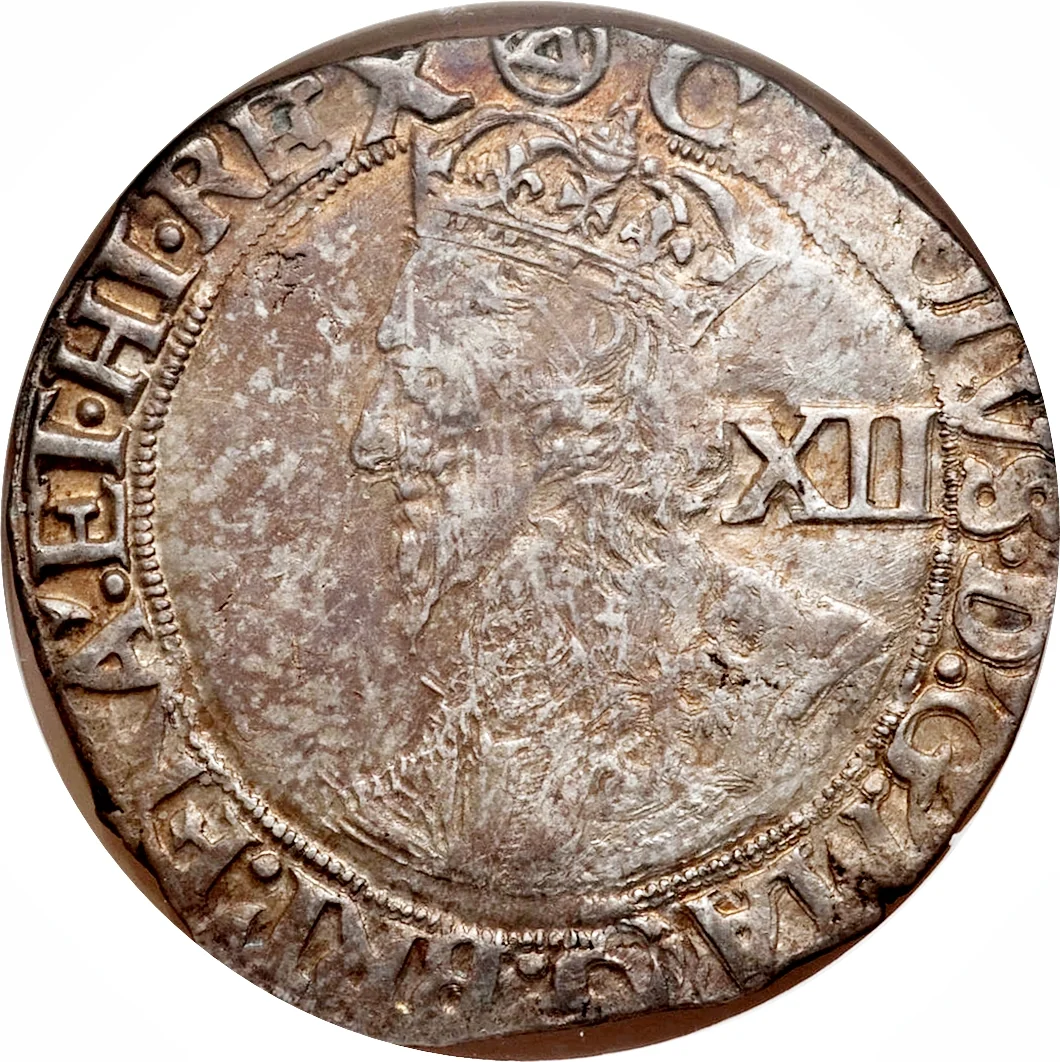
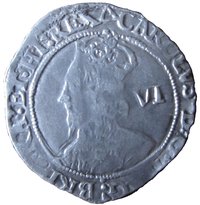
Sixth, left-facing Briot bust (type 4.4) with stellate collar, double-arched crown, rear denomination, perimeter legend.
Inscription:
CAROLVS.D.G.MAG.BRI.FRA.ET.HI.REX
Script: Latin
Reverse
Description:
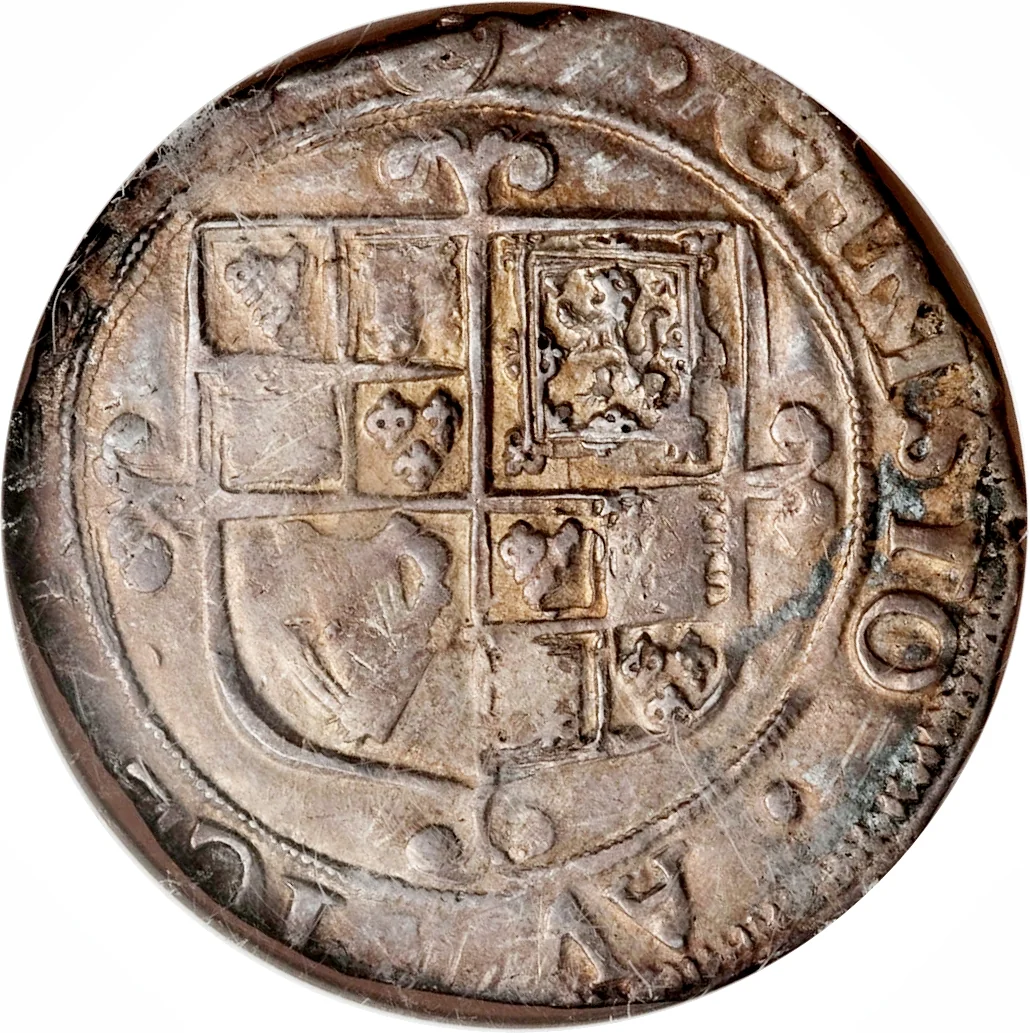
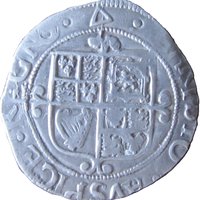
Quartered shield over cross moline within circle, surrounded by legend.
Inscription:
CHRISTO . AVSPICE . REGNO
Script: Latin
Edge
Mints
| Name | Mark |
|---|---|
| Royal Mint (Tower of London) | — |
Mintings
| Year | Mint Mark | Mintage | Quality | Collection |
|---|---|---|---|---|
| — | — | — |
Historical background
In 1639, England’s currency system was fundamentally based on silver, with the pound sterling (£) defined as a specific weight of sterling silver. Coins in circulation were predominantly hammer-struck silver pieces, such as shillings and crowns, whose value was intrinsically tied to their precious metal content. However, the system was under significant strain due to the widespread practice of "clipping" (shaving metal from coin edges) and counterfeiting, which degraded the coinage in circulation and created uncertainty about the true silver value of any given coin. This erosion of trust in the physical currency was a persistent economic problem.
The monetary situation was directly influenced by the Crown's financial policies. King Charles I, ruling without Parliament since 1629, was in desperate need of revenue, particularly to fund the ongoing Bishops' Wars against Scotland. His expedients included not only controversial taxes like Ship Money but also the seizure of the private bullion deposits of merchants held at the Tower of London mint in 1640 (known as the seizure of the "London Mint"). While this act provided a short-term cash infusion, it severely damaged financial confidence and disrupted trade by demonstrating that even stored wealth was not safe from royal appropriation.
Consequently, the currency situation reflected and exacerbated the broader political crisis. The degradation of the coinage hindered efficient trade and taxation, while the Crown's manipulation of monetary trust for fiscal reasons alienated the merchant classes and contributed to the growing grievances that would erupt into the English Civil Wars just three years later. Thus, in 1639, England’s currency was not merely an economic instrument but a fragile and contested element in the escalating conflict between the Crown and the nation over finance and sovereignty.
The monetary situation was directly influenced by the Crown's financial policies. King Charles I, ruling without Parliament since 1629, was in desperate need of revenue, particularly to fund the ongoing Bishops' Wars against Scotland. His expedients included not only controversial taxes like Ship Money but also the seizure of the private bullion deposits of merchants held at the Tower of London mint in 1640 (known as the seizure of the "London Mint"). While this act provided a short-term cash infusion, it severely damaged financial confidence and disrupted trade by demonstrating that even stored wealth was not safe from royal appropriation.
Consequently, the currency situation reflected and exacerbated the broader political crisis. The degradation of the coinage hindered efficient trade and taxation, while the Crown's manipulation of monetary trust for fiscal reasons alienated the merchant classes and contributed to the growing grievances that would erupt into the English Civil Wars just three years later. Thus, in 1639, England’s currency was not merely an economic instrument but a fragile and contested element in the escalating conflict between the Crown and the nation over finance and sovereignty.
⭐ Somewhat Rare