

1 Unite – England
United Kingdom
Context
Years: 1633–1641
Country: United Kingdom 
Issuer: England 
Ruler: Charles I
Currency:
(1158—1970)
Demonetized: Yes
Material
Weight: 9 g
Gold weight: 8.25 g
Shape: Irregular rectangular
Composition: 91.7% Gold
Magnetic: No
Technique: Hammered
References
KM: #Click to copy to clipboard154.1
Numista: #52400
Value
Bullion value: $1378.36
Obverse
Description:
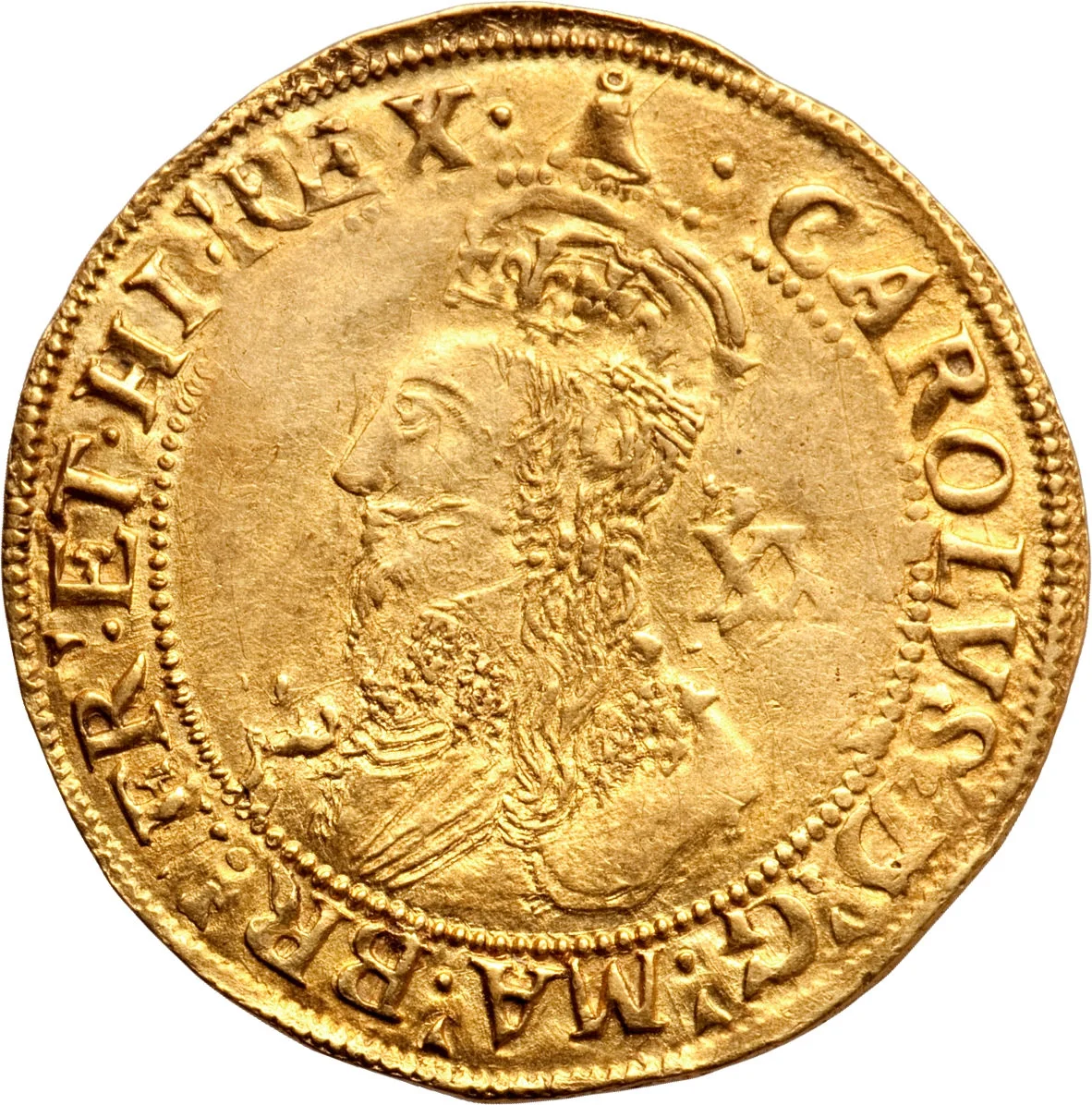
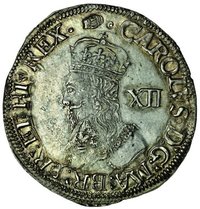
Smaller bust of Charles I left, laureate, crowned, draped, and armored.
Inscription:
CAROLVS·D:G·MAG·BR·FR·ET·HI·REX
XX
XX
Script: Latin
Reverse
Description:
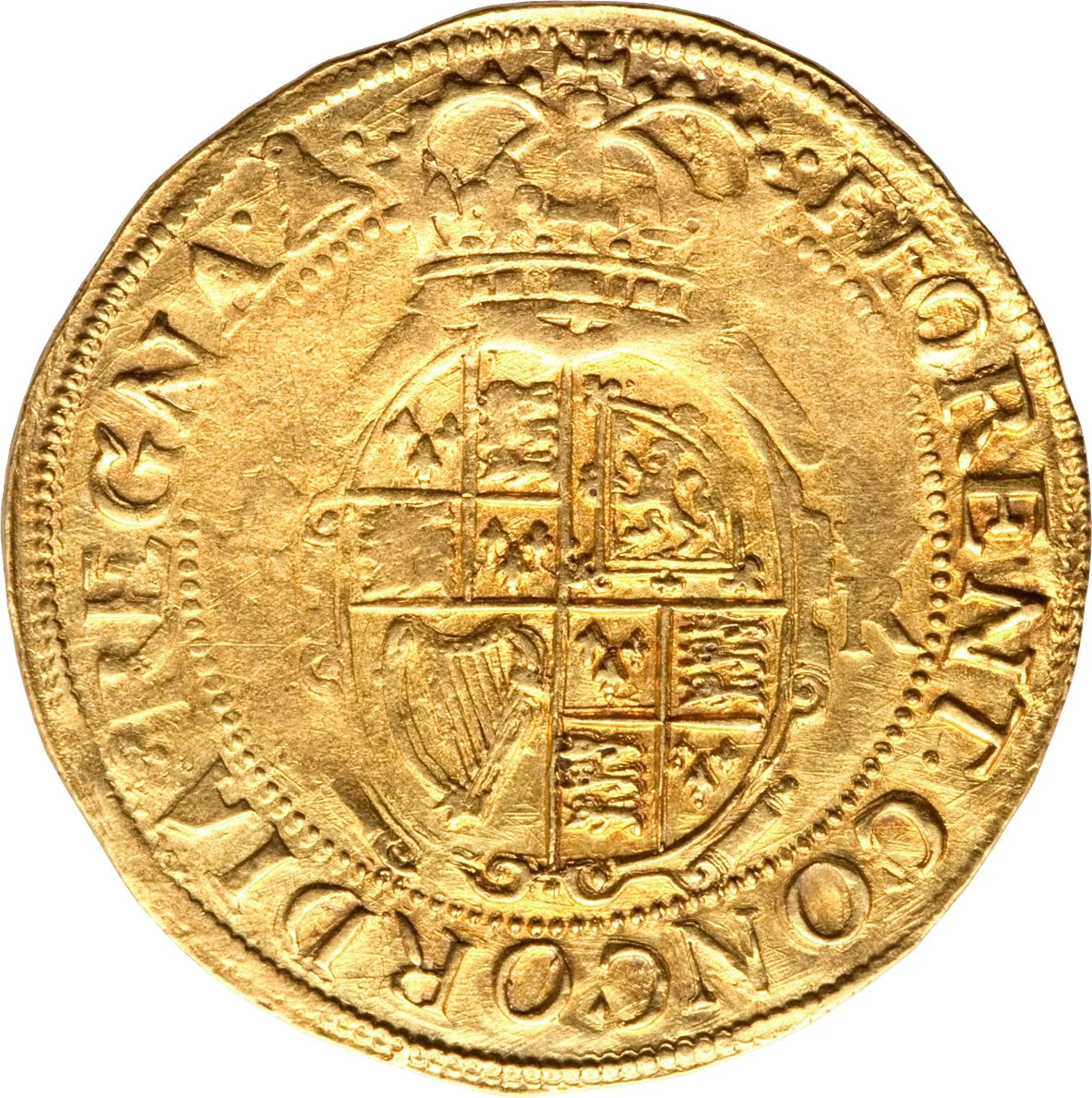
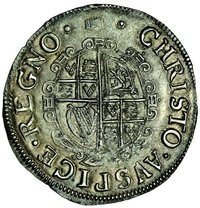
Crowned shield quartering the arms of England, Scotland, Ireland, and France, within a beaded border.
Inscription:
FLORENT·CONCORDIA·REGNA
Script: Latin
Edge
Mints
| Name | Mark |
|---|---|
| Royal Mint (Tower of London) | — |
Mintings
| Year | Mint Mark | Mintage | Quality | Collection |
|---|---|---|---|---|
| — | — | — |
Historical background
In 1633, England operated under a bimetallic currency system based on silver and gold, but it was a period of significant monetary instability. The primary unit was the silver pound sterling, divided into 20 shillings and 240 pence, with the most common coin being the silver shilling. However, the coinage was in a severely degraded state due to decades of "clipping" (shaving metal from edges) and counterfeiting, which eroded public trust. More critically, the official mint price for silver was set too low compared to its market value in Europe, leading to the widespread melting down and export of full-weight silver coins. This resulted in a circulation dominated by underweight and poor-quality coins, hampering trade and causing inflation.
King Charles I, ruling without Parliament since 1629, faced persistent financial difficulties and viewed the currency chaos as both a problem and a potential source of revenue. His government was aware of the need for reform but was hesitant to undertake the massive and costly recoinage required. Instead, Charles exploited his royal prerogative over the currency, most notoriously through the seizure of approximately £130,000 worth of private bullion stored in the Tower of London mint for safekeeping in 1640. While this act lay in the future, the precedent of such arbitrary actions created deep anxiety among merchants and financiers, further undermining confidence in the monetary system.
The currency problems were symptomatic of the wider tensions between the Crown and the propertied classes. The deteriorating coinage directly impacted trade, credit, and taxation, exacerbating economic grievances that would contribute to the political conflicts of the 1640s. While no major reform was enacted in 1633, the state of the currency remained a persistent and troubling issue, reflecting the Crown's weakening fiscal authority and the growing disconnect between royal policy and the needs of a commercialising economy. It was a silent crisis that eroded the economic foundations of the Stuart monarchy.
King Charles I, ruling without Parliament since 1629, faced persistent financial difficulties and viewed the currency chaos as both a problem and a potential source of revenue. His government was aware of the need for reform but was hesitant to undertake the massive and costly recoinage required. Instead, Charles exploited his royal prerogative over the currency, most notoriously through the seizure of approximately £130,000 worth of private bullion stored in the Tower of London mint for safekeeping in 1640. While this act lay in the future, the precedent of such arbitrary actions created deep anxiety among merchants and financiers, further undermining confidence in the monetary system.
The currency problems were symptomatic of the wider tensions between the Crown and the propertied classes. The deteriorating coinage directly impacted trade, credit, and taxation, exacerbating economic grievances that would contribute to the political conflicts of the 1640s. While no major reform was enacted in 1633, the state of the currency remained a persistent and troubling issue, reflecting the Crown's weakening fiscal authority and the growing disconnect between royal policy and the needs of a commercialising economy. It was a silent crisis that eroded the economic foundations of the Stuart monarchy.
✨ Legendary