

½ ducat – Norway
Add to wishlist
Norway
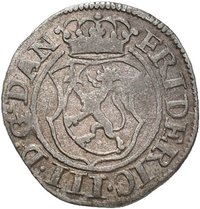
Obverse
Description:
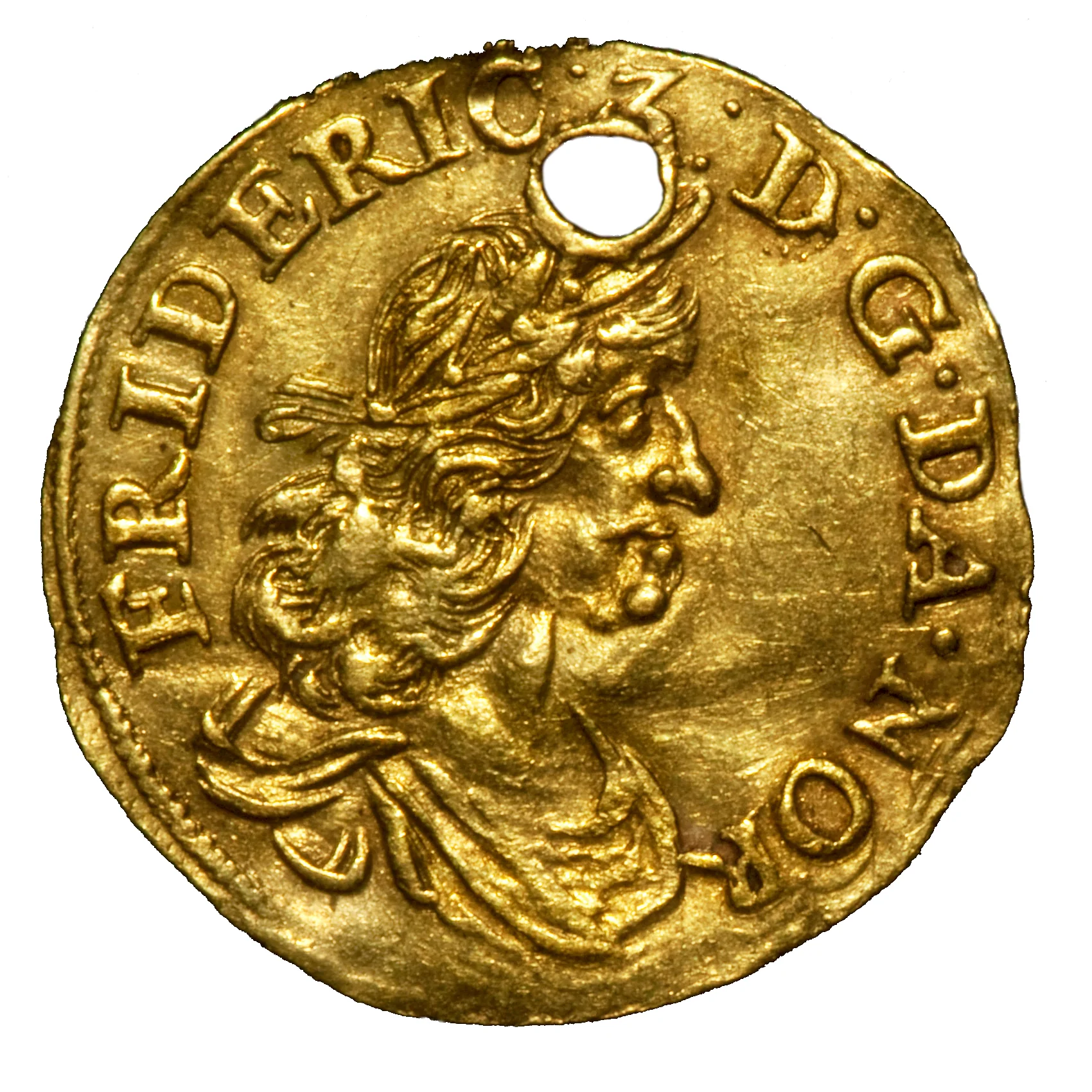
Bust of Frederik III with laurel wreath, facing right, within inscription and beaded rim.
Inscription:
FRIDERIC:3:D:G·DA·NOR
Script: Latin
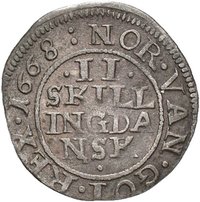
Reverse
Description:
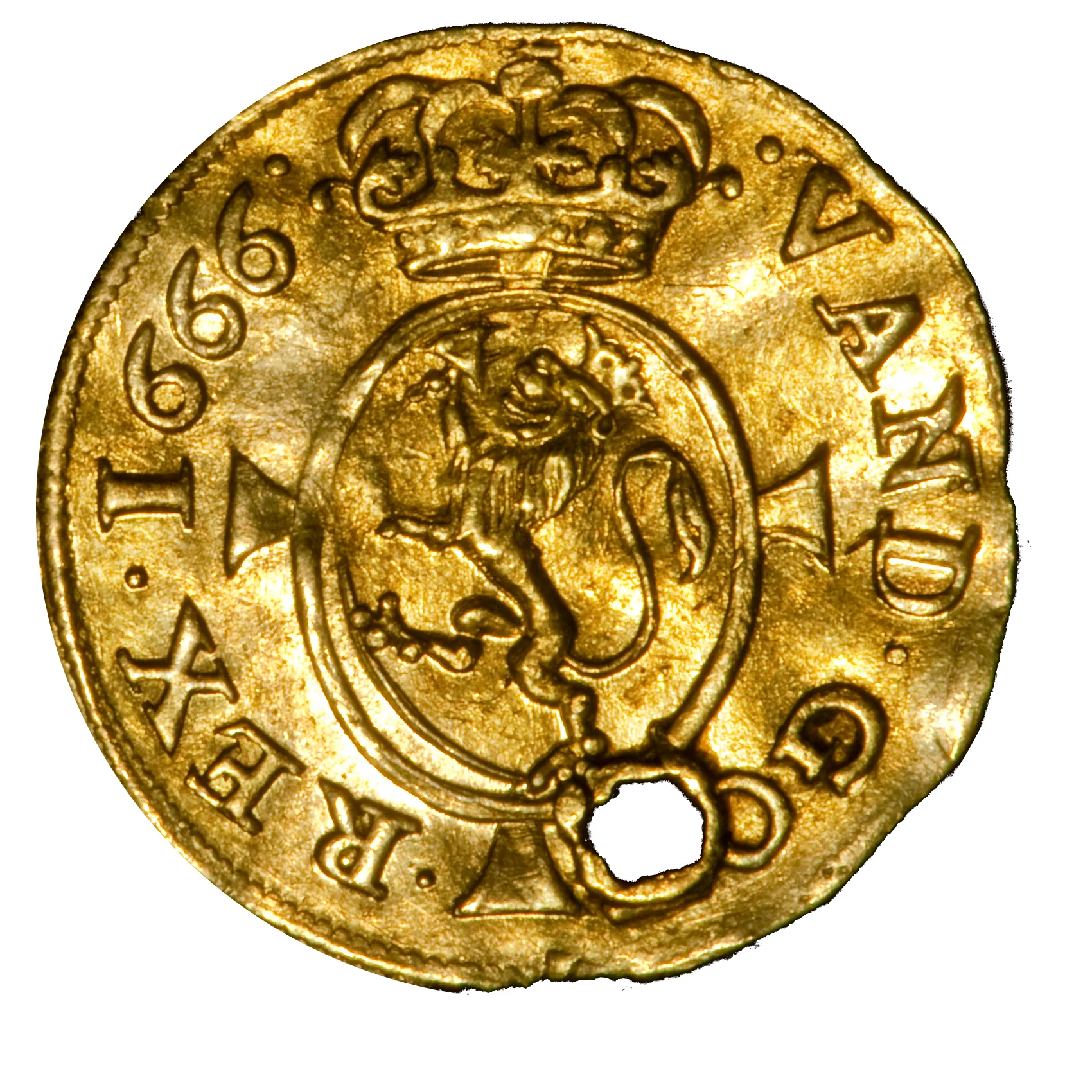
Norwegian lion with axe in crowned shield on cross, surrounded by inscription and date. Beaded rim.
Inscription:
·VAND·GOT· ·REX·1666·
Script: Latin
Edge
Plain.
Categories
| Animal |
| Person> Monarch |
| Symbol> Crown |
| Symbols> Coat of Arms |
| Symbol> Cross |
| Object> Cold weapons |
Mints
| Name | Mark |
|---|---|
| Christiania | — |
Mintings
| Year | Mint Mark | Mintage | Quality | Collection |
|---|---|---|---|---|
| 1666 | — | — |
Historical background
In 1666, Norway was part of the dual monarchy of Denmark-Norway, and its currency situation was characterized by severe instability and depreciation. The primary circulating coin was the silver riksdaler, but its value was being steadily eroded by the state's fiscal policies. To finance costly wars, particularly the Second Northern War (1655-1660) against Sweden, the government had resorted to repeated debasements—reducing the silver content in coins while maintaining their face value. This practice, combined with the widespread circulation of low-quality foreign coins and clipped domestic coins, led to significant inflation and a loss of public trust in the monetary system.
The situation was further complicated by the introduction of paper money in the form of kreditivsedler (credit notes) in 1666, issued by the newly established Rigsbank in Copenhagen. While intended to stabilize finances and provide a reliable medium of exchange, these notes were not fully backed by silver reserves and were initially met with public skepticism. In Norway, which relied heavily on a silver-based economy for its vital timber and fish exports, this fiat currency added another layer of uncertainty to daily transactions and long-term contracts.
Consequently, the year 1666 found Norway in a precarious monetary position, caught between the legacy of war-driven debasement and an experimental, untrusted paper currency. This instability hindered trade, created arbitrary shifts in wealth between debtors and creditors, and reflected the broader challenges of a centralized Danish fiscal policy attempting to manage a geographically and economically distinct Norway. The period set the stage for ongoing monetary struggles that would persist for decades.
The situation was further complicated by the introduction of paper money in the form of kreditivsedler (credit notes) in 1666, issued by the newly established Rigsbank in Copenhagen. While intended to stabilize finances and provide a reliable medium of exchange, these notes were not fully backed by silver reserves and were initially met with public skepticism. In Norway, which relied heavily on a silver-based economy for its vital timber and fish exports, this fiat currency added another layer of uncertainty to daily transactions and long-term contracts.
Consequently, the year 1666 found Norway in a precarious monetary position, caught between the legacy of war-driven debasement and an experimental, untrusted paper currency. This instability hindered trade, created arbitrary shifts in wealth between debtors and creditors, and reflected the broader challenges of a centralized Danish fiscal policy attempting to manage a geographically and economically distinct Norway. The period set the stage for ongoing monetary struggles that would persist for decades.
✨ Legendary