

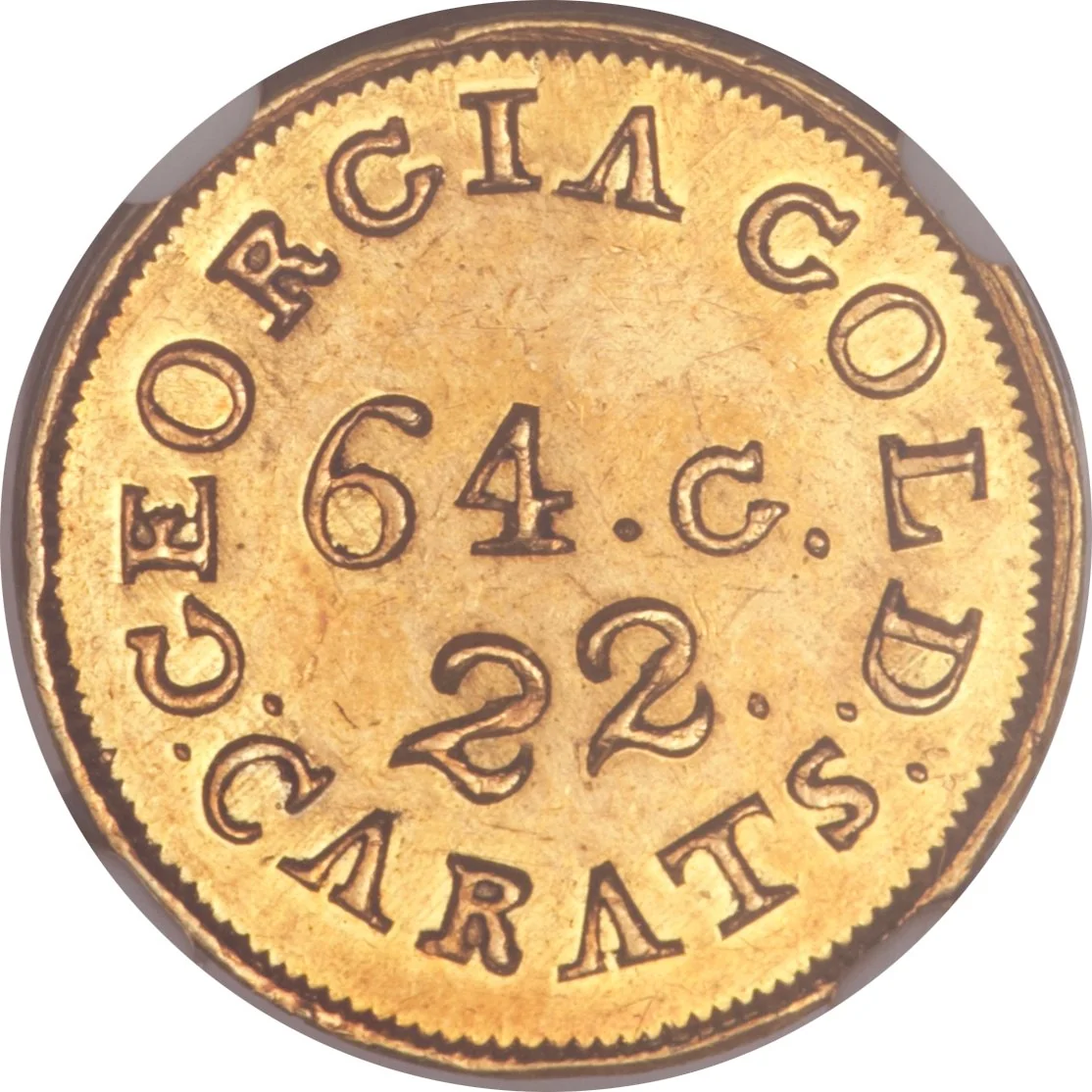
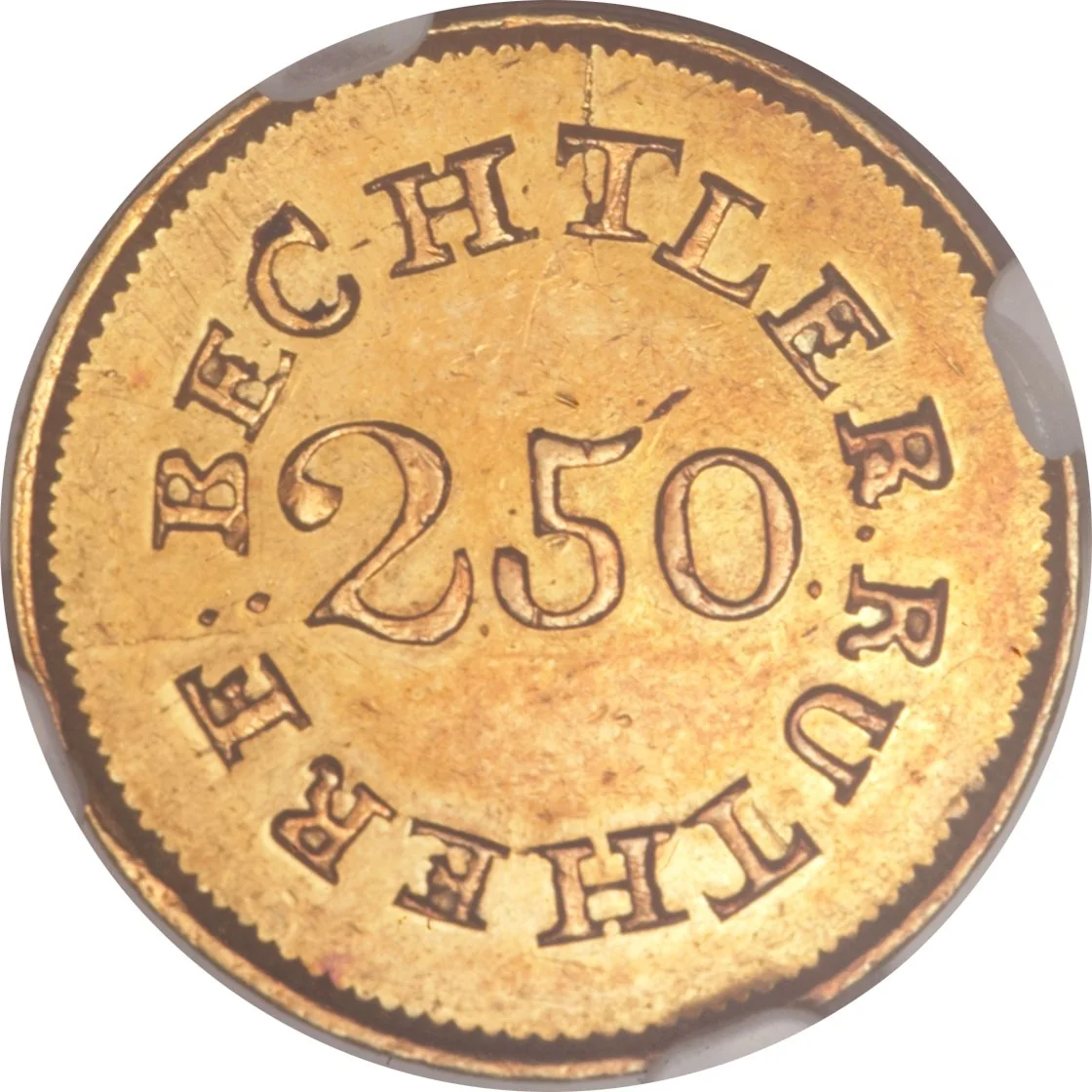
2½ dollars – Georgia
Add to wishlist
United States
Context
Years: 1837–1842
Country: United States
Issuer: Georgia
Period:
(since 1789)
Currency:
Demonetized: Yes
Material
References
KM: #
Numista: #118946
Value
Bullion value: $640.31
Obverse
Reverse
Edge
Mintings
| Year | Mint Mark | Mintage | Quality | Collection |
|---|---|---|---|---|
| — | — | — |
Historical background
In 1837, the currency situation in the Russian Empire, which included Georgia following its annexation in the early 19th century, was in a state of profound crisis. The empire's finances had been severely strained by the costs of the Napoleonic Wars and subsequent military campaigns, leading to massive printing of paper assignats. These notes had depreciated dramatically against silver, creating a chaotic dual-system where goods had both a paper price and a much higher silver price. This instability was felt acutely in Georgia, where the Russian paper currency circulated alongside a variety of older metallic coins, including Persian abbasis and Turkish piastres, complicating all commercial transactions.
Tsar Nicholas I's government attempted a fundamental reform to stabilize the economy. In July 1839, a manifesto established a fixed exchange rate between the devalued assignats and a new silver-based currency, setting the groundwork for the introduction of the silver ruble. While the formal decree came in 1839, the preparatory financial measures and the pervasive monetary instability defined the experience of 1837. In Georgia, this period was marked by uncertainty in trade and daily economic life, as the population awaited and adapted to the impending imperial shift from a discredited paper system to a hard metallic standard.
The reform aimed to restore public confidence and facilitate Georgia's deeper integration into the imperial economic sphere. For Georgian merchants and peasants, however, the immediate years leading to 1837 were characterized by the practical difficulties of fluctuating values, which hampered both local markets and the region's growing export trade in wine and silk. Thus, the currency situation in Georgia in 1837 is best understood as a tense transitional phase, directly tied to St. Petersburg's efforts to resolve a systemic imperial financial collapse that disrupted the entire South Caucasus.
Tsar Nicholas I's government attempted a fundamental reform to stabilize the economy. In July 1839, a manifesto established a fixed exchange rate between the devalued assignats and a new silver-based currency, setting the groundwork for the introduction of the silver ruble. While the formal decree came in 1839, the preparatory financial measures and the pervasive monetary instability defined the experience of 1837. In Georgia, this period was marked by uncertainty in trade and daily economic life, as the population awaited and adapted to the impending imperial shift from a discredited paper system to a hard metallic standard.
The reform aimed to restore public confidence and facilitate Georgia's deeper integration into the imperial economic sphere. For Georgian merchants and peasants, however, the immediate years leading to 1837 were characterized by the practical difficulties of fluctuating values, which hampered both local markets and the region's growing export trade in wine and silk. Thus, the currency situation in Georgia in 1837 is best understood as a tense transitional phase, directly tied to St. Petersburg's efforts to resolve a systemic imperial financial collapse that disrupted the entire South Caucasus.
✨ Legendary