

½ Dam – Mughal Empire
India
Context
Years: 1560–1575
Country: India 
Issuer: Mughal Empire
Ruler: Akbar
Currency:
(1540—1842)
Demonetized: Yes
Material
Diameter: 19 mm
Weight: 10 g
Shape: Irregular round
Composition: Copper
Magnetic: No
Technique: Hammered
References
KM: #Click to copy to clipboard22.1
Numista: #50974
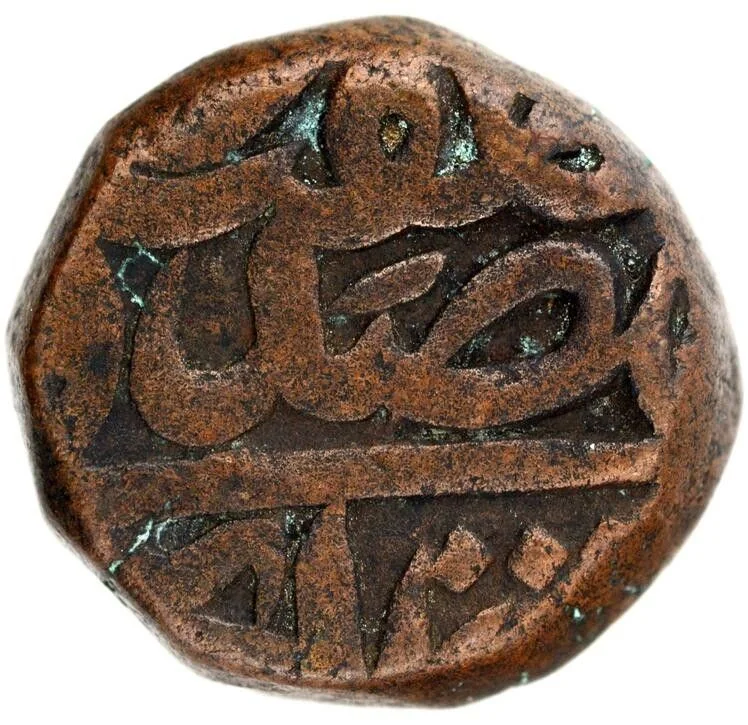
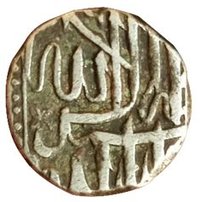
Obverse
Description:
Date in numeric and written form.
Script: Persian
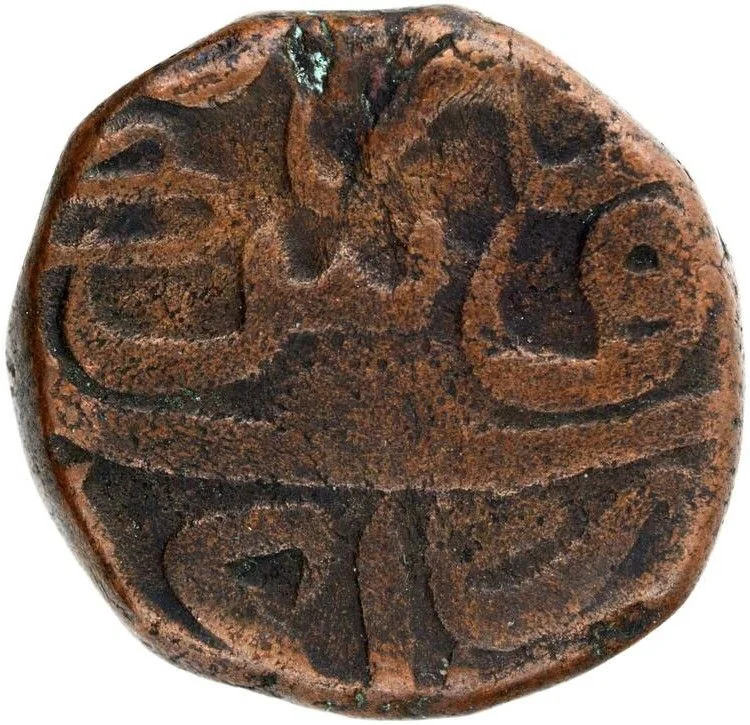
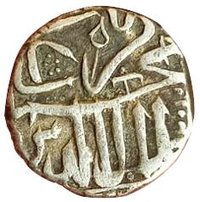
Reverse
Description:
Value and mint inscription.
Script: Persian
Edge
Plain
Mints
| Name | Mark |
|---|---|
| Agra | — |
Mintings
| Year | Mint Mark | Mintage | Quality | Collection |
|---|---|---|---|---|
| 1560 | — | — | ||
| 1563 | — | — | ||
| 1564 | — | — | ||
| 1565 | — | — | ||
| 1567 | — | — | ||
| 1568 | — | — | ||
| 1575 | — | — |
Historical background
In 1560, the Mughal Empire's currency system was in a formative stage under the reign of its second emperor, Humayun, who had only recently regained his throne in 1555 after a period of exile. The monetary landscape was not yet a unified imperial standard but was instead a complex inheritance from previous regional powers, primarily the Afghan Sur Empire (1540-1555). The Sur ruler, Sher Shah Suri, had instituted a major currency reform, introducing high-purity silver rupees and copper dams that were minted across the empire with standardised weight and design. These coins, particularly the well-regarded rupaiya, set a powerful precedent that the Mughals would later adopt and refine.
Upon his return, Humayun largely continued using the existing Sur mints and coinage to ensure economic stability, meaning that in 1560 the coins in circulation were predominantly those struck by Sher Shah and his successors. The system was bimetallic, relying on silver for larger transactions and copper for everyday use, with a fixed exchange rate between them. Gold coins (mohurs) existed but were used more for hoarding, ceremonial purposes, and large state transactions rather than general commerce. However, Humayun's sudden death in 1556 and the subsequent regency for his young son, Akbar, meant that a distinctively "Mughal" monetary policy had not yet been fully implemented.
Thus, the currency situation in 1560 was one of transition and consolidation. The empire possessed a robust and respected monetary foundation thanks to Sher Shah's reforms, which facilitated trade and administration. Yet, it awaited the decisive and systematic overhaul it would receive under Akbar's personal rule. Within the next few decades, Akbar would establish a vast imperial minting network, strictly control the sources of precious metals, and issue coins bearing elaborate Persian inscriptions that projected Mughal sovereignty, thereby transforming the inherited system into a powerful instrument of imperial integration and economic control.
Upon his return, Humayun largely continued using the existing Sur mints and coinage to ensure economic stability, meaning that in 1560 the coins in circulation were predominantly those struck by Sher Shah and his successors. The system was bimetallic, relying on silver for larger transactions and copper for everyday use, with a fixed exchange rate between them. Gold coins (mohurs) existed but were used more for hoarding, ceremonial purposes, and large state transactions rather than general commerce. However, Humayun's sudden death in 1556 and the subsequent regency for his young son, Akbar, meant that a distinctively "Mughal" monetary policy had not yet been fully implemented.
Thus, the currency situation in 1560 was one of transition and consolidation. The empire possessed a robust and respected monetary foundation thanks to Sher Shah's reforms, which facilitated trade and administration. Yet, it awaited the decisive and systematic overhaul it would receive under Akbar's personal rule. Within the next few decades, Akbar would establish a vast imperial minting network, strictly control the sources of precious metals, and issue coins bearing elaborate Persian inscriptions that projected Mughal sovereignty, thereby transforming the inherited system into a powerful instrument of imperial integration and economic control.
✨ Legendary