

4 maravedis – Spain
Add to wishlist
Spain
Context
Material
References
KM: #
Numista: #104091
Obverse
Description:
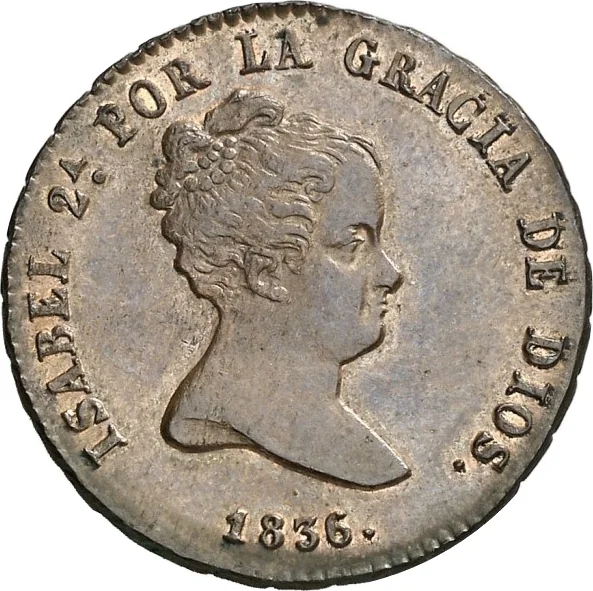
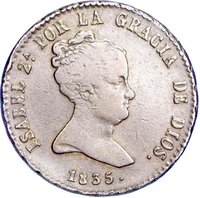
Queen Isabel II facing right.
Inscription:
ISABEL 2A. POR LA GRACIA DE DIOS.
1836.
1836.
Translation:
ISABELLA 2ND. BY THE GRACE OF GOD.
1836.
1836.
Script: Latin
Language: Spanish
Engraver: Mariano González de Sepúlveda Salazar
Reverse
Description:
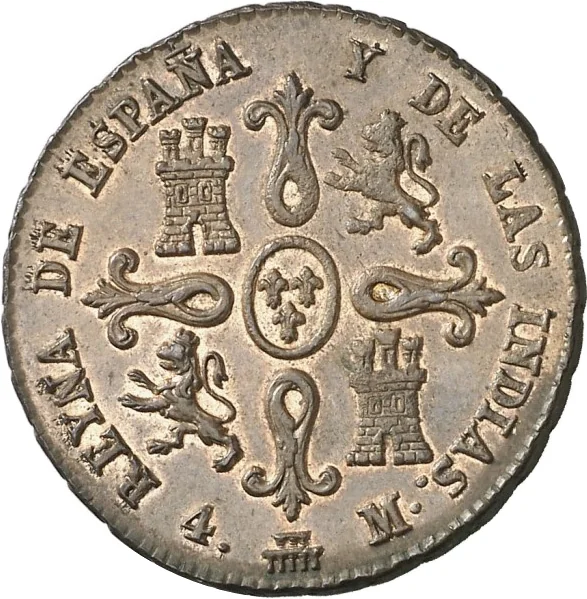
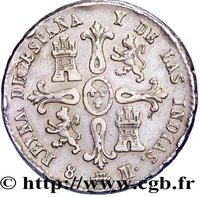
Cross of Pelayo with Castile-León lions and a Bourbon fleur-de-lis oval.
Inscription:
REYNA DE ESPAÑA Y DE LAS INDIAS.
4. M·
4. M·
Translation:
Queen of Spain and of the Indies.
4. M·
4. M·
Script: Latin
Language: Spanish
Engraver: Mariano González de Sepúlveda Salazar
Edge
Categories
| Symbol> Fleur-de-lis |
| Animal> Feline |
| Building> Castle or fortification |
| Symbol> Cross |
Mints
| Name | Mark |
|---|---|
| Royal Mint of Madrid | — |
| Royal Mint of Segovia | — |
| Jubia Mint | J |
Historical background
In 1835, Spain was in the midst of a profound political and economic crisis, with its currency system reflecting the turmoil of the First Carlist War (1833-1840). The conflict between the liberal government of Queen Isabella II and the traditionalist Carlists had devastated the countryside, disrupted trade, and drained the state treasury. To finance the war, the liberal government in Madrid resorted to extreme measures, including the confiscation and sale of church lands (the desamortización), heavy borrowing, and the issuance of vast amounts of debt. This fiscal desperation directly undermined the stability of the circulating medium.
The official currency was the real, with the peseta (worth 4 reales) emerging as a common accounting unit. However, the system was chaotic and fragmented. Alongside scarce silver and gold coin, a plethora of paper money and debt instruments circulated, often at a steep discount. Most notably, the government flooded the economy with vales reales (royal bonds), which had evolved from interest-bearing debt into a de facto, and deeply depreciated, paper currency. Their value plummeted based on the war's fortunes and public confidence, leading to severe inflation and a effective bimetallic standard where precious metal coins commanded a large premium over paper.
Consequently, Spain operated with a dual and dysfunctional monetary system. In daily transactions, people struggled with a mix of undervalued full-bodied coin, depreciated government paper, and a variety of private and regional tokens. This instability hindered commerce, eroded savings, and created a climate of financial uncertainty. The currency situation of 1835 thus encapsulates a state at war, using monetary emission as a crutch, with a unified and trustworthy national currency remaining an elusive goal until the political conflict was resolved.
The official currency was the real, with the peseta (worth 4 reales) emerging as a common accounting unit. However, the system was chaotic and fragmented. Alongside scarce silver and gold coin, a plethora of paper money and debt instruments circulated, often at a steep discount. Most notably, the government flooded the economy with vales reales (royal bonds), which had evolved from interest-bearing debt into a de facto, and deeply depreciated, paper currency. Their value plummeted based on the war's fortunes and public confidence, leading to severe inflation and a effective bimetallic standard where precious metal coins commanded a large premium over paper.
Consequently, Spain operated with a dual and dysfunctional monetary system. In daily transactions, people struggled with a mix of undervalued full-bodied coin, depreciated government paper, and a variety of private and regional tokens. This instability hindered commerce, eroded savings, and created a climate of financial uncertainty. The currency situation of 1835 thus encapsulates a state at war, using monetary emission as a crutch, with a unified and trustworthy national currency remaining an elusive goal until the political conflict was resolved.
💎 Extremely Rare