

1⁄20 silver ecu – France
Add to wishlist
France
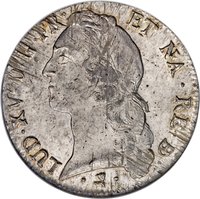
Obverse
Description:
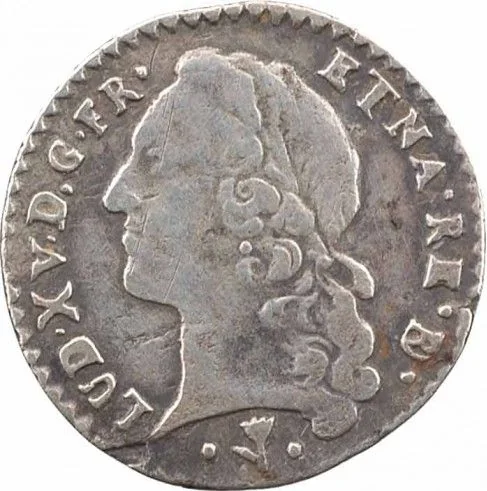
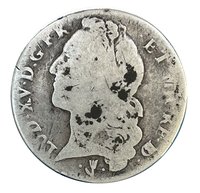
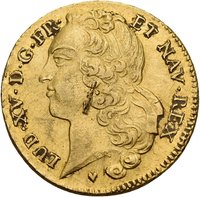
Bust of Louis XV left, wearing a headband. "JCR" on neck edge.
Inscription:
LUD·XV·D·G·FR·ET·NA·RE·B D
Script: Latin
Engraver: Joseph-Charles Röettiers
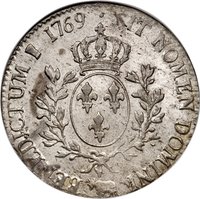
Reverse
Description:
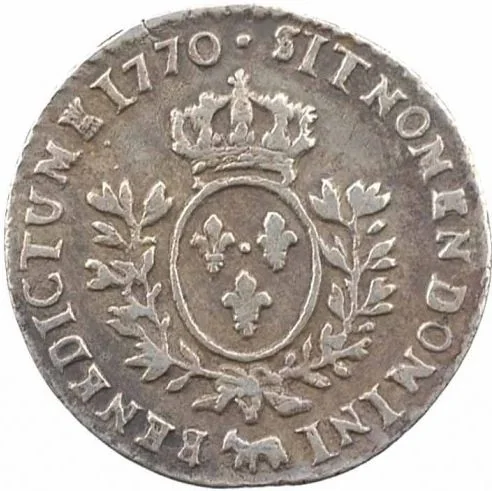
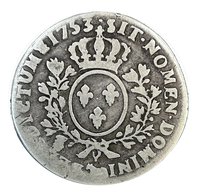
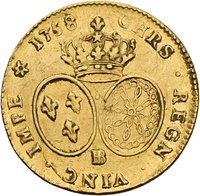
Crowned oval shield of France between olive branches.
Inscription:
SIT NOMEN DOMINI BENEDICTUM 1770
Script: Latin
Engraver: Joseph-Charles Röettiers
Edge
Corded
Mints
| Name | Mark |
|---|---|
| Pau | 🐄 |
Mintings
Historical background
In 1741, France operated under a complex and strained monetary system, a legacy of the ambitious but disastrous policies of Louis XIV's later reign. The nation was on a bimetallic standard, using both gold louis d'or and silver écus, but the official mint ratios between the two metals frequently failed to match market values, causing one coinage to be hoarded or exported. This instability was exacerbated by a chronic shortage of small-denomination coins for everyday trade, forcing many regions and merchants to rely on a cumbersome patchwork of credit notes and token money.
The financial situation was directly shaped by the War of the Austrian Succession (1740-1748), in which France had entered in 1741. Military expenditure placed immense pressure on the royal treasury, managed by Controller-General Philibert Orry. To raise funds, the monarchy resorted to traditional but damaging expedients: devaluing the coinage by altering its metal content, selling new offices, and extracting forced loans from financiers. These measures eroded public confidence in the currency's value and fueled inflation, particularly in grain prices, which burdened the peasantry and urban poor.
Consequently, the currency situation of 1741 reflected a kingdom of great wealth struggling with systemic fiscal weakness. The government's manipulation of coinage to fund war created a volatile economic environment of fluctuating values and scarcity. This instability sowed social discontent and highlighted the structural financial problems that, left unresolved, would contribute to the severe fiscal crises leading to the French Revolution later in the century.
The financial situation was directly shaped by the War of the Austrian Succession (1740-1748), in which France had entered in 1741. Military expenditure placed immense pressure on the royal treasury, managed by Controller-General Philibert Orry. To raise funds, the monarchy resorted to traditional but damaging expedients: devaluing the coinage by altering its metal content, selling new offices, and extracting forced loans from financiers. These measures eroded public confidence in the currency's value and fueled inflation, particularly in grain prices, which burdened the peasantry and urban poor.
Consequently, the currency situation of 1741 reflected a kingdom of great wealth struggling with systemic fiscal weakness. The government's manipulation of coinage to fund war created a volatile economic environment of fluctuating values and scarcity. This instability sowed social discontent and highlighted the structural financial problems that, left unresolved, would contribute to the severe fiscal crises leading to the French Revolution later in the century.
Series: 1741 France circulation coins
✨ Legendary