

½ Silver Ecu – France
France

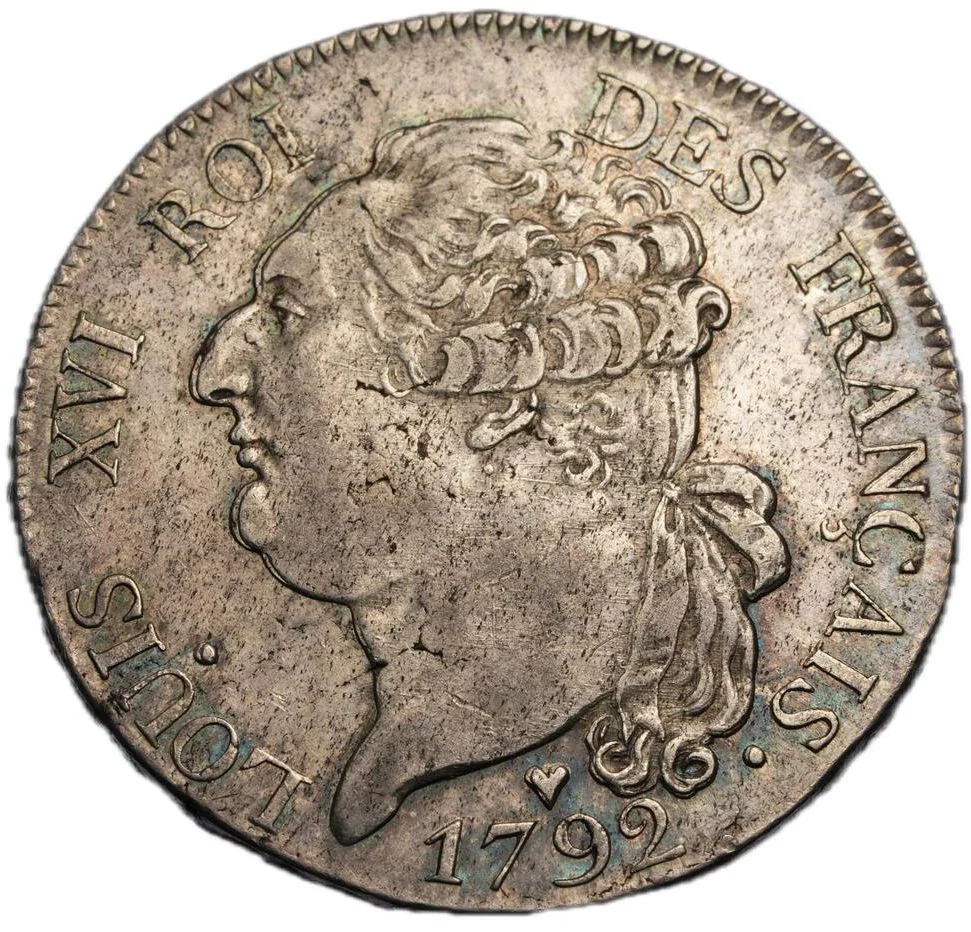
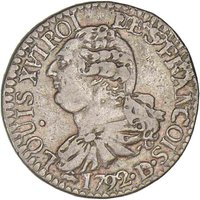
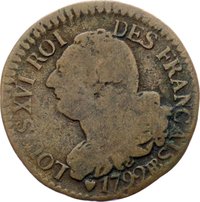
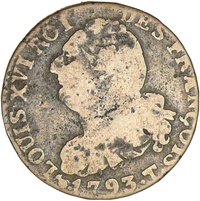
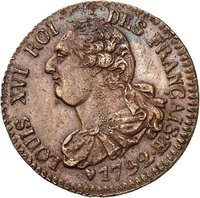
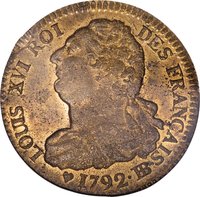
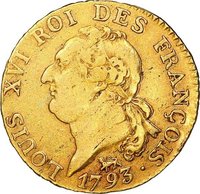
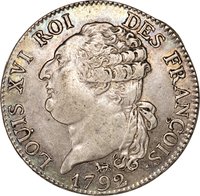
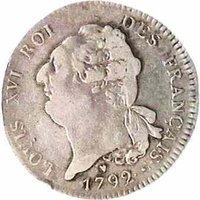
Obverse
Description:
Left turn.
Inscription:
LOUIS XVI ROI DES FRANÇAIS·
1792
1792
Script: Latin
Engraver: Pierre-Benjamin Duvivier
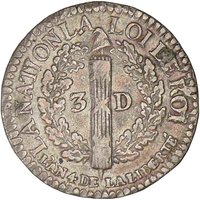
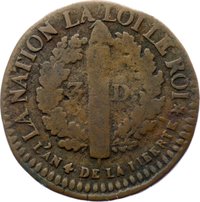
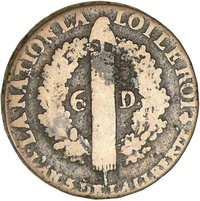
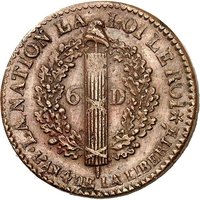
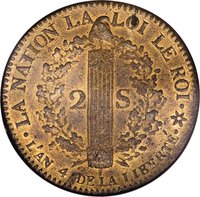
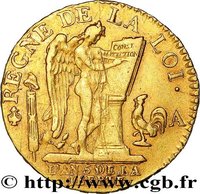
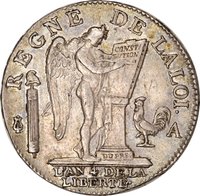
Reverse
Description:
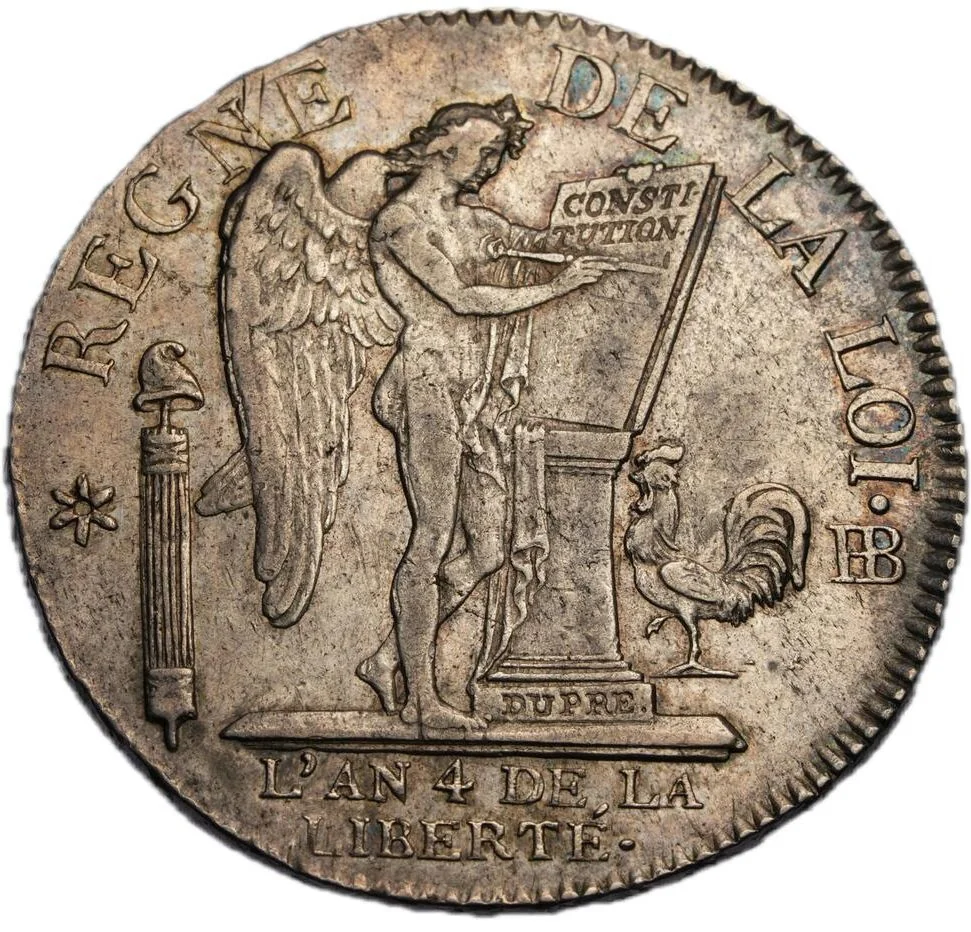
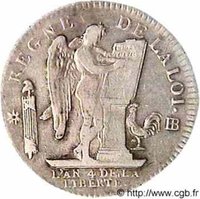
Genius drafting the Constitution.
Inscription:
REGNE DE LA LOI·
A
L'AN 4 DE LA
LIBERTÉ
A
L'AN 4 DE LA
LIBERTÉ
Script: Latin
Engraver: Augustin Dupré
Edge
Script:Latin
Legend:
LA NATION LA LOI ET LE ROI
Mints
| Name | Mark |
|---|---|
| Strasbourg | BB |
Mintings
| Year | Mint Mark | Mintage | Quality | Collection |
|---|---|---|---|---|
| 1792 | BB | — |
Historical background
In 1792, France was in the throes of a profound monetary crisis, a direct consequence of the revolutionary government's financial strategies. To address the crippling debt inherited from the Ancien Régime and fund the Revolution itself, the National Assembly had issued the assignat in 1789. Initially a bond backed by the value of confiscated church lands, it was soon transformed into a paper currency. While this injection of money initially stimulated the economy, it set a dangerous precedent for solving fiscal shortfalls by simply printing more notes.
The situation deteriorated rapidly as the government, facing war with Austria and Prussia and internal rebellions, resorted to massive over-issuance of assignats to pay for its escalating expenses. This led to severe inflation, as the volume of paper money far exceeded the value of the nationalized property that supposedly guaranteed it. By 1792, the assignat had lost approximately 40% of its face value against metallic coinage. This created a destructive cycle of hoarding, where gold and silver coins (specie) disappeared from circulation, leaving only the depreciating paper, which merchants were increasingly reluctant to accept at its official rate.
This currency instability exacerbated the social and political turmoil of the period. Soaring prices for bread and basic goods, paid for with devalued paper, caused immense hardship for the urban poor and sans-culottes, fueling their radicalism. It also bred widespread distrust in the government and accusations of speculation against merchants and bankers. The failing assignat thus became both a symbol and a direct cause of the economic distress that underpinned the radicalization of the Revolution, pushing the nation toward the Terror as authorities sought to impose price controls and punish "economic enemies" in a desperate attempt to manage the crisis their monetary policy had helped create.
The situation deteriorated rapidly as the government, facing war with Austria and Prussia and internal rebellions, resorted to massive over-issuance of assignats to pay for its escalating expenses. This led to severe inflation, as the volume of paper money far exceeded the value of the nationalized property that supposedly guaranteed it. By 1792, the assignat had lost approximately 40% of its face value against metallic coinage. This created a destructive cycle of hoarding, where gold and silver coins (specie) disappeared from circulation, leaving only the depreciating paper, which merchants were increasingly reluctant to accept at its official rate.
This currency instability exacerbated the social and political turmoil of the period. Soaring prices for bread and basic goods, paid for with devalued paper, caused immense hardship for the urban poor and sans-culottes, fueling their radicalism. It also bred widespread distrust in the government and accusations of speculation against merchants and bankers. The failing assignat thus became both a symbol and a direct cause of the economic distress that underpinned the radicalization of the Revolution, pushing the nation toward the Terror as authorities sought to impose price controls and punish "economic enemies" in a desperate attempt to manage the crisis their monetary policy had helped create.
Series: 1792 France circulation coins
✨ Legendary