

2.5 xerafins – Portuguese India
Add to wishlist
India
Context
Years: 1724–1726
Country: India
Issuer: Portuguese India
Issuing organization: Casa da Moeda de Diu
Ruler: João V
Currency:
(1706—1880)
Subdivision: 2.5 xerafins = 750 Réis
Demonetized: Yes
Material
Diameter: 14 mm
Weight: 1.4 g
Gold Weight:: 1.40 g
Shape: Irregular round
Composition: Gold
Magnetic: No
Technique: Hammered
References
KM: #
Numista: #50616
Value
Bullion value: $217.96
Obverse
Description:
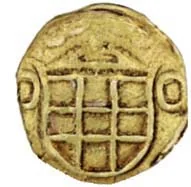
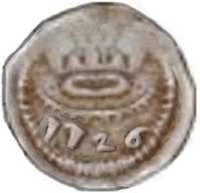
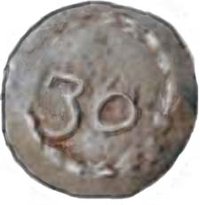
Arms split, mint marks.
Inscription:
D-O
Reverse
Inscription:
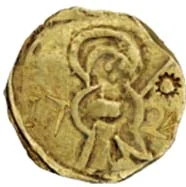
1-7
2-4
2-4
Edge
Mintings
| Year | Mint Mark | Mintage | Quality | Collection |
|---|---|---|---|---|
| 1724 | D-O | — | ||
| 1726 | D-O | — |
Historical background
In 1724, the currency situation in Portuguese India, centered on Goa, was a complex tapestry of official Portuguese issues, pervasive foreign coinage, and chronic scarcity. The official currency was the Portuguese xerafim, but it struggled to dominate a marketplace deeply integrated into Indian Ocean trade networks. Consequently, the most commonly circulating and trusted coins were foreign: the gold mohur and silver rupee of the Mughal Empire, along with a multitude of other coins from neighboring Indian states and former regional powers like the Vijayanagara Empire. This reliance on external currency severely limited Lisbon's economic control and siphoned seigniorage revenue away from the colonial administration.
The Portuguese state attempted to manage this system through the Casa da Moeda (mint) in Goa, which primarily struck silver tangas (a fractional coin) and copper bazarucos. However, these local issues were often of inferior alloy and weight, leading to widespread distrust and discounting in commerce. The real pillar of high-value trade was the gold mohur, which served as the de facto standard for major transactions and treasury accounts. A fixed, but often artificial, official exchange rate between the xerafim and the mohur was decreed, but market rates fluctuated based on the intrinsic silver content of Portuguese coins versus the perceived purity and weight of foreign specie.
This monetary environment created significant challenges for the Estado da Índia. The constant outflow of silver to pay for trade goods within Asia, combined with the inability to control the money supply, led to frequent liquidity crises and hampered governmental finances. Furthermore, the coexistence of multiple coinages facilitated fraud and complicated tax collection. Thus, in 1724, the currency situation was not one of sovereign stability but of pragmatic adaptation, where Portuguese authority was forced to operate within a vibrant and autonomous regional bullion market that it could neither replace nor fully regulate.
The Portuguese state attempted to manage this system through the Casa da Moeda (mint) in Goa, which primarily struck silver tangas (a fractional coin) and copper bazarucos. However, these local issues were often of inferior alloy and weight, leading to widespread distrust and discounting in commerce. The real pillar of high-value trade was the gold mohur, which served as the de facto standard for major transactions and treasury accounts. A fixed, but often artificial, official exchange rate between the xerafim and the mohur was decreed, but market rates fluctuated based on the intrinsic silver content of Portuguese coins versus the perceived purity and weight of foreign specie.
This monetary environment created significant challenges for the Estado da Índia. The constant outflow of silver to pay for trade goods within Asia, combined with the inability to control the money supply, led to frequent liquidity crises and hampered governmental finances. Furthermore, the coexistence of multiple coinages facilitated fraud and complicated tax collection. Thus, in 1724, the currency situation was not one of sovereign stability but of pragmatic adaptation, where Portuguese authority was forced to operate within a vibrant and autonomous regional bullion market that it could neither replace nor fully regulate.
✨ Legendary