



1 xerafim – Portuguese India
Add to wishlist
India
Context
Year: 1737
Country: India
Issuer: Portuguese India
Issuing organization: Casa da Moeda de Damão
Ruler: João V
Currency:
(1706—1880)
Demonetized: Yes
Material
Diameter: 22 mm
Weight: 11.8 g
Silver Weight:: 11.80 g
Shape: Irregular round
Composition: Silver
Magnetic: No
Technique: Hammered
References
KM: #
Numista: #50593
Value
Bullion value: $29.62
Obverse
Description:
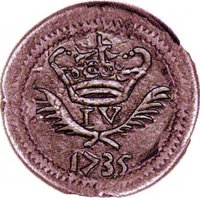
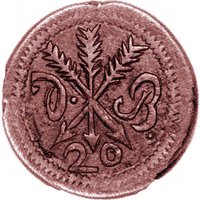
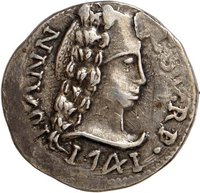
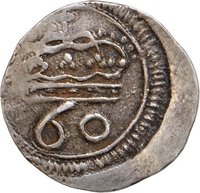
Arms with a crown.
Reverse
Description:
Christus Cross Order splits date.
Inscription:
NNA (ES) V R P
1-7
3-7
1-7
3-7
Edge
Mintings
| Year | Mint Mark | Mintage | Quality | Collection |
|---|---|---|---|---|
| 1737 | — | — |
Historical background
In 1737, the currency situation in Portuguese India, centered on Goa, was characterized by a complex and often chaotic multiplicity of coins, reflecting both its regional trade hub status and its declining imperial control. The official Portuguese currency, the xerafim, was the unit of account, but the actual circulating medium was dominated by a plethora of foreign coins. Gold mohurs and silver rupias from the neighboring Maratha Empire, which was then ascendant and exerting significant military pressure on Portuguese territories, were particularly prevalent. These competed with older Portuguese issues, Spanish-American pieces of eight, and various other Indian and European coins, leading to chronic instability in exchange rates and valuations.
This monetary disorder was a direct symptom of Portugal's economic weakness within the Indian Ocean trade. The once-lucrative Carreira da Índia (India Run) had severely diminished, and the Estado da Índia suffered from chronic budget deficits, forcing it to repeatedly debase its own coinage to raise short-term revenue. Consequently, public trust in official Portuguese currency was low, and merchants preferred the more reliable intrinsic silver content of Maratha or Mughal coins. The Portuguese administration attempted to fix rates by proclamation, but these tábuas were largely ineffective against market forces, creating a gap between the official and black-market values of money.
The situation was further exacerbated by the ongoing political and military conflicts of the period. The Maratha campaigns, culminating in the loss of the Província do Norte (Northern Province) including Bassein in 1739, caused economic dislocation and heightened the influx of Maratha currency into remaining territories like Goa, Daman, and Diu. This period thus represents a key moment where monetary circulation visibly mirrored the shifting power dynamics: the Portuguese crown's authority was receding, while local and regional powers increasingly set the practical economic terms within their sphere of influence.
This monetary disorder was a direct symptom of Portugal's economic weakness within the Indian Ocean trade. The once-lucrative Carreira da Índia (India Run) had severely diminished, and the Estado da Índia suffered from chronic budget deficits, forcing it to repeatedly debase its own coinage to raise short-term revenue. Consequently, public trust in official Portuguese currency was low, and merchants preferred the more reliable intrinsic silver content of Maratha or Mughal coins. The Portuguese administration attempted to fix rates by proclamation, but these tábuas were largely ineffective against market forces, creating a gap between the official and black-market values of money.
The situation was further exacerbated by the ongoing political and military conflicts of the period. The Maratha campaigns, culminating in the loss of the Província do Norte (Northern Province) including Bassein in 1739, caused economic dislocation and heightened the influx of Maratha currency into remaining territories like Goa, Daman, and Diu. This period thus represents a key moment where monetary circulation visibly mirrored the shifting power dynamics: the Portuguese crown's authority was receding, while local and regional powers increasingly set the practical economic terms within their sphere of influence.
✨ Legendary