

⅕ Rupee – Bombay Presidency
India
Context

Material
Diameter: 12.5 mm
Weight: 2.32 g
Silver weight: 2.32 g
Shape: Irregular round
Composition: Silver
Magnetic: No
Alignment: Coin alignment
flip
References
KM: #Click to copy to clipboard276
Numista: #50443
Value
Bullion value: $6.62
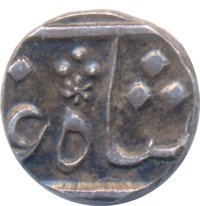
Obverse
Description:
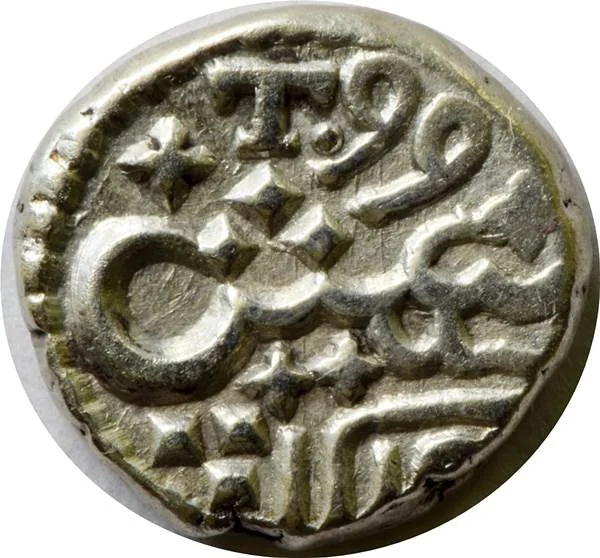
T.99 Sikka nishini (AH 1214), beaded rim.
Inscription:
T99
١٢١۶
١٢١۶
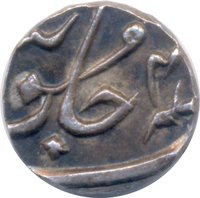
Reverse
Description:
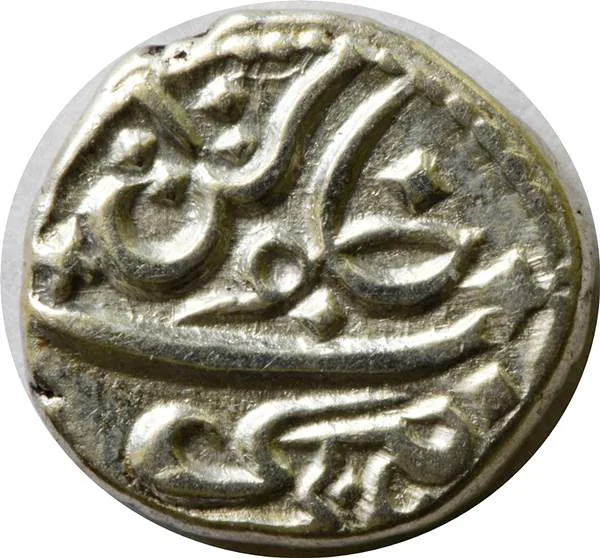
Persian legend: Zarb Tellicherri julus, beaded rim.
Edge
Plain
Mintings
| Year | Mint Mark | Mintage | Quality | Collection |
|---|---|---|---|---|
| 1799 | T | — |
Historical background
By 1799, the currency situation in the Bombay Presidency was one of profound complexity and disorder, characterized by a chaotic multiplicity of circulating media. The official currency of the East India Company was the Bombay rupee, but its circulation was limited and it competed with a host of other coins. Most prominent were the silver rupees of the neighbouring Mughal successor states, particularly the Ankushi rupee of the Ahmadabad mint and the Chandori rupee of the Maratha Confederacy, each with differing weights and fineness. Furthermore, a vast array of older Mughal coins, Portuguese xeraphims, and even gold mohurs circulated, all requiring constant evaluation and discounting in daily transactions.
This monetary anarchy created severe challenges for trade and administration. Merchants and the Company itself faced significant losses from exchange fluctuations and the costs of assaying (testing purity). The problem was exacerbated by the widespread practice of clipping and counterfeiting coins, which further eroded public trust. The Presidency’s economy was also strained by a chronic scarcity of small change, hindering retail trade and the payment of wages. Attempts to introduce a uniform coinage had been made, notably with the "Bombay Rupee" minted from the 1670s, but these efforts failed to supplant the deeply entrenched and varied monetary habits of the region.
The year 1799 itself fell within a period of transition following the British victory in the Fourth Anglo-Mysore War, which expanded Company influence but did not immediately resolve the monetary crisis. The Presidency was on the cusp of major reform. Just a few years later, in 1803, the Governor of Bombay, Jonathan Duncan, would implement the "Bombay Regulation VII," which finally standardised the rupee by making the Company’s Bombay rupee the sole legal tender and systematically demonetising all other variants. Thus, the situation in 1799 represents the final, fraught chapter of an old monetary regime, poised for the imposition of a uniform colonial currency.
This monetary anarchy created severe challenges for trade and administration. Merchants and the Company itself faced significant losses from exchange fluctuations and the costs of assaying (testing purity). The problem was exacerbated by the widespread practice of clipping and counterfeiting coins, which further eroded public trust. The Presidency’s economy was also strained by a chronic scarcity of small change, hindering retail trade and the payment of wages. Attempts to introduce a uniform coinage had been made, notably with the "Bombay Rupee" minted from the 1670s, but these efforts failed to supplant the deeply entrenched and varied monetary habits of the region.
The year 1799 itself fell within a period of transition following the British victory in the Fourth Anglo-Mysore War, which expanded Company influence but did not immediately resolve the monetary crisis. The Presidency was on the cusp of major reform. Just a few years later, in 1803, the Governor of Bombay, Jonathan Duncan, would implement the "Bombay Regulation VII," which finally standardised the rupee by making the Company’s Bombay rupee the sole legal tender and systematically demonetising all other variants. Thus, the situation in 1799 represents the final, fraught chapter of an old monetary regime, poised for the imposition of a uniform colonial currency.
💎 Extremely Rare