

1⁄48 rupee – Madras Presidency
Add to wishlist
India
Obverse
Description:
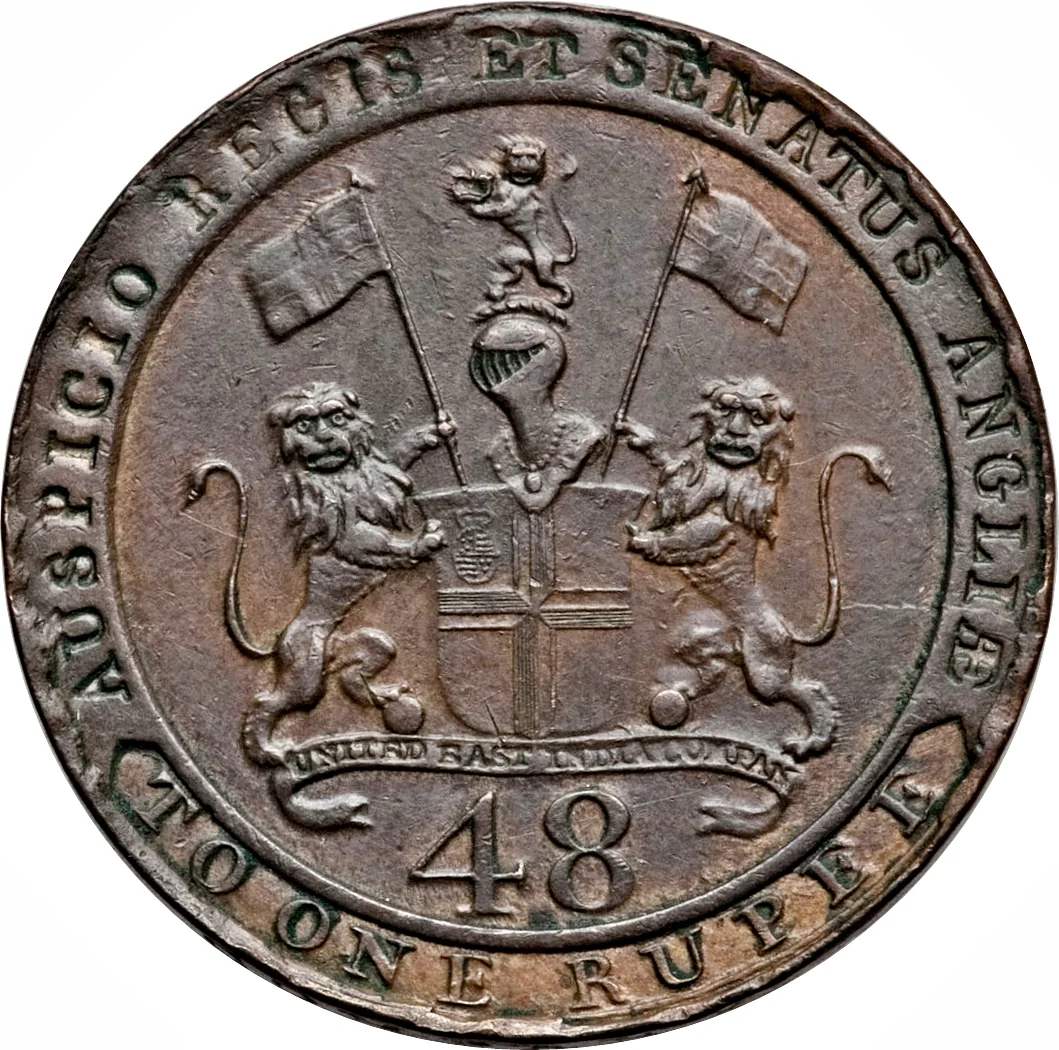
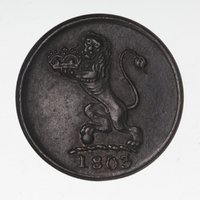
Arms of the East India Company on a scroll reading "United East India Company." The rim is inscribed "AUSPICIO REGIS ET SENATUS ANGLIAE" with "48 TO ONE RUPEE" in a sunken panel below.
Inscription:
AUSPICIO REGIS ET SENATUS ANGLIAE
UNITED EAST INDIA COMPANY
48
TO ONE RUPEE
UNITED EAST INDIA COMPANY
48
TO ONE RUPEE
Script: Latin
Reverse
Description:
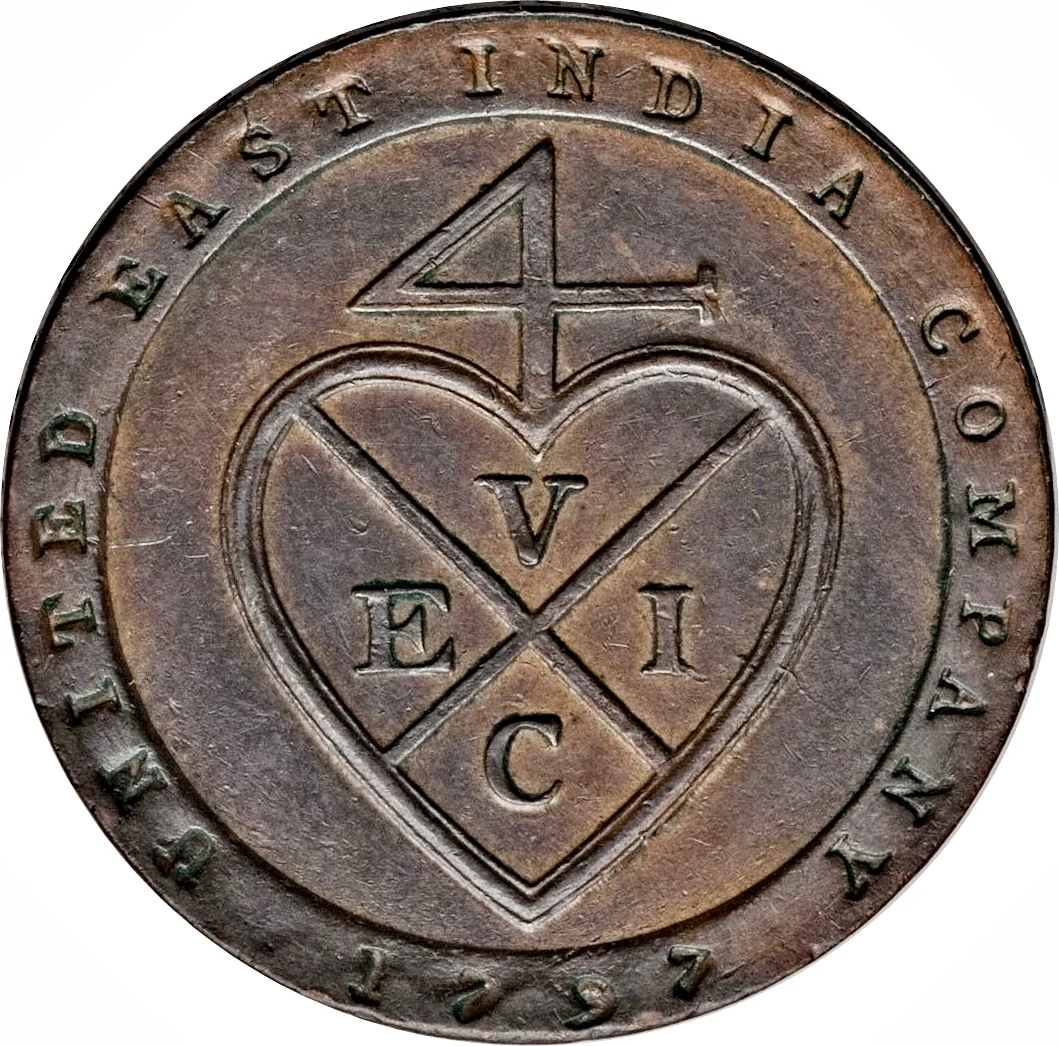
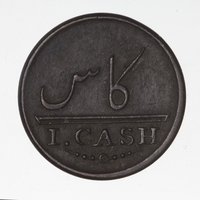
Company seal with rim inscription: United East India Company 1797.
Inscription:
UNITED EAST INDIA COMPANY
4
V E I C
1797
4
V E I C
1797
Script: Latin
Edge
Smooth with Lettering
Legend:
ENGLISH UNITED EAST INDIA COMPANY
Mints
| Name | Mark |
|---|---|
| Soho Mint | — |
Mintings
| Year | Mint Mark | Mintage | Quality | Collection |
|---|---|---|---|---|
| 1797 | — | — | ||
| 1797 | — | — | Proof |
Historical background
In 1797, the currency situation in the Madras Presidency was one of profound confusion and instability, a direct legacy of the region's complex monetary history. The Presidency operated without a unified coinage system, as the East India Company's authority competed with that of previous Indian rulers and other European powers. Consequently, a multitude of coins circulated simultaneously: the Company's gold pagodas and silver rupees, Arcot rupees of varying weight and fineness issued by the Nawabs of Carnatic, and a host of older Mughal and South Indian coins. This proliferation created a chaotic marketplace where exchange rates fluctuated wildly, complicating all trade and revenue collection.
The core of the problem lay in the relationship between the two primary units: the gold pagoda and the silver Arcot rupee. There was no fixed legal ratio between gold and silver, leading to constant arbitrage and market manipulation. Merchants and money-changers (shroffs) held significant power in determining daily exchange rates, often to the detriment of the Company's finances and the wider economy. Furthermore, widespread counterfeiting and the clipping of coins eroded public trust. The Company's own attempts to introduce new rupees had failed to establish dominance, leaving the monetary system fragmented and unreliable.
This chaotic environment severely hampered the East India Company's administration. It made the assessment and collection of land revenue—the Presidency's financial lifeblood—notoriously difficult, as payments in devalued or suspect coinage caused constant shortfalls. Recognizing that monetary control was essential for political and economic consolidation, the Madras government was, by 1797, actively seeking a permanent solution. This urgency would culminate just a few years later in the major reform of 1812, which finally established the Company's silver rupee as the sole standard, decisively ending the pagoda's reign and bringing a much-needed uniformity to the currency.
The core of the problem lay in the relationship between the two primary units: the gold pagoda and the silver Arcot rupee. There was no fixed legal ratio between gold and silver, leading to constant arbitrage and market manipulation. Merchants and money-changers (shroffs) held significant power in determining daily exchange rates, often to the detriment of the Company's finances and the wider economy. Furthermore, widespread counterfeiting and the clipping of coins eroded public trust. The Company's own attempts to introduce new rupees had failed to establish dominance, leaving the monetary system fragmented and unreliable.
This chaotic environment severely hampered the East India Company's administration. It made the assessment and collection of land revenue—the Presidency's financial lifeblood—notoriously difficult, as payments in devalued or suspect coinage caused constant shortfalls. Recognizing that monetary control was essential for political and economic consolidation, the Madras government was, by 1797, actively seeking a permanent solution. This urgency would culminate just a few years later in the major reform of 1812, which finally established the Company's silver rupee as the sole standard, decisively ending the pagoda's reign and bringing a much-needed uniformity to the currency.
💎 Extremely Rare