

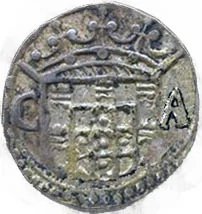
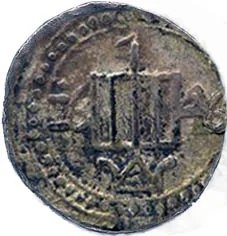
1 tanga – Portuguese India
Add to wishlist
India
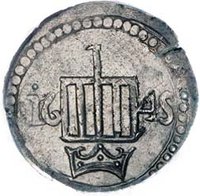
Obverse
Reverse
Edge
Mintings
| Year | Mint Mark | Mintage | Quality | Collection |
|---|---|---|---|---|
| 1645 | G-A | — | ||
| 1646 | G-A | — |
Historical background
In 1645, the currency situation in Portuguese India was complex and strained, reflecting the broader political and economic pressures of the Estado da Índia. The Portuguese crown had long sought to impose monetary uniformity, promoting the silver real and the gold cruzado as standards. However, the reality in Goa and its dependencies was a fragmented monetary landscape dominated by a plethora of foreign coins. Spanish pieces of eight, Venetian ducats, Mughal rupees, and various other regional currencies circulated freely, their values fluctuating based on metallic content and market demand. This reliance on external coinage left the colonial administration vulnerable, as it lacked control over the primary medium of exchange in its own commercial hubs.
This monetary chaos was exacerbated by the ongoing conflict with the Dutch East India Company (VOC), which had blockaded Goa and seized key territories like Malacca. The Dutch blockade severely disrupted the influx of fresh bullion and coins from Lisbon, leading to acute shortages of specie. Consequently, the local economy increasingly relied on credit instruments and the continued circulation of worn or clipped foreign coins, further destabilizing trade and public finances. The Portuguese administration resorted to periodic revaluations and the minting of low-value copper bazarucos for small-scale transactions, but these often fueled inflation and public discontent.
Despite these challenges, the Casa da Moeda (mint) in Goa remained active, primarily striking silver tangas and reis coins. However, its output was insufficient to displace the foreign currencies that underpinned the vast intra-Asian trade networks. The situation in 1645 was thus one of precarious duality: an official, struggling royal currency system existing alongside a vibrant, practical, and indispensable unofficial market of diverse foreign coinage. This instability highlighted the declining economic sovereignty of Portuguese India, caught between a resurgent local economy integrated with Asian markets and a metropolitan authority unable to project its monetary power effectively.
This monetary chaos was exacerbated by the ongoing conflict with the Dutch East India Company (VOC), which had blockaded Goa and seized key territories like Malacca. The Dutch blockade severely disrupted the influx of fresh bullion and coins from Lisbon, leading to acute shortages of specie. Consequently, the local economy increasingly relied on credit instruments and the continued circulation of worn or clipped foreign coins, further destabilizing trade and public finances. The Portuguese administration resorted to periodic revaluations and the minting of low-value copper bazarucos for small-scale transactions, but these often fueled inflation and public discontent.
Despite these challenges, the Casa da Moeda (mint) in Goa remained active, primarily striking silver tangas and reis coins. However, its output was insufficient to displace the foreign currencies that underpinned the vast intra-Asian trade networks. The situation in 1645 was thus one of precarious duality: an official, struggling royal currency system existing alongside a vibrant, practical, and indispensable unofficial market of diverse foreign coinage. This instability highlighted the declining economic sovereignty of Portuguese India, caught between a resurgent local economy integrated with Asian markets and a metropolitan authority unable to project its monetary power effectively.

✨ Legendary