

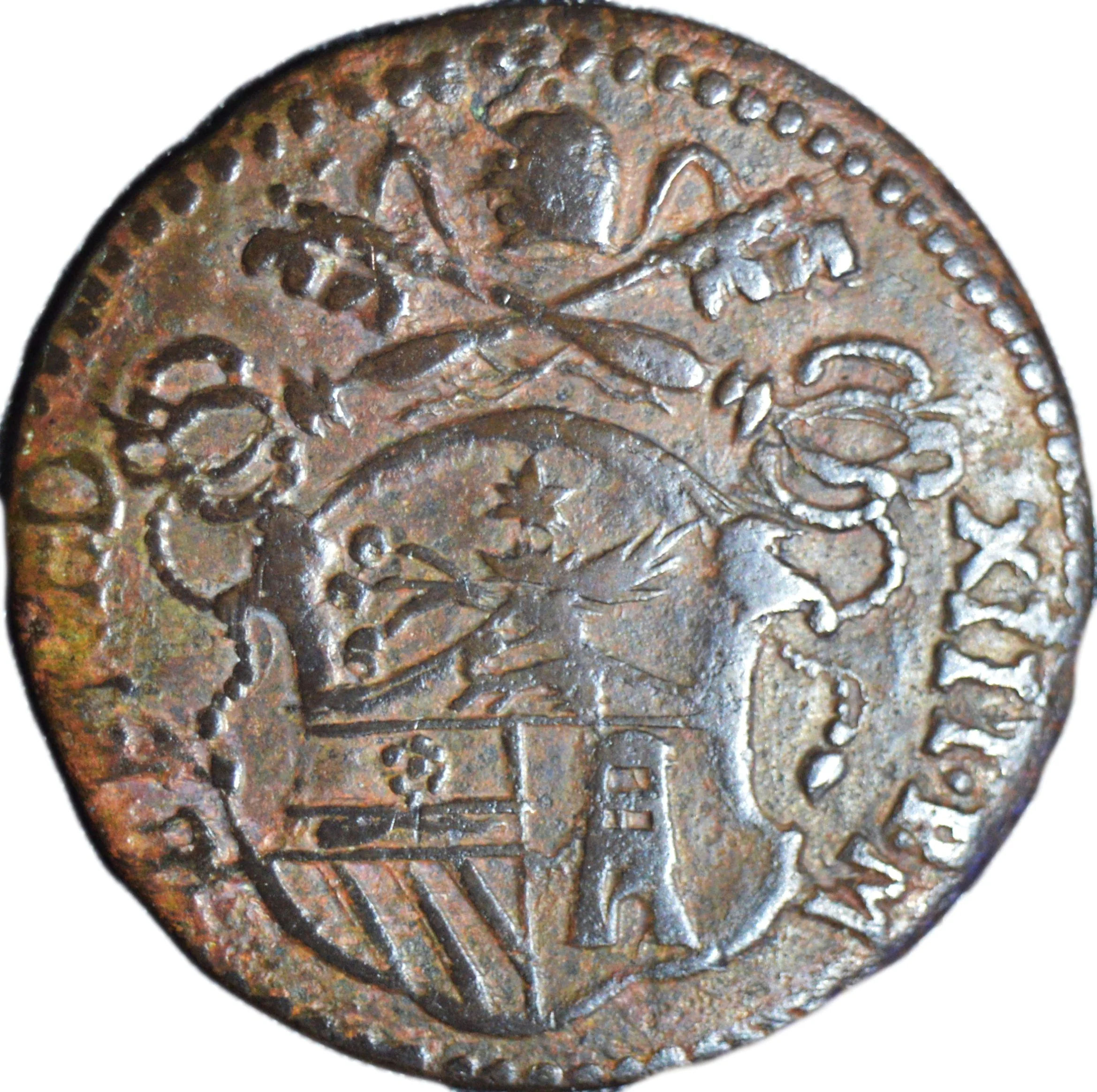
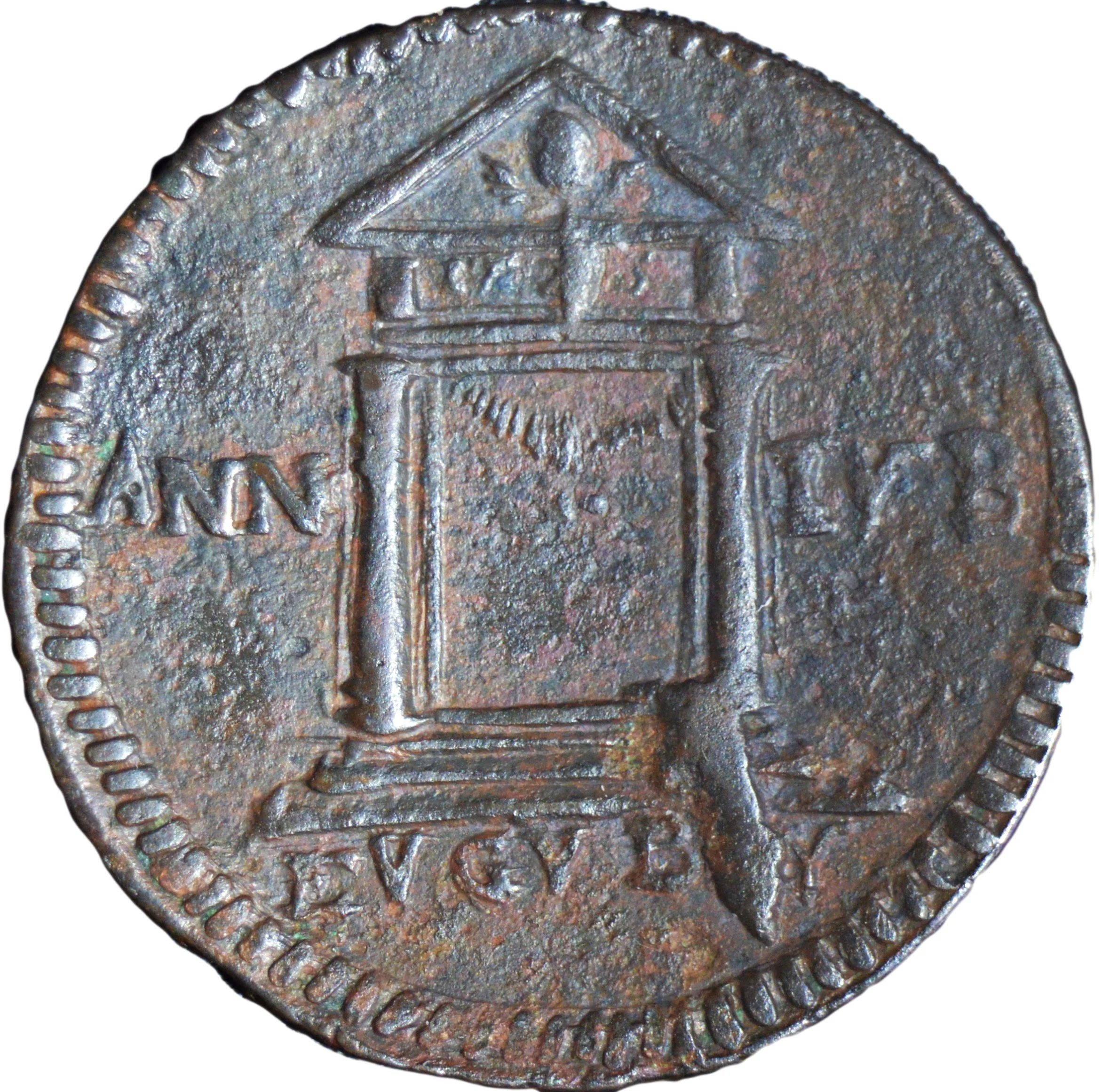
½ baiocco – Gubbio
Add to wishlist
Circulating commemorative coins
Commemoration: Jubilee 1725
Italy
Context
Year: 1725
Country: Italy
Issuer: Gubbio
Ruler: Benedict XIII
Currency:
(1534—1835)
Demonetized: Yes
Material
Diameter: 28 mm
Weight: 6.6 g
Shape: Round
Composition: Copper
Magnetic: No
Technique: Roller milled
Alignment: Coin alignment
flip
References
KM: #
Numista: #495846
Obverse
Description:
Arms of Benedict XIII
Inscription:
BENED XIII · P · M
Reverse
Description:
Holy Door: a symbolic passage for spiritual renewal.
Inscription:
ANN IVB
EVGVBY
EVGVBY
Edge
Mints
| Name | Mark |
|---|---|
| Gubbio | — |
Mintings
| Year | Mint Mark | Mintage | Quality | Collection |
|---|---|---|---|---|
| 1725 | — | — |
Historical background
In 1725, the Italian city-state of Gubbio, like much of the Papal States under Pope Benedict XIII, operated within a complex and often chaotic monetary system. The official currency was the Papal scudo, a silver coin, but in practice, Gubbio’s economy was flooded with a bewildering variety of coins. These included older papal issues, coins from neighbouring Italian states like Tuscany and Venice, and even clipped and debased foreign silver from Spain and the German states. This proliferation made everyday commerce difficult, as merchants and citizens constantly had to assess the weight and true metallic value of each coin, with exchange rates fluctuating based on wear and perceived trustworthiness.
The root of this disorder lay in the weak central control of the Papal mint and the widespread practice of coin clipping, where precious metal was shaved from the edges of coins. Furthermore, the government’s own fiscal demands, funding both local administration and the papal court, often led to inflationary pressures. In Gubbio specifically, a local economy still heavily reliant on agriculture, wool textiles, and ceramics, this monetary instability created significant friction. Contracts for land rents, artisan goods, and larger civic projects had to include elaborate clauses specifying payment in "good and current silver coin," a testament to the lack of faith in any standard medium of exchange.
Consequently, the currency situation in 1725 Gubbio was one of entrenched inconvenience and economic inefficiency. While not in a state of hyperinflation, the system imposed a hidden tax on all transactions through uncertainty and the need for expert money-changers. This environment stifled trade, discouraged investment, and perpetuated localism, as trust was placed more in tangible goods or known local credit networks than in the confusing array of official and unofficial metal circulating in the marketplace.
The root of this disorder lay in the weak central control of the Papal mint and the widespread practice of coin clipping, where precious metal was shaved from the edges of coins. Furthermore, the government’s own fiscal demands, funding both local administration and the papal court, often led to inflationary pressures. In Gubbio specifically, a local economy still heavily reliant on agriculture, wool textiles, and ceramics, this monetary instability created significant friction. Contracts for land rents, artisan goods, and larger civic projects had to include elaborate clauses specifying payment in "good and current silver coin," a testament to the lack of faith in any standard medium of exchange.
Consequently, the currency situation in 1725 Gubbio was one of entrenched inconvenience and economic inefficiency. While not in a state of hyperinflation, the system imposed a hidden tax on all transactions through uncertainty and the need for expert money-changers. This environment stifled trade, discouraged investment, and perpetuated localism, as trust was placed more in tangible goods or known local credit networks than in the confusing array of official and unofficial metal circulating in the marketplace.
✨ Legendary