

1 Atiá – Portuguese India
India
Context
Years: 1767–1777
Country: India 
Issuer: Portuguese India
Issuing organization: Casa da Moeda de Diu
Ruler: Joseph I
Currency:
(1706—1880)
Subdivision: 1 Atiá = ¼ Tanga= 15 Réis
Demonetized: Yes
Material
Diameter: 25 mm
Weight: 8.5 g
Shape: Irregular round
Composition: Copper
Magnetic: No
Technique: Hammered
References
KM: #Click to copy to clipboard38
Numista: #49256
Obverse
Description:
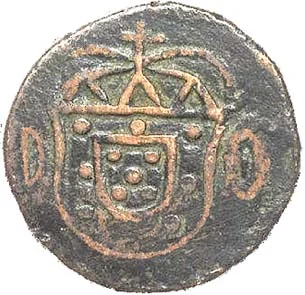
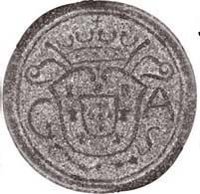
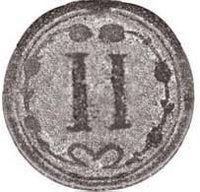
The coins, known locally as "4 Duganis," were not Portuguese. Some feature the number "4" beneath the cross on the king's coat of arms, flanked by mint letters.
Inscription:
D - O
Script: Latin
Reverse
Edge
Mintings
| Year | Mint Mark | Mintage | Quality | Collection |
|---|---|---|---|---|
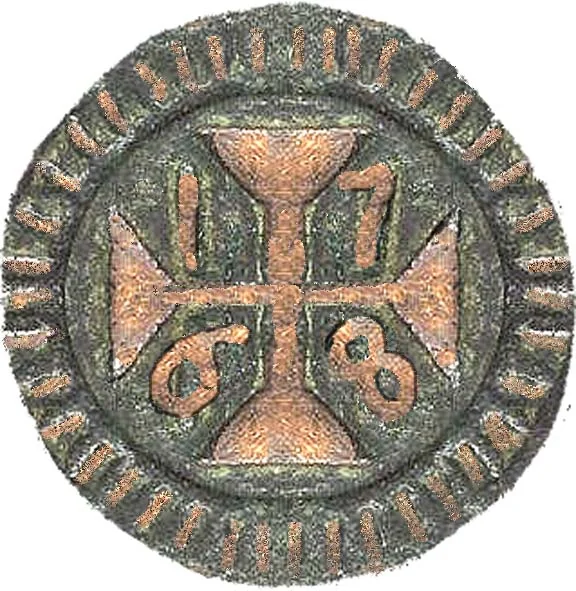
| 1767 | D-O | — | ||
| 1768 | D-O | — | ||
| 1777 | D-O | — |
Historical background
In 1767, the currency situation in Portuguese India was a complex and fragmented system, reflecting both the colony's historic role as a trading hub and the declining economic power of the Portuguese Empire. The primary official currency was the Portuguese Indian Rupia (or Rupia), a silver coin minted at the Goa Mint. However, its circulation and authority were challenged by a multitude of other coins. Most notably, the gold Moha and the silver Xerafim (worth 300 réis or ¾ of a Rupia) were widely used for larger transactions, while a plethora of smaller copper and tin coins, like bazarucos and reis, facilitated everyday local trade.
This monetary landscape was further complicated by the heavy influx of foreign coins from other European powers and regional states, which circulated freely due to Goa's commercial importance. Coins from the neighbouring Maratha Empire, Mughal rupees, and even Spanish-American pieces of eight were common in markets. This created a constant problem of valuation and exchange, as the intrinsic metal value of these foreign coins often differed from the nominal value of the Portuguese issues. The Portuguese administration struggled to control this system, leading to frequent official re-evaluations (cunhos) of coin values in a futile attempt to fix exchange rates and prevent the export of full-weight silver coins.
Ultimately, the monetary chaos of 1767 was symptomatic of deeper issues: a chronic shortage of specie, a weak central fiscal authority, and Portugal's diminished capacity to enforce a uniform currency in its Asian possessions. The reliance on a bimetallic (gold and silver) system with multiple denominations, coupled with uncontrolled foreign coinage, led to persistent instability, hampering both commerce and colonial revenue collection. This situation would persist with only minor administrative adjustments until more substantial, but still problematic, reforms were attempted in the 19th century.
This monetary landscape was further complicated by the heavy influx of foreign coins from other European powers and regional states, which circulated freely due to Goa's commercial importance. Coins from the neighbouring Maratha Empire, Mughal rupees, and even Spanish-American pieces of eight were common in markets. This created a constant problem of valuation and exchange, as the intrinsic metal value of these foreign coins often differed from the nominal value of the Portuguese issues. The Portuguese administration struggled to control this system, leading to frequent official re-evaluations (cunhos) of coin values in a futile attempt to fix exchange rates and prevent the export of full-weight silver coins.
Ultimately, the monetary chaos of 1767 was symptomatic of deeper issues: a chronic shortage of specie, a weak central fiscal authority, and Portugal's diminished capacity to enforce a uniform currency in its Asian possessions. The reliance on a bimetallic (gold and silver) system with multiple denominations, coupled with uncontrolled foreign coinage, led to persistent instability, hampering both commerce and colonial revenue collection. This situation would persist with only minor administrative adjustments until more substantial, but still problematic, reforms were attempted in the 19th century.
⭐ Rare