

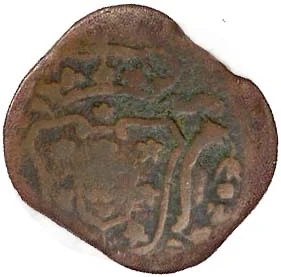
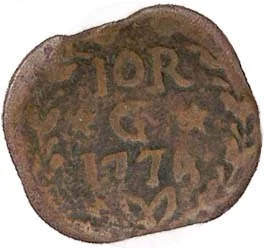
10 Réis – Portuguese India
India
Context
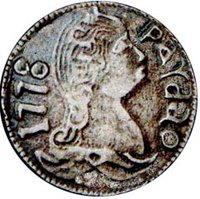
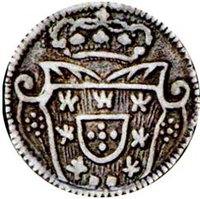
Year: 1774
Country: India 
Issuer: Portuguese India
Ruler: Joseph I
Currency:
(1706—1880)
Subdivision: 10 Réis = ⅙ Tanga
Demonetized: Yes
Material
Diameter: 21 mm
Weight: 6.6 g
Shape: Irregular round
Composition: Copper
Magnetic: No
Technique: Hammered
References
KM: #Click to copy to clipboard157
Numista: #49247
Mints
| Name | Mark |
|---|---|
| Goa | — |
Mintings
| Year | Mint Mark | Mintage | Quality | Collection |
|---|---|---|---|---|
| 1774 | G | — |
Historical background
In 1774, the currency situation in Portuguese India, centered on Goa, was characterized by significant complexity and economic strain. The territory operated within a wider Indian Ocean monetary ecosystem, where various foreign and local coins circulated freely. The official Portuguese system, nominally based on the réis, was overshadowed in daily commerce by the ubiquitous silver rupee (particularly the Mughal and later Maratha variants), the gold pagoda from the south, and a multitude of smaller regional copper coins. This created a constant challenge of exchange and valuation, undermining Portuguese monetary authority and causing frequent market disputes.
The Portuguese administration attempted to impose order through the minting of its own coins at the Goa Mint (Casa da Moeda). By 1774, it primarily issued silver xerafins and copper bazarucos, with the xerafin being the key unit of account for official transactions. However, the intrinsic silver content of locally minted coins often fluctuated and was frequently inferior to that of rival currencies, leading to their depreciation and hoarding of higher-value foreign coins. This debasement was a deliberate, short-sighted fiscal policy to generate revenue for the cash-strapped colonial state, but it eroded trust and further complicated trade.
Consequently, the monetary landscape was one of fragmented sovereignty and persistent inflation. The coexistence of multiple coinage systems necessitated a class of money changers (sarafs) who became essential economic intermediaries, while the state grappled with chronic budgetary deficits. This unstable environment reflected the broader decline of Portuguese power in the region, as its economic instruments failed to keep pace with the dynamic and competitive markets of 18th-century India, leaving the colony financially vulnerable.
The Portuguese administration attempted to impose order through the minting of its own coins at the Goa Mint (Casa da Moeda). By 1774, it primarily issued silver xerafins and copper bazarucos, with the xerafin being the key unit of account for official transactions. However, the intrinsic silver content of locally minted coins often fluctuated and was frequently inferior to that of rival currencies, leading to their depreciation and hoarding of higher-value foreign coins. This debasement was a deliberate, short-sighted fiscal policy to generate revenue for the cash-strapped colonial state, but it eroded trust and further complicated trade.
Consequently, the monetary landscape was one of fragmented sovereignty and persistent inflation. The coexistence of multiple coinage systems necessitated a class of money changers (sarafs) who became essential economic intermediaries, while the state grappled with chronic budgetary deficits. This unstable environment reflected the broader decline of Portuguese power in the region, as its economic instruments failed to keep pace with the dynamic and competitive markets of 18th-century India, leaving the colony financially vulnerable.
✨ Legendary