

3 Kreuzers – County of Tyrol
Austria

Obverse
Description:
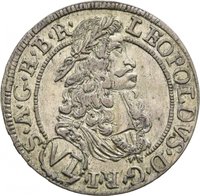
Portrait of Leopold I facing right, lion on shoulder, within inner circle and legend. Value in oval beneath bust.
Inscription:
LEOPOLDVS·D:G·R·I· S·A·G·H.B·R·
(3)
(3)
Script: Latin
Reverse
Description:
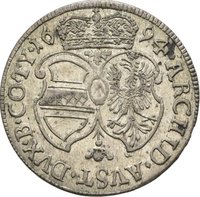
Two shields under a crown: left for Further Austria, right for Tyrol. Value below, legend around.
Inscription:
ARCHID·AV:DVX·BV·CO·TY· 17 01
Script: Latin
Edge
Plain
Mints
| Name | Mark |
|---|---|
| Hall | — |
Mintings
| Year | Mint Mark | Mintage | Quality | Collection |
|---|---|---|---|---|
| 1701 | — | — |
Historical background
In 1701, the County of Tyrol, a strategic Alpine territory within the Habsburg Monarchy, operated under a complex and strained currency system. The primary unit was the Tyrolean Gulden (florin), which was part of the broader South German monetary zone. However, the reality was a chaotic mix of circulating coins: domestic Tyrolean issues, coins from other Habsburg lands, and a flood of foreign currency, particularly from neighboring Italian states and the Holy Roman Empire. This proliferation of coins of varying weight and fineness created significant challenges for trade and daily transactions, leading to widespread confusion and susceptibility to debasement.
The situation was exacerbated by the financial pressures of the War of the Spanish Succession (1701-1714), which began that very year. The Habsburg state, under Emperor Leopold I, required immense revenue to fund its military campaigns. This often led to the manipulation of currency, such as issuing debased coinage or mandating the acceptance of overvalued money, to generate seigniorage profit. These practices further eroded public trust in the currency, drove good-quality coin out of circulation (Gresham's Law), and contributed to price inflation, burdening the local Tyrolean population.
Despite this turmoil, Tyrol possessed a unique economic strength: the silver mines of Schwaz, which historically provided the metal for renowned Tyrolean Thalers. In 1701, however, the mine output was in decline and could not single-handedly stabilize the currency. Authority over coinage was a contested matter between the Habsburg sovereign and the Tyrolean Landtag (diet), which guarded its historic privileges. Consequently, the currency situation of 1701 was defined by this tension between central fiscal demands from Vienna, local institutional resistance, and the practical economic distress caused by a fragmented and war-depreciated monetary environment.
The situation was exacerbated by the financial pressures of the War of the Spanish Succession (1701-1714), which began that very year. The Habsburg state, under Emperor Leopold I, required immense revenue to fund its military campaigns. This often led to the manipulation of currency, such as issuing debased coinage or mandating the acceptance of overvalued money, to generate seigniorage profit. These practices further eroded public trust in the currency, drove good-quality coin out of circulation (Gresham's Law), and contributed to price inflation, burdening the local Tyrolean population.
Despite this turmoil, Tyrol possessed a unique economic strength: the silver mines of Schwaz, which historically provided the metal for renowned Tyrolean Thalers. In 1701, however, the mine output was in decline and could not single-handedly stabilize the currency. Authority over coinage was a contested matter between the Habsburg sovereign and the Tyrolean Landtag (diet), which guarded its historic privileges. Consequently, the currency situation of 1701 was defined by this tension between central fiscal demands from Vienna, local institutional resistance, and the practical economic distress caused by a fragmented and war-depreciated monetary environment.
✨ Legendary