

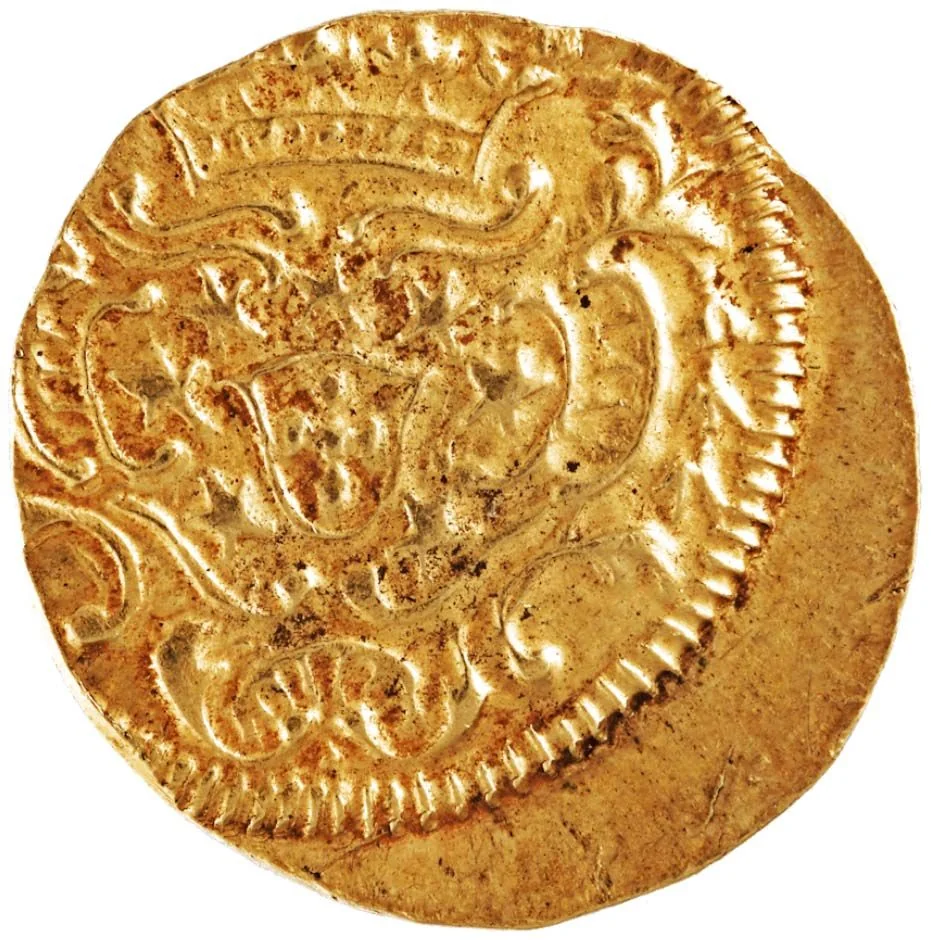
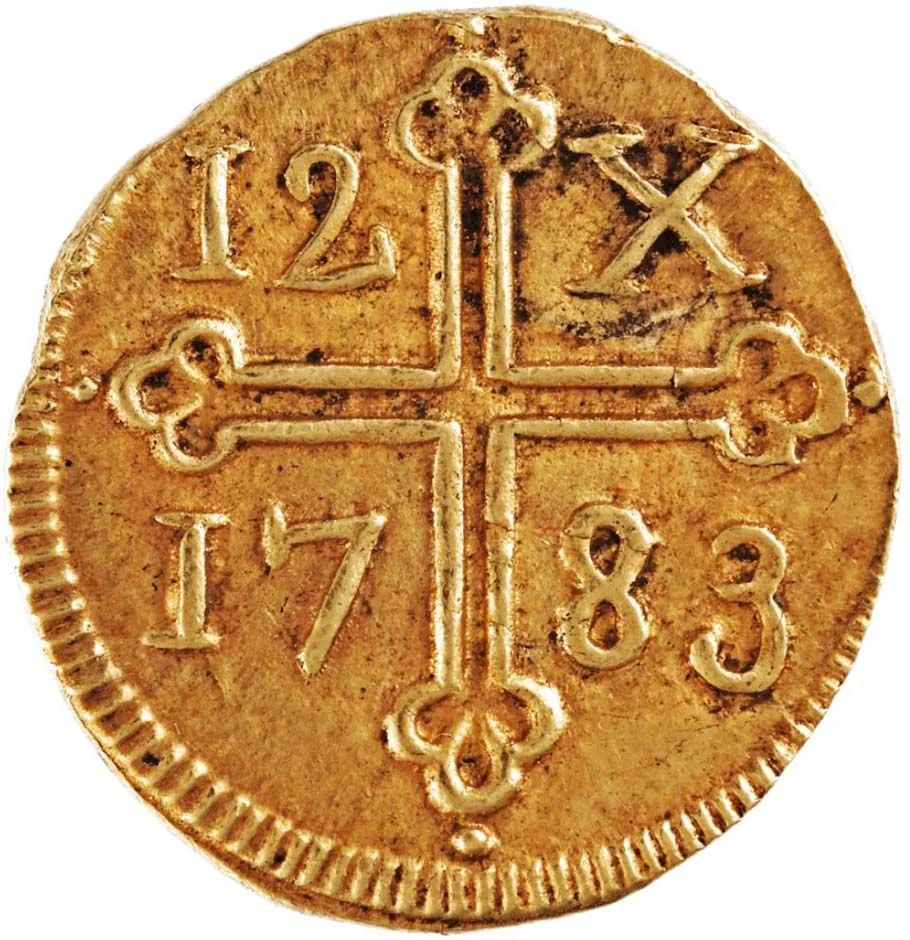
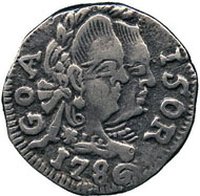
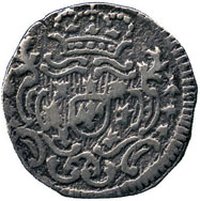
12 xerafins – Portuguese India
Add to wishlist
India
Context
Material
Diameter: 19 mm
Weight: 4.87 g
Gold Weight:: 4.47 g
Shape: Irregular round
Composition: 91.7% Gold
Magnetic: No
Technique: Hammered
References
KM: #
Numista: #48861
Value
Bullion value: $695.26
Mints
| Name | Mark |
|---|---|
| Goa | — |
Mintings
| Year | Mint Mark | Mintage | Quality | Collection |
|---|---|---|---|---|
| 1781 | — | — | ||
| 1782 | — | — | ||
| 1783 | — | — | ||
| 1784 | — | — | ||
| 1785 | — | — | ||
| 1786 | — | — | ||
| 1787 | — | — |
Historical background
In 1781, the currency situation in Portuguese India, centred on the colony of Goa, was characterised by severe instability and a complex multiplicity of circulating coins. The official currency was the Portuguese xerafim, but the economy was dominated by a plethora of foreign silver coins, primarily the Spanish-American real de a ocho (Spanish dollar or "piece of eight") and various Indian rupees, especially those minted by the neighbouring Maratha Confederacy. This created a chaotic monetary environment where trade and taxation required constant calculation of exchange rates, which fluctuated based on the intrinsic silver content and the perceived reliability of the issuing authority.
The root of this crisis lay in a chronic shortage of official Portuguese currency and a persistent trade deficit. Goa imported far more than it exported, causing a continuous drain of silver xerafins out of the territory to settle accounts. To fill the vacuum, the colonial administration was forced to officially recognise and tariff foreign coins, but they struggled to control their value. Furthermore, widespread clipping and counterfeiting of both foreign and domestic coins eroded public trust, exacerbating the monetary confusion and hindering commercial transactions.
Attempting to regain control, the Portuguese authorities in Goa had undertaken a significant monetary reform in 1774 by introducing new, milled-edge silver coins to deter clipping. However, by 1781, this measure had proven insufficient. The fundamental economic weaknesses remained, and the influx of foreign silver continued to dictate the market. Consequently, the currency situation remained a persistent administrative headache and a brake on economic development, reflecting Goa’s diminished position in regional trade networks and its vulnerability to broader monetary currents in the Indian Ocean world.
The root of this crisis lay in a chronic shortage of official Portuguese currency and a persistent trade deficit. Goa imported far more than it exported, causing a continuous drain of silver xerafins out of the territory to settle accounts. To fill the vacuum, the colonial administration was forced to officially recognise and tariff foreign coins, but they struggled to control their value. Furthermore, widespread clipping and counterfeiting of both foreign and domestic coins eroded public trust, exacerbating the monetary confusion and hindering commercial transactions.
Attempting to regain control, the Portuguese authorities in Goa had undertaken a significant monetary reform in 1774 by introducing new, milled-edge silver coins to deter clipping. However, by 1781, this measure had proven insufficient. The fundamental economic weaknesses remained, and the influx of foreign silver continued to dictate the market. Consequently, the currency situation remained a persistent administrative headache and a brake on economic development, reflecting Goa’s diminished position in regional trade networks and its vulnerability to broader monetary currents in the Indian Ocean world.
✨ Legendary