

½ Real – Prince-bishopric of Liege
Belgium
Context
Year: 1629
Country: Belgium 
Issuer: Prince-bishopric of Liege
Ruler: Ferdinand of Bavaria
Currency:
(1545—1650)
Subdivision: ½ Real = 3 Patards
Demonetized: Yes
Material
Weight: 2.1 g
Silver weight: 2.10 g
Shape: Irregular round
Composition: Silver
Magnetic: No
Technique: Hammered
References
KM: #Click to copy to clipboardF35.1
Numista: #487314
Value
Bullion value: $6.01
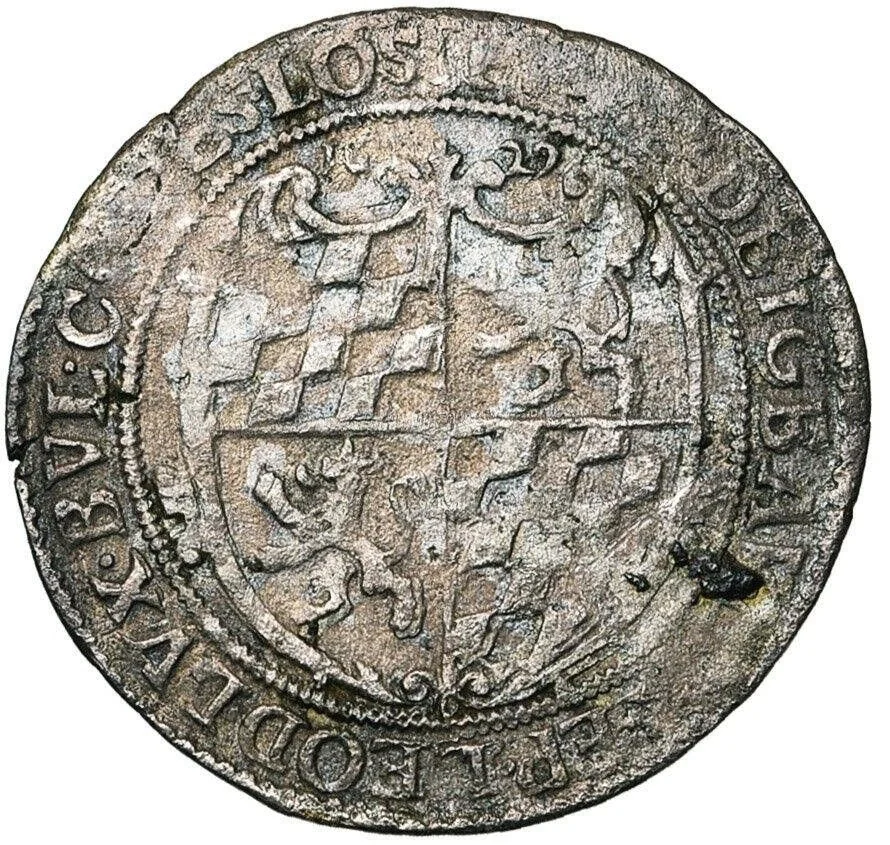
Obverse
Description:
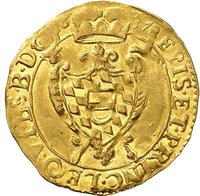
Bavaria-Palatinate quartered arms in ornate frame, date above, within beaded circle.
Inscription:
FERD · DEI · G · BAV · DVX · EP · LEOD · DVX · BVL · COMES · LOS
Script: Latin
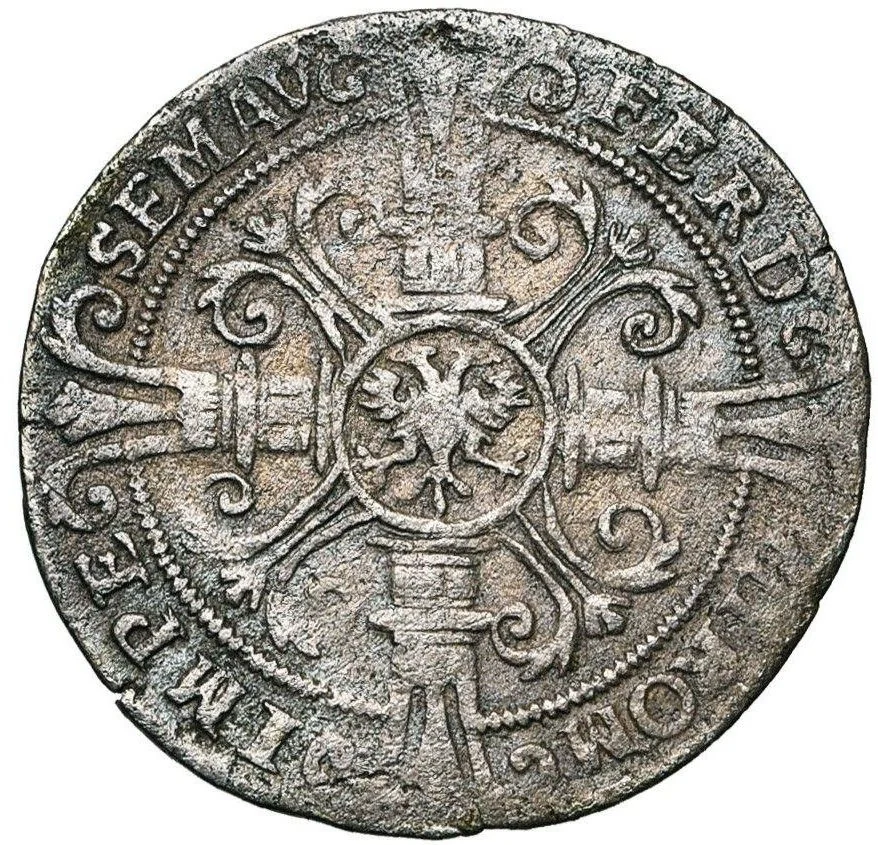
Reverse
Description:
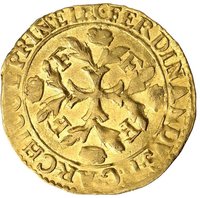
Ornate cross with floral design, central double-headed eagle in circle.
Inscription:
FERD II ROM IMPE SEM AVG
Script: Latin
Edge
Categories
| Symbols> Coat of Arms |
| Symbol> Cross |
Mints
| Name | Mark |
|---|---|
| Liège | — |
Mintings
| Year | Mint Mark | Mintage | Quality | Collection |
|---|---|---|---|---|
| 1629 | — | — |
Historical background
In 1629, the Prince-Bishopric of Liège found itself in a precarious monetary situation, caught in the crosscurrents of the wider European "Kipper und Wipper" crisis. This was a period of severe currency debasement and monetary instability, particularly within the Holy Roman Empire, where various states competitively reduced the silver content of their coinage to fund expenditures, often related to the Thirty Years' War. While Liège maintained a degree of political neutrality in the conflict, it could not escape the economic contagion. The flood of debased foreign coins, especially from neighboring German states, circulated within its borders, driving out Liège's own better-quality specie and causing inflation, confusion in trade, and a loss of confidence in the monetary system.
The response from the Liège authorities, under Prince-Bishop Ferdinand of Bavaria, was a continuous but struggling effort at monetary regulation. The government issued repeated ordinances aimed at controlling the exchange rates of the myriad coins in circulation and forbidding the import and circulation of the most debased foreign currency. However, these measures were largely reactive and difficult to enforce. The economic reality was that Liège's own minting activity was limited, and its monetary sovereignty was undermined by its geographic and economic position as a crossroads for trade and finance, making it highly susceptible to external monetary pressures.
Consequently, the currency situation in Liège in 1629 was one of fragmented and unstable circulation. Merchants and the populace had to navigate a complex mix of officially valued coins, heavily debated foreign issues, and a likely thriving black market for currency exchange. This instability created a drag on the economy of the prince-bishopric, increasing transaction costs and fostering uncertainty, even as its political leadership sought to assert control over a monetary environment that was fundamentally shaped by forces beyond its borders.
The response from the Liège authorities, under Prince-Bishop Ferdinand of Bavaria, was a continuous but struggling effort at monetary regulation. The government issued repeated ordinances aimed at controlling the exchange rates of the myriad coins in circulation and forbidding the import and circulation of the most debased foreign currency. However, these measures were largely reactive and difficult to enforce. The economic reality was that Liège's own minting activity was limited, and its monetary sovereignty was undermined by its geographic and economic position as a crossroads for trade and finance, making it highly susceptible to external monetary pressures.
Consequently, the currency situation in Liège in 1629 was one of fragmented and unstable circulation. Merchants and the populace had to navigate a complex mix of officially valued coins, heavily debated foreign issues, and a likely thriving black market for currency exchange. This instability created a drag on the economy of the prince-bishopric, increasing transaction costs and fostering uncertainty, even as its political leadership sought to assert control over a monetary environment that was fundamentally shaped by forces beyond its borders.
✨ Legendary