

4 escudos – Peru
Add to wishlist
Peru
Obverse
Description:
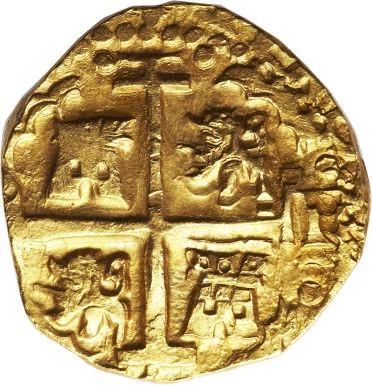
Jerusalem cross with lions and castles in its quarters.
Reverse
Description:
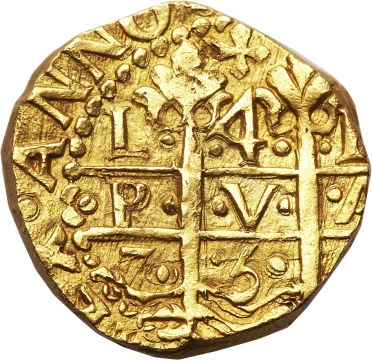
Supporting columns.
Edge
Mints
| Name | Mark |
|---|---|
| Lima | — |
Mintings
| Year | Mint Mark | Mintage | Quality | Collection |
|---|---|---|---|---|
| 1750 | LR | — |
Historical background
In 1750, Peru was the heart of the Spanish Viceroyalty of Peru, and its currency system was entirely dictated by the Spanish Crown. The primary source of wealth was silver, mined from the legendary Cerro Rico in Potosí (in modern-day Bolivia, then part of the Viceroyalty) and from Peruvian mines like Huancavelica. This bullion was minted into coins at the royal mint in Lima, established in 1565. The standard silver coin was the real, with eight reales making a peso, famously known as the "piece of eight." The gold escudo was also minted but was less common in everyday transactions. This system was designed to extract wealth for Spain, with a significant portion of all minted coins shipped to the metropolis as royal revenue.
However, the monetary reality within Peru was one of chronic scarcity and inconsistency. Despite the immense silver output, much of the physical currency was immediately exported, leaving the local economy perpetually short of circulating coinage. This led to widespread use of informal substitutes, including cobs (crudely cut and stamped coins), clipped coins, and even barter for common transactions, especially in remote areas. Furthermore, the quality and weight of coins could vary, and counterfeiting was a persistent problem. The economy was thus bifurcated: large-scale imperial trade and mining operated with official coin, while much of the internal market struggled with a fragmented and insufficient money supply.
This currency situation existed within a rigid mercantilist framework. Peru was legally forbidden from trading with other nations or even other Spanish viceroyalties, making it dependent on goods from Spain via the fleet system. The lack of currency exacerbated this, hindering internal development and commercial growth. The system would soon face immense pressure from the Bourbon Reforms, particularly after the creation of the new Viceroyalty of the Río de la Plata in 1776, which stripped Potosí and its mint from Lima's control, permanently altering Peru's economic and monetary dominance in South America.
However, the monetary reality within Peru was one of chronic scarcity and inconsistency. Despite the immense silver output, much of the physical currency was immediately exported, leaving the local economy perpetually short of circulating coinage. This led to widespread use of informal substitutes, including cobs (crudely cut and stamped coins), clipped coins, and even barter for common transactions, especially in remote areas. Furthermore, the quality and weight of coins could vary, and counterfeiting was a persistent problem. The economy was thus bifurcated: large-scale imperial trade and mining operated with official coin, while much of the internal market struggled with a fragmented and insufficient money supply.
This currency situation existed within a rigid mercantilist framework. Peru was legally forbidden from trading with other nations or even other Spanish viceroyalties, making it dependent on goods from Spain via the fleet system. The lack of currency exacerbated this, hindering internal development and commercial growth. The system would soon face immense pressure from the Bourbon Reforms, particularly after the creation of the new Viceroyalty of the Río de la Plata in 1776, which stripped Potosí and its mint from Lima's control, permanently altering Peru's economic and monetary dominance in South America.

✨ Legendary