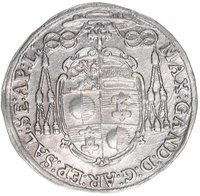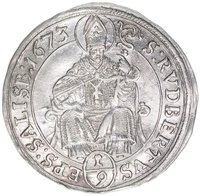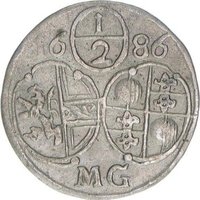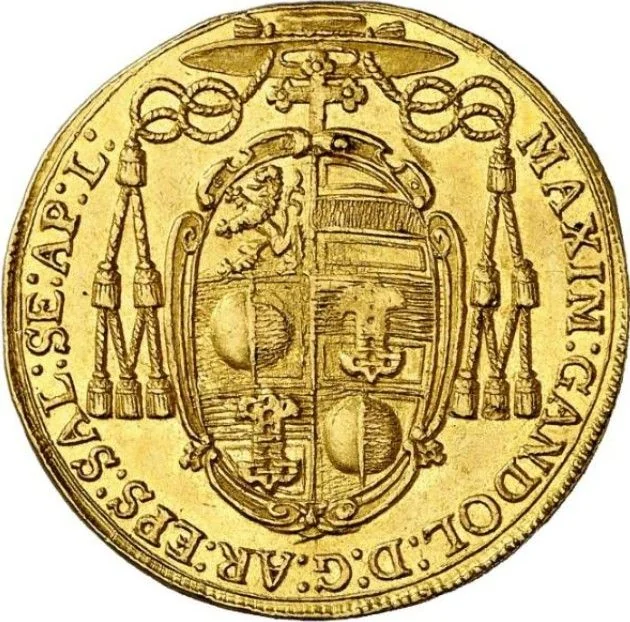
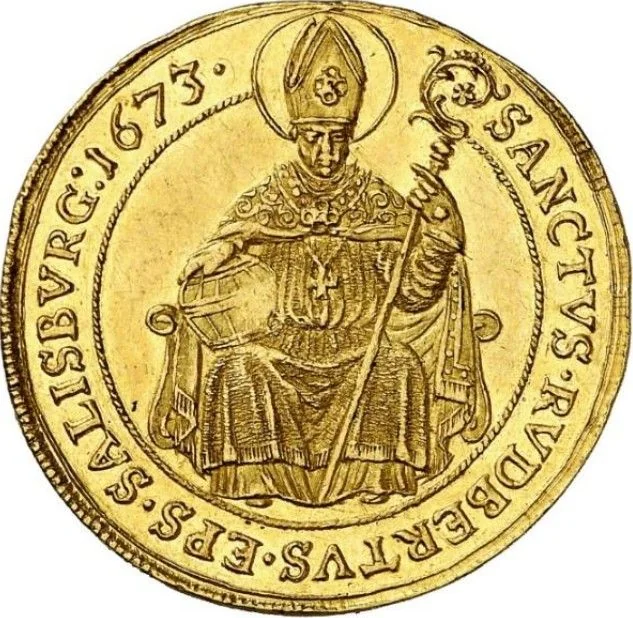
In 1670, the currency situation within the Prince-Archbishopric of Salzburg was characterized by the complex and fragmented monetary landscape of the Holy Roman Empire. Salzburg did not possess the right of
Münzregal (the sovereign right to mint coins) for large silver currency like thalers. Instead, its mint primarily produced smaller, everyday coins known as
Landesmünzen—kreuzers, pfennigs, and hellers—for local circulation. The value and stability of these coins were heavily influenced by the policies of larger neighboring powers, particularly the silver-rich thalers from the Habsburg Austrian lands and the prolific coinage from the Bavarian mint in Munich, which constantly flowed across Salzburg's borders.
This period was one of significant monetary stress, as the mid-17th century saw widespread debasement across the Empire. Archbishop Maximilian Gandolf von Kuenburg (ruled 1668–1687) faced the persistent challenge of maintaining the silver content and credibility of Salzburg's coinage amidst this inflationary environment. Devalued foreign coins and counterfeits circulated freely, undermining local commerce. The bishopric's economy, reliant on mining, salt, and trade, required a reliable medium of exchange, but the archbishop's limited minting authority constrained his ability to unilaterally stabilize the currency.
Consequently, Salzburg's monetary policy in 1670 was largely reactive and defensive. The government focused on regulating and policing the coins that circulated within its territory through repeated minting ordinances (
Münzordnungen), which attempted to fix exchange rates between local and foreign coins and to ban the circulation of particularly debased pieces. The effectiveness of these measures was limited, as the fundamental problem stemmed from a lack of centralized imperial monetary control. Thus, Salzburg's currency situation remained a precarious balancing act, dependent on the economic policies of its more powerful neighbors and the fluctuating value of silver in European markets.