

24 Skilling – Denmark
Denmark
Context
Material
References
KM: #Click to copy to clipboard538
Numista: #47931
Value
Bullion value: $14.93
Obverse
Description:
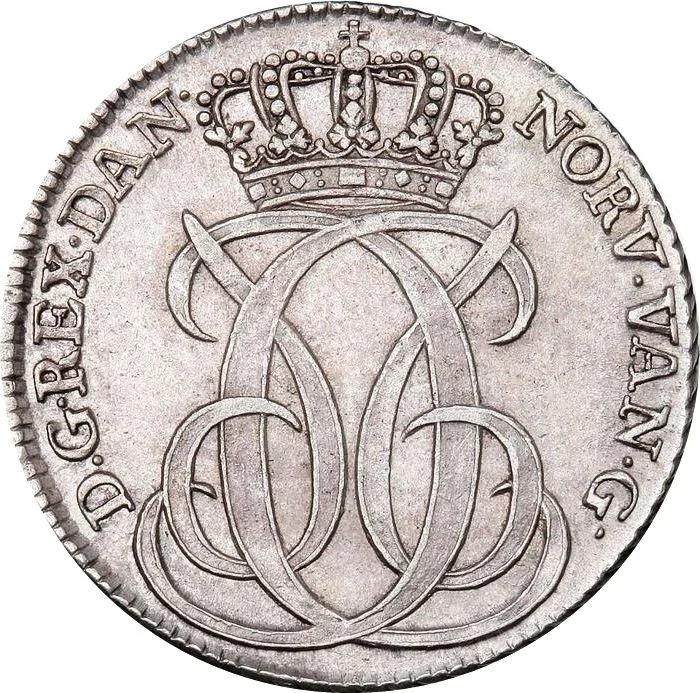
Crowned double monogram divides legend.
Inscription:
C6 6C
D • G • REX • DAN • | NORV • VAN • G •
D • G • REX • DAN • | NORV • VAN • G •
Script: Latin
Reverse
Description:
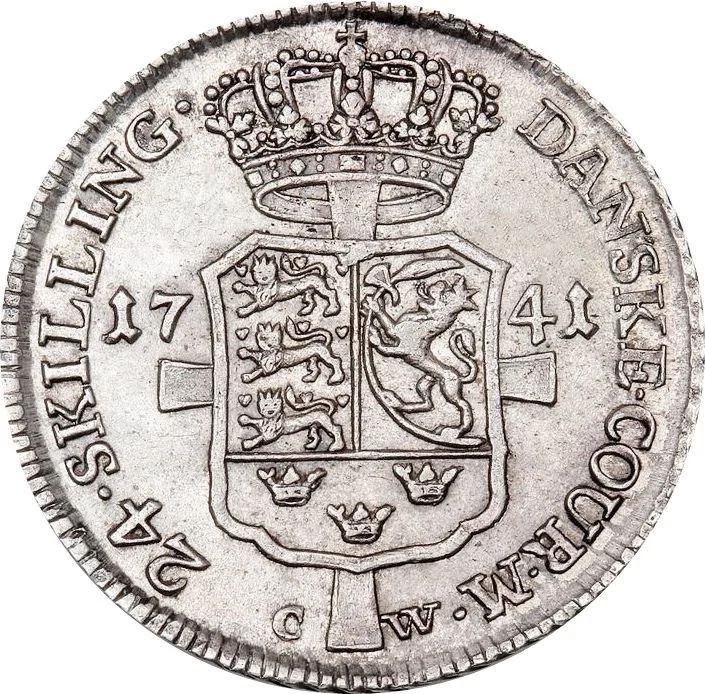
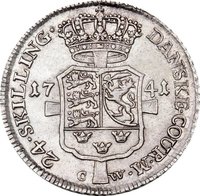
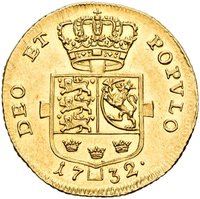
Shield with Danish, Swedish, and Norwegian arms above cross, flanked by date. Mintmark below, value around rim.
Inscription:
24 • SKILLING • | DANSKE • COUR: M •
17 41
C W
17 41
C W
Script: Latin
Edge
Diagonal milling
Categories
| Symbols> Coat of Arms |
Mints
| Name | Mark |
|---|---|
| Copenhagen | CW |
| Royal Danish Mint | CW |
Mintings
Historical background
In 1732, Denmark operated under a silver standard, with the rigsdaler specie as the primary unit of account. However, the monetary reality was complex and strained. The state treasury, burdened by the costs of earlier wars and an expansive absolutist court, frequently resorted to debasing the circulating coinage. This meant minting coins with the same face value but containing less precious metal, a short-term fiscal measure that eroded public trust and sparked inflation. Consequently, a discrepancy grew between the officially minted "kurant" coins used domestically and the full-valued "specie" coins required for foreign trade, creating a dual-currency system.
The situation was further complicated by a severe shortage of small-change coins, which crippled everyday market transactions for the common people. To fill this void, a flood of low-quality foreign coins, particularly German klippe coins, circulated alongside privately issued tokens and credit notes from merchants and city authorities. This patchwork of unofficial money led to confusion, fraud, and localized exchange rates, hampering commerce. The central government in Copenhagen struggled to exert control over this fragmented monetary landscape, especially in the duchies of Schleswig and Holstein and distant territories like Norway.
Overall, Denmark's currency situation in 1732 was characterized by instability and fragmentation. The core issues were a fragile state finances driving debasement, a dysfunctional division between high-value and everyday coinage, and a lack of uniform small change. This unstable environment would eventually prompt attempts at reform, most notably under King Christian VI, but in 1732, the system remained a source of economic uncertainty and a challenge to the authority of the absolutist state.
The situation was further complicated by a severe shortage of small-change coins, which crippled everyday market transactions for the common people. To fill this void, a flood of low-quality foreign coins, particularly German klippe coins, circulated alongside privately issued tokens and credit notes from merchants and city authorities. This patchwork of unofficial money led to confusion, fraud, and localized exchange rates, hampering commerce. The central government in Copenhagen struggled to exert control over this fragmented monetary landscape, especially in the duchies of Schleswig and Holstein and distant territories like Norway.
Overall, Denmark's currency situation in 1732 was characterized by instability and fragmentation. The core issues were a fragile state finances driving debasement, a dysfunctional division between high-value and everyday coinage, and a lack of uniform small change. This unstable environment would eventually prompt attempts at reform, most notably under King Christian VI, but in 1732, the system remained a source of economic uncertainty and a challenge to the authority of the absolutist state.
💎 Extremely Rare