Logo Title
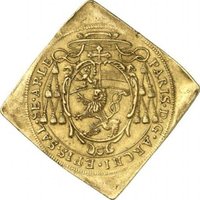
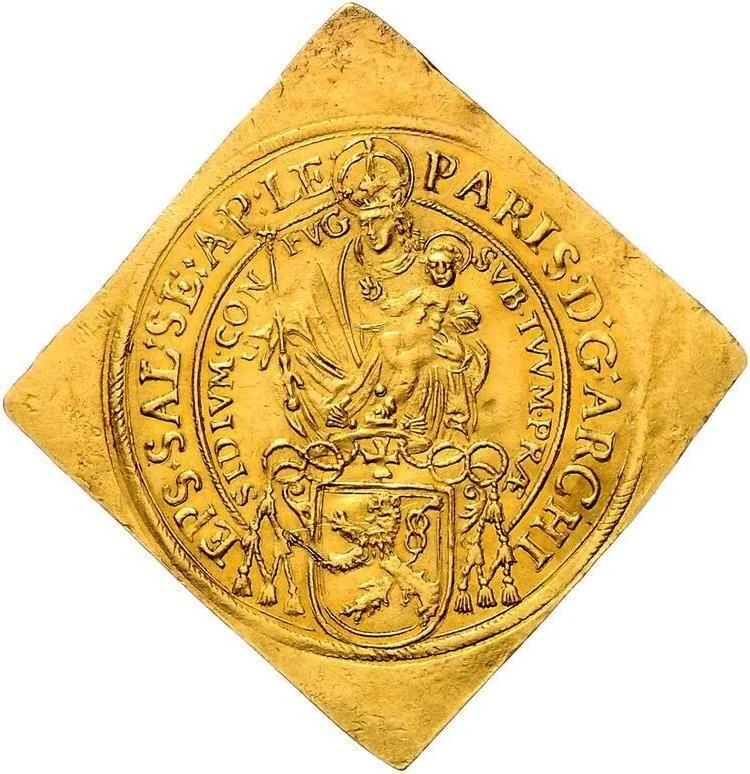
obverse
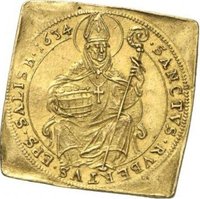
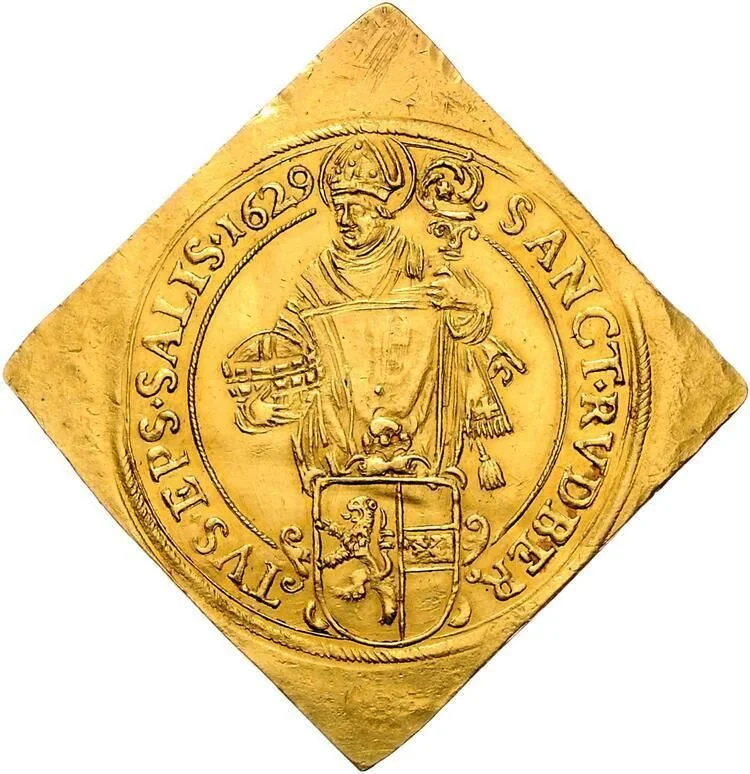
reverse
Auktionen Frühwald

3 Ducats – Bishopric of Salzburg

Context
Years: 1624–1642
Currency:
Demonetized: Yes
Material
Weight: 10.5 g
Gold weight: 10.50 g
Shape: Klippe
Composition: Gold
Magnetic: No
References
KM: #Click to copy to clipboard94
Numista: #478597
Value
Bullion value: $1750.70

Obverse

Description:
Madonna and Child above the archbishop's coat of arms.
Inscription:
⸰ PARIS · D : G: ARCHI EPS · SAL · SE : AP : LE :

SVB · TVVM PRÆ SIDIVM · CONF VG :
Script: Latin

Reverse

Description:
Saint Rupert holding a salt barrel and crozier, above the Salzburg arms.
Inscription:
SANCT : RVDBER TVS · EPS · SALISB : 1624
Script: Latin

Edge

Mintings

YearMint MarkMintageQualityCollection
1624
1629
1638
1642

Historical background

In 1624, the Bishopric of Salzburg operated within the complex monetary landscape of the Holy Roman Empire, where its currency was not issued in isolation. The principality's primary coin was the Salzburg Gulden, but its value and stability were intrinsically tied to the wider Imperial monetary systems, particularly the Reichsthaler (Imperial Thaler) standard established by the Imperial Minting Ordinance of 1559. This created a bimetallic system where silver Thaler coins served as large-denomination trade currency, while smaller, everyday transactions were conducted in Gulden, Kreuzer, and Pfennig. The stability of these currencies depended heavily on the bishopric's disciplined minting practices and the silver supply from its own mines, which were past their peak but still operational.

The period was one of significant monetary stress across Central Europe due to the outbreak of the Thirty Years' War (1618-1648). The war caused widespread currency debasement, as neighboring states and warring parties reduced the precious metal content in their coins to fund military expenses. While Salzburg, under Prince-Archbishop Paris von Lodron (ruled 1619-1653), maintained a policy of cautious neutrality, it was not immune to these pressures. The inflow of debased foreign coins into the bishopric threatened to drive out Salzburg's higher-quality currency (Gresham's Law), complicating commerce and creating inflationary risks for the local economy.

Despite these external threats, the monetary situation in Salzburg in 1624 was relatively stable compared to many German territories, a testament to von Lodron's prudent governance. He focused on fortifying the city and managing finances conservatively, which likely extended to the mint. The bishopric's currency thus enjoyed a reputation for reliability, which was crucial for its role as a regional trade hub and for financing the extensive construction projects of the early Baroque era. This stability, however, remained precarious, contingent on the bishopric's continued political neutrality and the fluctuating fortunes of war surrounding its borders.
Legendary